'Gulf Statistical Center': Saudi Arabia witnesses diversified economic growth strengthening its presence in Gulf integration
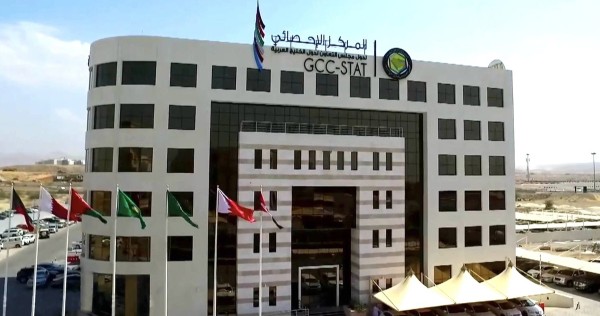
The Gulf Cooperation Council Statistical Center confirmed that Saudi Arabia is witnessing diversified economic growth that strengthens its presence in the Gulf integration process through strong investment, trade, and tourism indicators.
Translated by Qiyas from السياسة — Original source
The Statistical Center of the Gulf Cooperation Council (GCC) countries confirmed that the Kingdom of Saudi Arabia is witnessing diversified economic growth, an expansion in the investment base, and growth in non-oil, commercial, and investment sectors, thereby strengthening its presence in the GCC integration process.
In a report titled “The Kingdom of Saudi Arabia: The Heart of the GCC Economy and Partner in Shaping the Future,” issued to mark the Kingdom’s 96th National Day on Wednesday, the Center stated that the report includes a set of economic and social indicators tracking the Kingdom’s transformation paths and highlighting their extension into the joint GCC work system.
It added that the indicators reflect the broadening economic and social interaction between the Kingdom and citizens of GCC member states, noting that Saudi ports of entry recorded the entry of 9.1 million GCC citizens in 2024, while the number of GCC citizens employed in the private sector in the Kingdom reached 7,690.
Economically, and specifically in the capital market, the Center noted that the number of GCC member state shareholders in the Saudi stock market reached approximately 5,749, alongside 353 companies listed for GCC trading, “reflecting the extension of investment and ownership activities among GCC citizens.”
It pointed out that this interconnection extends to education and social services, with the number of GCC citizens studying in the Kingdom’s public education system reaching 10,096 students, and the number of GCC citizens covered by social services reaching 5,467 in 2024.
The Center emphasized that these indicators reflect one aspect of GCC integration that goes beyond the movement of goods and capital to include the movement of people, education, work, and investment, thereby enhancing the interconnection of interests and benefits among GCC member states.
Regarding Saudi economic indicators, the Center pointed out that the economy recorded real growth of 4.5 percent last year, with gross domestic product (GDP) at current prices reaching approximately $1.275 trillion, and net foreign direct investment inflows reaching about $32.5 billion.
It stated that structural economic indicators show an expanding contribution of non-oil activities, which accounted for 72.5 percent of GDP, while the contribution of the non-oil private sector reached 54 percent, reflecting the growing role of productive and service sectors in the Saudi economy.
It added that the Kingdom’s merchandise trade volume reached approximately $565.3 billion in 2025, reflecting the expansion of commercial activity and the growing importance of the Kingdom in regional and international trade flows. The Center reviewed in its report, prepared in collaboration with the Saudi General Authority for Statistics, the Kingdom’s growing international presence through hosting global conferences and events in the fields of economy, technology, environment, and development, thereby enhancing business activities and international and regional partnerships.
In this context, it pointed out that Riyadh will host the sixth UN Global Data Forum in November, alongside major future hostings such as “Expo Riyadh 2030” and the “FIFA World Cup 2034,” as milestones that enhance the Kingdom’s presence in the global economy and support multiple sectors including tourism, aviation, hospitality, logistics, and technology.
Within this context, it stated that international tourism revenues in the Kingdom reached $47.1 billion in 2025, an increase of 70.9 percent compared to 2019, reflecting the growing role of tourism within the paths of Saudi economic diversification.
On the technology and innovation front, the Center clarified that the Kingdom is witnessing a growing presence of technology and artificial intelligence in the Saudi economy. Investment in AI reached approximately $2.03 billion in 2025, while 33.1 percent of enterprises were using AI technologies.
He emphasized that these trends highlight a growing field for Gulf cooperation, particularly in data, advanced technologies, innovation, and research and development, amid an increasing need to build more integrated regional systems within the digital economy.
Regarding energy and the transition toward the future, the Center pointed to Riyadh’s continued pivotal role in the energy system, alongside the expansion of renewable energy sources. The operational capacity of renewable energy projects reached 12.3 gigawatts in 2025.
On the Gulf level, it noted that the Kingdom’s share in the capital of the Gulf Cooperation Council (GCC) Interconnection Authority amounted to 31.6 percent in 2024, reflecting its presence in the integration and interconnection system within the energy sector among GCC states.
The Center concluded in its report that these indicators reveal that the Kingdom’s transformation path “is not limited to diversifying the economy and expanding growth areas domestically, but intersects with a broader movement within GCC states extending from trade and investment to labor, education, tourism, energy, and technology.”
It affirmed that with the diversification of economic sectors and the growing areas of investment and innovation in the Kingdom, “interaction with the economies of GCC states is strengthened, opening new horizons for partnerships and the development of value and supply chains, and enhancing opportunities for mutual benefit from economic and technological transformations.”
The Center also emphasized that the Saudi economy, changing in its structural and sectoral features according to observed indicators, is increasingly present in the Gulf environment. The transformations underway in the Kingdom have become part of a broader path toward a more interconnected and diversified Gulf economy, capable of leveraging future opportunities.
