Minister of 'Development': Sustainability is a Key Part of State Readiness, Risk Management, and Ensuring Continuity of Vital Sectors
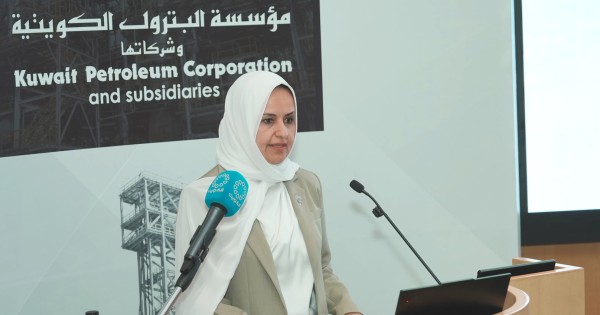
Dr. Reem Al-Faleh emphasized that sustainability is a fundamental part of state readiness and risk management during a workshop at the Kuwait Petroleum Corporation.
Translated by Qiyas from السياسة — Original source
State Minister for Development and Sustainability, Dr. Reem Al-Faleh, stated that recent regional developments have shown that sustainability is no longer solely linked to protecting the environment and its resources, but has become an essential part of the state’s readiness and its ability to manage risks and ensure the continuity of its vital sectors under all circumstances.
This remark came during Dr. Al-Faleh’s speech at a workshop organized by the Kuwait Petroleum Corporation (KPC), under the patronage of Oil Minister Tariq Al-Roumi, on Wednesday at the Kuwait National Petroleum Company (KNPC) theater. The event aimed to review crisis management, the integration of the hydrocarbon and waste transportation system, and mechanisms for controlling oil spills.
Dr. Al-Faleh added that, in light of this responsibility, the Council of Ministers had directed the Ministry of Development and Sustainability, in coordination with relevant government entities, to monitor the national readiness level for dealing with potential environmental risks.
She clarified that the ministry has worked on preparing the National Environmental Risk Register and identifying eight main risks and their response pathways. This aims to build a clear national picture of risks, define responsibilities, and measure the readiness level to address them. She noted that true readiness begins before a crisis occurs, through knowing, measuring, and preparing for the risk.
The minister emphasized that the oil sector holds a highly significant position within this framework, given the advanced expertise possessed by KPC and its subsidiaries in areas such as safety, waste management, handling hazardous materials, and responding to spills, accidents, and crises. She described this expertise as a "national asset" that can be built upon and utilized at the state level.
She further stated that the importance of the workshop lies in showcasing best practices in waste management, tracking and supervising transport vehicles, and responding to marine spills and crises. This presents an opportunity to convert this accumulated expertise into practices that enhance the environmental risk management system in Kuwait.
Dr. Al-Faleh explained that the success of this workshop will not be measured solely by the information presented during it, but by how its outputs are transformed into practical steps that enhance environmental protection and improve the efficiency of responding to risks and crises. She highlighted that sustainability is not just about protecting today’s resources, "but preparing for tomorrow’s risks and building a national system capable of confronting them."
The State Minister for Development and Sustainability thanked KPC and its subsidiaries for organizing the workshop and for their continuous cooperation in supporting the state’s efforts in the fields of environment, sustainability, and crisis readiness.
For his part, KPC CEO Sheikh Nawaf Al-Saud Al-Sabah stated that environmental sustainability represents an integral part of the oil sector’s responsibility and mission. He affirmed the corporation’s commitment to supporting the state’s efforts in addressing potential environmental pollution risks, particularly those related to oil sector operations.
In an opening address at the workshop, Sheikh Nawaf Al-Sabah noted that key operational areas include enhancing the speed of reporting environmental incidents, continuously updating emergency plans, and utilizing modern technologies in monitoring, tracking, and surveillance. These measures will undoubtedly contribute to building a more effective national system for responding to risks and protecting people, the environment, and vital facilities.
He emphasized the importance of the workshop as a new milestone in a long history of cooperation between the oil sector and various state entities, and as a practical translation of shared convictions. He clarified that confronting challenges requires the exchange of expertise to serve Kuwait and enhance its sustainability.
For his part, Abdullah Al-Ayyar, Deputy Managing Director for Sustainability at Kuwait Petroleum Corporation (KPC), outlined the workshop’s objectives, which focused on crisis management, the integration of the hydrocarbon and waste transportation system, and mechanisms for controlling oil spills.
In his speech, Al-Ayyar noted that the Kuwaiti oil sector has, throughout its history, undergone numerous experiences that contributed to building solid institutional expertise and enhancing its capacity to manage environmental crises and respond effectively to emergencies, particularly given the exceptional current geopolitical conditions facing the country and the region.
He added that the workshop was held in light of lessons learned over the past decades, aiming to continue developing systems and operational procedures, and to reinforce a culture of readiness, coordination, and joint action among relevant entities.
In this context, the workshop included discussions on several key topics, foremost among them an overview of KPC’s approach to crisis management; a session reviewing the historical journey of Kuwait National Petroleum Company (KNPC) in combating oil spills and managing waste; and a segment on readiness and response to marine oil spills at Kuwait Oil Company (KOC).
The fourth session of the workshop focused on the vehicle tracking system (GPS) and the electronic fuel level measurement system used in transportation operations, while the final session dealt with the mechanisms for tracking and monitoring the speed of vehicles transporting waste in the northern and western areas of KOC.
The workshop saw broad participation from relevant government entities involved in environmental risk management. Each presentation was followed by an open discussion session and a question-and-answer period, allowing attendees to exchange views and expertise.
