Saudi Arabia on its 96th Day... 'Our Pride is Our Nature'
Saudi Presence Expands Regionally, Internationally, and Globally
“Vision 2030” Transforms Planning into Execution
Non-Oil Sectors Expand the Saudi Economic Base
Public Investment Fund Leads New Wave of Projects and Growth
Tourism: A Broad-Impact Economic Pillar
Riyadh Season Entrenches the Entertainment Industry in the Kingdom
Sports Bolster Saudi Presence on the Global Stage
Housing, Healthcare, and Quality of Life at the Core of Development
Digital Transformation Reshapes Government Services
Heritage and Identity at the Heart of Opening to the World
Under the slogan “Our Strength is Our Nature,” the Kingdom of Saudi Arabia, our sister nation, today, Wednesday, celebrates its 96th National Day, commemorating the eternal legacy of unification achieved by King Abdulaziz bin Abdulrahman Al Saud, may God have mercy on him, on the day he declared the establishment of the Kingdom of Saudi Arabia as a single, united, strong, and proud state.
This day embodies pride in a homeland whose story has spanned generations. The celebration’s slogan highlights the enduring virtues of the Saudi people, present since birth: generosity, ambition, chivalry, authenticity, and excellence. These values are reflected in their daily conduct and have contributed to solidifying the image of the Saudi citizen as a model of pride and self-respect. The slogan also affirms the ambitious vision from which Saudis launch their efforts to build a prosperous future that aligns with the nation’s aspirations and those of its coming generations.
Today, Saudi Arabia does not merely revisit its historical pages; it presents a nation translating its ambitions into tangible projects and clear transformations across the economy, society, tourism, culture, technology, and lifestyle. Meanwhile, “Vision 2030” is reshaping the contours of its cities, expanding its economic base, and enhancing its presence regionally, internationally, and globally.
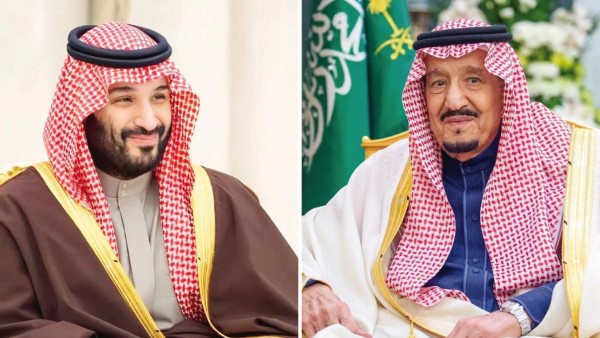
Under the leadership of His Majesty King Salman bin Abdulaziz, Custodian of the Two Holy Mosques, and Crown Prince and Prime Minister Mohammed bin Salman, the Kingdom continues on a path that combines state continuity with accelerated transformation. It enters its National Day celebrating what its history has achieved, what is being realized on its soil today, and what it aspires to accomplish in the coming years. Thus, the founding legacy meets future aspirations on the 96th National Day, in a homeland that preserves its roots while simultaneously writing a new chapter in its journey.
When Saudi Arabia launched “Vision 2030,” it set a broad range of objectives, foremost among them diversifying the economy, expanding youth participation, attracting investments, and strengthening industrial, tourism, cultural, and entertainment sectors, alongside developing cities and enhancing the Kingdom’s competitiveness on the global economic map. After years of implementation, the Vision has moved from its planning framework to executable projects and programs distributed across various regions of the Kingdom. Its results are now becoming clearer in indicators related to the economy, investment, and non-oil sectors.
The real Saudi economy grew by 4.5 percent in 2025, while the non-oil economy recorded growth of 4.9 percent. Gross domestic product at current prices reached approximately 4.789 trillion riyals. These figures reveal a clear trend toward broadening the economic base, with oil remaining a key element in the Kingdom’s financial and economic strength, and its revenues being leveraged to support new sectors and projects.
Oil: A Force Financing Transformation
Saudi Arabia remains one of the world’s largest oil powers, with energy remaining one of the most critical elements of its economic and strategic presence. However, the current transformation is linked to how this strength is utilized to build a more diversified economy. A significant portion of revenues and investment capabilities is being redirected toward new sectors, national companies, strategic projects, and long-term investments aimed at generating economic value beyond the oil sector.
In this context, the Public Investment Fund (PIF) stands at the forefront of transformation tools, having surpassed 3.4 trillion riyals in managed assets in 2025, while its cumulative local investments since 2021 reached approximately 750 billion riyals. These figures reflect a strategy focused on converting wealth into investments, and investments into economic activity, production, and job opportunities, thereby broadening the economic base and reducing reliance on a single source of growth.
**The Landscape of Opportunities**
Industry, mining, tourism, logistics, technology, entertainment, sports, culture, and artificial intelligence are no longer marginal sectors in the Saudi economy; they have become integral parts of the new growth system the Kingdom is working to strengthen. In the fourth quarter of 2025, non-oil exports, including re-exports, rose by 18.6 percent year-on-year, while the share of oil exports in total merchandise exports declined to 67.5 percent.
The Kingdom is also working to increase the value added from its natural resources by expanding into manufacturing, petrochemicals, mining, and energy-related industries. This enhances the presence of Saudi products in global markets and opens broader avenues for investment and employment.
**A Map of Cities**
Across the Kingdom, projects such as NEOM, The Qiddiya, Diriyah Gate, and The Red Sea Project represent a prominent aspect of the ongoing transformation. These initiatives are linked to economic, tourism, investment, and technological objectives that extend beyond mere urban development. They aim to create new centers of economic activity, attract companies and investments, expand sectors such as tourism, culture, entertainment, and technology, and provide job opportunities while building new urban environments. Thus, urban development is not limited to changing the physical form of cities; it extends to redistributing economic activity and creating new growth centers that will support the Saudi economy in the coming years.
**The Kingdom Opens Its Doors to the World**
The tourism sector is among the most revealing indicators of the scale of transformation the Kingdom has undergone in recent years. In addition to its established status as a destination for religious tourism, Saudi Arabia has moved to build a broader tourism product based on natural, cultural, and heritage diversity, offering visitors options ranging from historical sites to beaches, resorts, and sports, cultural, and entertainment events.
From AlUla to the Red Sea, and from Diriyah to Riyadh, a new tourism map is taking shape, reflecting a diversity of destinations and experiences. AlUla has become a prominent model for leveraging history and heritage within a modern tourism industry, while Riyadh has strengthened its position as a destination for exhibitions, conferences, summits, and major events throughout the year. Data highlights the sector’s expansion: in 2025, the Kingdom welcomed approximately 122.6 million domestic and international tourists, with total tourism spending reaching around 304 billion riyals, and the number of inbound tourists nearing 30 million. These indicators reflect a shift in tourism from an activity tied to specific seasons to a broad economic sector intertwined with transport, hospitality, retail, aviation, and investment, playing an increasingly vital role in diversifying income sources and creating jobs.
**Riyadh Season**
At the heart of this transformation, Riyadh Season has emerged as one of the Kingdom’s most prominent models of entertainment industry development. In just a few years, the event has evolved from a local mass-attendance gathering into a platform attracting international sports, artistic, cultural, and entertainment events, surpassing 17 million visitors in its sixth season.
However, the impact is not measured by visitor numbers alone. The season drives a wide range of economic activities linked to hotels, restaurants, transportation, marketing, media, event management, and retail, alongside the direct and indirect jobs and investments it generates. Thus, entertainment has become part of the Kingdom’s new economy, not merely as a space for events, but as an integrated sector that contributes to revitalizing cities, increasing local spending, attracting visitors, and strengthening Saudi Arabia’s presence on the global tourism and entertainment map.
A Global Presence Beyond Stadiums
In recent years, sports have become one of the prominent faces of the transformation underway in the Kingdom, marked by the expansion of hosting international tournaments, the development of sports facilities, investment in clubs, and the attraction of stars and champions from around the world.
Hosting the 2034 FIFA World Cup tops this agenda, following the International Federation of Association Football’s (FIFA) selection of Saudi Arabia to organize the tournament, making it the first country to host a single edition of the World Cup featuring 48 national teams. Alongside football, the Kingdom has bolstered its presence in Formula 1 races, boxing, golf, tennis, and esports, as part of a strategy that integrates major sporting events into the broader movement of tourism, entertainment, and investment.
The impact of sports is no longer confined to competition within stadiums. Every major tournament requires an integrated system of hospitality, transportation, marketing, media, and services, attracting audiences from both within the country and abroad. Consequently, sports are gradually evolving into an economic sector and a key element of Saudi Arabia’s global presence.
The Citizen... at the Heart of Development
Behind major projects and economic indicators, the impact of development on citizens’ lives remains one of the most important measures of transformation, evident in housing, health, services, and quality of life.
In the housing sector, the rate of Saudi families owning homes reached 66.24 percent in 2025, compared to 47 percent at the baseline, surpassing the target of 65 percent set for that year.
In healthcare, life expectancy rose to 79.7 years according to the latest published data for 2024, while 97.5 percent of the population was covered by health services in 2025.
These indicators reveal another dimension of Vision 2030: development is not measured solely by the scale of projects or investments, but by their tangible impact on housing, health, services, and daily quality of life.
Digital Transformation
Saudi government services have undergone a broad shift toward digital platforms, service integration, and improved accessibility in recent years, making electronic transactions a routine part of the relationship between citizens, residents, and government institutions.
According to the Digital Government Authority, the Kingdom ranked sixth globally in the 2024 United Nations E-Government Development Index. Regionally, it topped the ESCWA index for the maturity of electronic and mobile government services, achieving a maturity rate of 96 percent.
This transformation goes beyond moving transactions from paper to screens; the government system is moving toward integration among entities, leveraging data, artificial intelligence, and modern technologies to deliver faster, easier, and more responsive services tailored to beneficiaries’ needs.
Thus, digital transformation has become part of enhancing state performance, rather than remaining a separate technical track.
An Identity That Preserves Its Roots
Amid this accelerating pace of change, Saudi identity strongly features in the new landscape. Heritage is not distant from future plans; rather, it has become one of their economic, cultural, and tourism components.
Al Diriyah, Al Ula, historic Jeddah, and other heritage sites are no longer mere relics of the past; they have become destinations that welcome visitors and narrate the Kingdom’s history in a contemporary language, within projects that combine preservation with presenting these sites to new generations and the world.
The uniqueness of this landscape lies in the fact that openness to tourism, culture, sports, and international events runs parallel to highlighting Saudi heritage, architecture, arts, and traditions.
Here, transformation meets the National Day slogan “Our Pride is Our Nature.” The Kingdom is moving rapidly toward the future, but it does so while carrying its identity with it, presenting it as an integral part of its modern image rather than a separate memory.
A Foreign Policy Based on the Kingdom’s Weight
Saudi foreign policy moves from a broad base of strength elements; the Kingdom is a member of the G20, holds a key presence in energy markets, and possesses religious standing, a strategic geographic location, a large economy, and significant investments. These factors grant it an influential presence in economic, regional, and international issues. Saudi Arabia remains a member of the G20, the primary forum for international economic cooperation.
In recent years, the tools of Saudi presence have expanded to include diplomacy, investment, energy, economic cooperation, and hosting international meetings, summits, and events, alongside the growth of tourism, sports, and culture sectors. The Kingdom also maintains a leading position in the global energy sector, while simultaneously working to diversify its energy mix and expand into renewable and nuclear sources as part of its development plans. Thus, Saudi external presence is built on a combination of political, economic, religious, energy, and investment weight, as areas of cooperation and partnership with regional and global countries continue to broaden.
King Salman... The Era of Launching “Vision 2030”
His Majesty King Salman bin Abdulaziz Al Saud accompanies the Kingdom’s journey as its head of state and leader. His reign witnessed the launch of “Saudi Vision 2030” and entry into a broad phase of economic, social, and developmental transformation programs.
“Vision 2030” is based on three main pillars: a vibrant society, a thriving economy, and an ambitious nation. Over the past years, it has evolved into an umbrella for a large number of programs and projects spread across various regions of the Kingdom.
King Salman previously affirmed in an interview that the Vision represents a roadmap for the future, highlighting the achievements of its programs in government services, housing, tourism, entertainment, sports, women’s empowerment, and attracting investments.
During this phase, the Kingdom continues a path that combines the continuity of state institutions with the acceleration of development and transformation programs, as many of “Vision 2030” targets transition from planning to on-the-ground implementation.
Mohammed bin Salman... Leading a Major Transformation
The name of Crown Prince and Prime Minister Mohammed bin Salman has been linked to the trajectory of “Saudi Vision 2030,” which established a broad framework for reshaping sectors such as the economy, investment, tourism, industry, technology, culture, and sports, alongside urban development and opening new fields for the private sector, youth, and women.
Prince Mohammed bin Salman chairs the Council of Ministers, the Council of Economic and Development Affairs, and the Board of Directors of the Public Investment Fund (PIF). These positions place him at the core of the economic policy-making system and the monitoring of transformation and investment programs in the Kingdom.
Furthermore, the Board of Directors of the Fund, under his chairmanship, approved its strategy for the years 2026–2030 in April 2026, which continues to focus on building new economic sectors, enhancing private sector participation, and diversifying the economy.
The transformation is not limited to the economy alone; its features have extended to tourism, entertainment, sports, technology, services, and major projects.
