Kuwait Stock Exchange closes the week with a market capitalization of 53.3 billion dinars... and the 'Main 50' index continues its rise for the seventh consecutive week
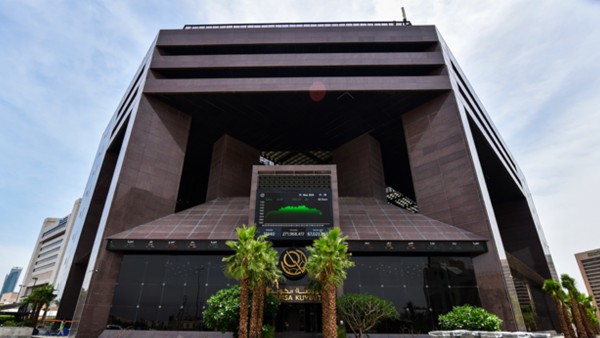
- Central bank holds discount rate at 3.5%; FTSE Russell review boosts trading activity
- Al-Shal: Most sectors outperform expectations despite war fallout... Technology leads gains
Kuwait Stock Exchange indices ended their weekly trading session the day before yesterday amid continued speculative trading and profit-taking in selected stocks, led by banking shares, influenced by the impact of the Central Bank of Kuwait’s decision to hold the discount rate at 3.5 percent, alongside the semi-annual FTSE Russell review affecting several listed stocks.
Discover robotics technologies
Explore demographic data
Try calendar apps
The exchange opened the week’s trading with mixed performance, amid liquidity of approximately 123 million dinars, equivalent to about $376.3 million, distributed across 45.315 million shares through 2,758 transactions. Strong activity was observed in targeted stocks in the First Market, which accounted for 51 percent of total liquidity, compared with 49 percent for the Main Market.
At the sector level, indices for nine of the 13 sectors rose in the opening session, led by the technology sector with a 4.54 percent gain. Three sectors declined, headed by the energy sector with a 0.46 percent drop, while the utilities sector remained flat.
In Monday’s session, indices extended their gains for a second consecutive day, led by the Main Market, as liquidity dipped slightly to 121.8 million dinars, or about $372.7 million. Indices for nine sectors rose, led by technology with an 8.20 percent gain, while three sectors fell, led by consumer goods with a 0.26 percent decline. The utilities sector remained unchanged.
The market capitalization of listed companies hit a new record high during the session, reaching approximately 54.045 billion dinars, or about $165.3 billion, amid selective trading in blue-chip stocks and small- and mid-cap shares targeted by investment groups seeking quick returns ahead of third-quarter lock-up periods.
In the mid-week session, trading took on a speculative tone, with sustained activity in the shares of one of the takaful (Islamic insurance) companies, which has become one of the market’s most prominent speculative stocks. This coincided with profit-taking in several stocks and anticipation of the implementation and review by FTSE Russell, contributing to increased liquidity.
Performance of the main indices was mixed amid anticipation of the Federal Reserve’s decision on monetary policy and interest rates. Indices for six sectors rose, led by technology with a 5.26 percent gain, while seven sectors declined, led by healthcare with an 8.99 percent drop.
Wednesday’s session recorded a new record high in liquidity of 144.2 million dinars, or about $442.6 million, despite profit-taking dominating active stocks. Main indices closed mixed amid anticipation of the Federal Reserve’s monetary policy decision.
In that session, indices for six sectors rose, led by healthcare with an 8.35 percent gain, while six sectors fell, led by technology with a 3.21 percent decline. The utilities sector remained flat.
Traders maintained a wait-and-see stance ahead of the U.S. Federal Reserve’s decision, coinciding with the implementation of the FTSE Russell review. FTSE Russell is one of the world’s leading providers of indices and market classifications, and its periodic reviews play a key role in directing foreign liquidity flows toward emerging stock exchanges.
The week concluded with the implementation of FTSE Russell’s semi-annual review of Kuwaiti stocks, which included downgrading the classification of Jazeera Airways’ shares from the small-cap list to the micro-cap list.
The review also included the addition of shares from "Al-Nizam Al-Aliya" (Automated Systems), "Inovest," "Real Estate Trading and Investment," and "Trolley General Trading" to the list of micro-cap companies, while shares of "Burqan for Boring, Trading and Maintenance," "Kuwait Cement," and "Al-Kuwaitiya for Factory Construction and Contracting" were removed from the same list.
In the closing session, trading opened with marginal gains amid traders’ relief over the Central Bank of Kuwait’s decision to hold the discount rate steady, thereby reducing the cost of funds.
The Central Bank of Kuwait had kept the discount rate at 3.5 percent, affirming the robustness of the country’s monetary and financial stability conditions and noting that monetary trends align with the local economic environment. This reflected positively on stock market trading at the end of the week.
The bank emphasized that the discount rate would remain at 3.5 percent, explaining that this level reflects a balanced monetary policy approach between supporting growth and containing inflationary pressures.
The "Main 50" index continued its upward trajectory for the seventh consecutive week, hitting new record highs, driven by the imminent announcement of companies’ third-quarter financial results for the current year.
The market capitalization of shares at the end of weekly trading stood at 53.3 billion dinars (approximately 163.6 billion dollars), a weekly decline of 0.33 percent, compared with 53.5 billion dinars (approximately 164.2 billion dollars) at the close of the previous week.
In a report issued on Saturday, Al-Shal Consulting stated that the war has not shown any significant negative impact on the performance of various stock market sectors. Most sector indices posted positive performance during the period from the last trading day before the U.S.-Iran war on February 24, 2026, through September 15, 2026, although performance levels varied among them.
The report added that it is impossible to determine the magnitude of the positive performance these sector indices would have achieved had the war not occurred, particularly the banking sector index, which carries the highest weight in terms of contribution to the market capitalization of listed companies.
It clarified that the technology sector led in performance, with its index rising by approximately 1,455.6 percent, despite its contribution to the stock market’s capitalization not exceeding 0.3 percent. This was followed by the insurance sector, which rose by approximately 35.8 percent, amid rising risks and the consequent increase in insurance premiums.
The basic materials sector ranked third, with its index rising by approximately 26.4 percent, a trend the report attributed to supply chain disruptions, demand outpacing supply, and the resulting price increases.
The report noted that eight other sectors recorded positive performance ranging from moderate to weak, led by the telecommunications sector with gains of approximately 11.3 percent, followed by real estate at approximately 9.9 percent, financial services at approximately 7.3 percent, and healthcare at approximately 5.3 percent.
The consumer goods sector also posted gains of approximately 4.9 percent, energy 3.8 percent, and industry 2.7 percent.
The report highlighted the modest gains in the banking sector, which stood at approximately 1.2 percent, and called for an investigation into the reasons behind this, including whether it is linked to the intensity of geopolitical events, the local economic environment affected by the war, or other factors.
Only two sectors recorded negative performance: the consumer services index lost approximately 1.2 percent, while the utilities sector declined by approximately 4.9 percent.
Al-Shal concluded its analysis by noting the lack of a clear explanation to date for the varying performance of stock market sector indices, considering that their performance was better than expected given the scale of the war’s impact on public finances and the economy.
