Health Minister: Breast cancer accounts for over 40% of cancer cases among women in Kuwait
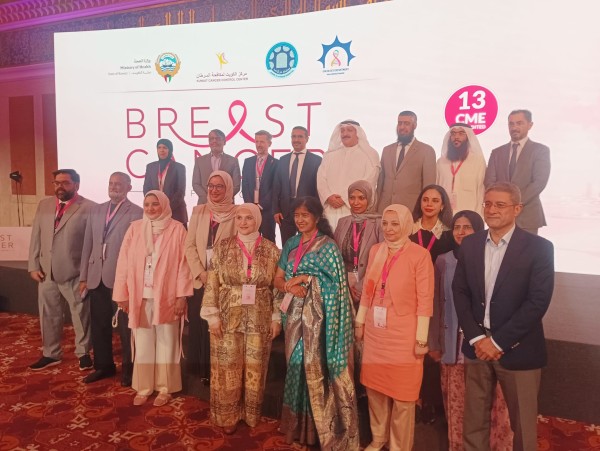
The Health Minister confirmed that breast cancer accounts for over 40% of cases among women, with the launch of new treatment technologies and a new center
Translated by Qiyas from السياسة — Original source
- More than 8,000 patients receiving treatment and follow-up... New cancer center to open soon
- Implementation of "liquid biopsy" and preparation of a clinical study on breast cancer by 2026
- Al-Nouri: "Smart" chemotherapy treatments target cancer cells with greater precision
Minister of Health Dr. Ahmed Al-Awadi confirmed that breast cancer accounts for more than 40 percent of cancer cases registered among women in Kuwait, noting that more than 8,000 patients living with the disease are receiving treatment and follow-up care in Ministry of Health facilities.
Speaking at the opening of the Third Kuwait Breast Cancer Conference, organized by the Kuwait Cancer Control Center, Al-Awadi stated that these figures place a significant responsibility on the Ministry to detect the disease at its early stages, accelerate diagnosis, provide appropriate treatment, and safeguard the patient’s dignity and right to information and participation in treatment decisions.
He clarified that cancer control requires an integrated system starting with awareness and early detection, extending to diagnosis, treatment, rehabilitation, and follow-up, based on scientific evidence, reliable data, and the measurement of healthcare service outcomes.
He noted that Kuwait has strengthened its capacity to combat breast cancer since the launch of the National Early Detection Program in 2014, the establishment of the Rapid Diagnosis Clinic in 2015, and the Genomics Laboratory in 2016. Additionally, the Oncology Department opened at Jabir Al-Ahmad Hospital in 2022, and a team for breast cancer surgeries and reconstruction was established in 2023.
The Minister added that the Ministry provides modern treatment options, including hormonal, targeted, immunological therapies, and antibody-drug conjugates, tailored to the nature and characteristics of the disease and the clinical condition of each patient, with continuous evaluation of the efficacy, safety, and outcomes of these treatments.
Al-Awadi revealed that the Kuwait Cancer Control Center has begun implementing the "liquid biopsy" technology to support molecular tumor analysis and guide treatment decisions in appropriate cases. He also announced plans to prepare and conduct a clinical study on breast cancer in 2026, adhering to accepted scientific and ethical standards.
He pointed to the establishment of a specialized epidemiology and cancer registry department in 2026 to monitor incidence patterns and trends, analyze data, and utilize it for planning and evaluating services, emphasizing that accurate data form the foundation for identifying needs, directing resources, and measuring the impact of early detection and treatment programs.
Regarding the development of national cadres, Al-Awadi explained that the precise specialized training program in oncology, under the auspices of the Kuwait Institute for Medical Specialties and supported by the Ministry, has contributed to graduating six specialized oncologists over the past five years. He stressed that investment in competencies encompasses all members of the treatment team, including doctors, nurses, pharmacists, and specialists in diagnosis, rehabilitation, and psychological support.
New Center
The Minister of Health disclosed the Ministry’s readiness to open the new Kuwait Cancer Control Center in the Sabah Medical Area, explaining that the project will enhance the capacity to provide specialized care, facilitate access to services, accelerate procedures, integrate specialties, and ensure the safety and continuity of care.
He called for the conference to produce practical recommendations that support early detection, develop diagnostic and treatment pathways, strengthen research collaboration and specialized training, and translate scientific advancements into daily practice. He emphasized the importance of partnership with civil society institutions in raising awareness, encouraging early detection, and supporting patients and their families.
"Smart" Treatments
For his part, Dr. Anwar Al-Nouri, chairman of the Third Kuwait Conference on Breast Cancer, affirmed that the conference focuses on the latest advances in chemotherapy, biological, hormonal, and targeted therapies.
He highlighted “antibody-drug conjugates” (ADCs), or “smart chemotherapy,” as one of the most notable developments, enabling more precise delivery of chemotherapy to cancer cells, alongside targeted therapies that rely on identifying genetic mutations. He noted that genetic mutation testing is available at the Kuwait Cancer Control Center.
He pointed out that Kuwait had early access to several modern treatments, including the drug “elacestrant,” and emphasized the importance of keeping pace with scientific developments and exchanging expertise to improve the treatment of breast cancer patients.
