Dreams, Imprisonment, and Al-Hasan ibn al-Haytham's Chamber: A Reading of Arab Civilization
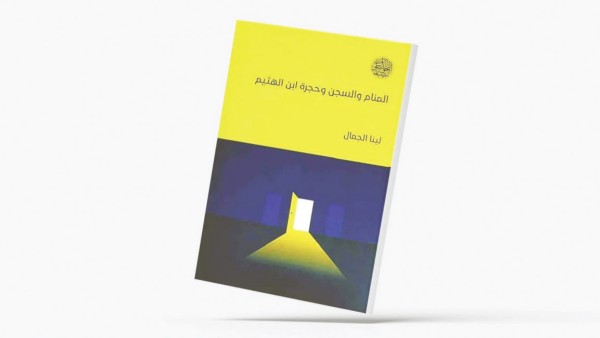
Dr. Lina Al-Jamal, a Lebanese academic researcher, explores dreams and their interpretation in the early centuries of the Hijra in her book, *Dreams, Prison, and Ibn al-Haytham’s Chamber: A New Reading of Space in Arab Civilization*. The book examines dreams, their evocation, interpretation, and utilization in Islamic culture, as well as the relationship between these elements and space, conceived first as an entity and then as a concept. This approach encompasses several themes, including connections between Arab-Islamic civilization and other ancient civilizations through practices such as *halama* (dream incubation), *istikhara* (seeking divine guidance), and sleeping near graves. It also interrogates material civilization to understand its impact on prisoners’ dreams, architectural interpretations, and dreams that leave tangible traces. Furthermore, it seeks to ground the dream experience in the theories of philosophy and vision proposed by ancient Arab scholars. In doing so, the book situates dreams within the broader framework of Arab literary and intellectual heritage, offering a new reading of space in Islamic civilization.
The book is divided into five main sections, guided by two considerations: first, our understanding of spaces potentially connected to dreams—the space where the dreamer slept, the space depicted in the dream, and the space interpreted in books of dream interpretation; and second, our attention to the appearance of dreams in both narrative and interpretive contexts. The first section, “Dreams and Their Interpretation in Early Islamic Culture,” serves as a necessary introduction to the book’s various chapters. It reviews the nature of dreams in Islam and their intersections with neighboring ancient civilizations. It briefly traces the emergence of the science of dream interpretation in Islam and its gradual transition from oral to written tradition, then outlines the methodologies of Islamic dream interpretation by deriving them from the prefaces of early dream interpretation texts.
Educational
Kuwait Weather
The second section, “Evoking Dreams: Custom or Worship?”, delves into the phenomenon of *halama*, which has been associated with dreams since antiquity, spread across Greek, Indian, and ancient Egyptian civilizations, and manifested in certain practices among Arabs in the Arabian Peninsula.
The third section shifts to studying prisoners’ dreams and the impact of imprisonment on them, as presented in the book *Relief After Hardship*, analyzing the dreams of thirteen prisoners.
The fourth section, “Between Vision and Revelation,” offers a more comprehensive perspective on the relationship between dreams and space in Arab-Islamic civilization. It explores the linguistic dimensions between *ru’ya* (vision) and *ru’ya* (revelation), and the role of dark space in perceiving both dreams and images. This section draws on the experience of the optics scholar Ibn al-Haytham in prison, his inspiration for the experimental test of the dark chamber, and his departure from the Greek legacy in theories of vision.
The fifth and final section, “The World is a Dream, and the Dream is a Journey,” analyzes dreams as a symbolic embodiment of the journey, or a transition from one space to another. By returning to the literature of al-Thanukhi, it demonstrates that dreams fulfill certain purposes of travel.
