Al-Sharq... and Kuwait's Leadership in Arabic Software and Computing
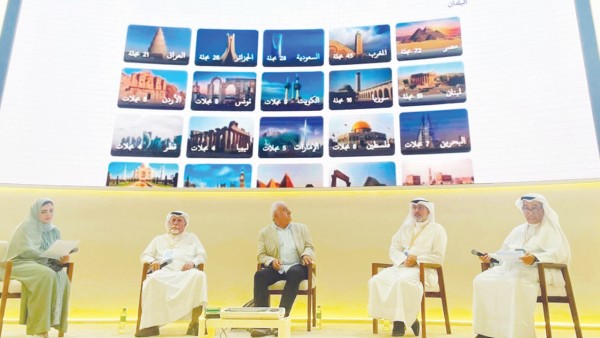
The symposium was part of the cultural program accompanying the Abu Dhabi International Book Fair.
The Abu Dhabi International Book Fair highlighted the legacy of the late Kuwaiti pioneer of Arabic computing, Muhammad Al-Sharq, through a specialized cultural symposium titled “Al-Sharq... When the Computer Mastered Arabic,” held as part of the fair’s accompanying cultural program.
The symposium shed light on Al-Sharq’s journey in digitally empowering the Arabic language, his contributions to developing Arabic software and supporting knowledge-based content, and his efforts to strengthen Arabic’s presence in the technical field. This early endeavor helped pave the way for the use of Arabic in computing.
It also examined the broader cultural impact of his initiatives and the connection they forged between technological innovation and linguistic and cultural identity in the Arab world.
Mobile Apps
Cultural News
Economic News
Participants in the symposium included Riyadh Al-Sharq, Kuwaiti novelist Saud Al-Sanousi, writer and publisher Samuel Shimon, and researcher Dr. Abdullah Al-Madani, with the session moderated by Abeer Al-Balushi.
Riyadh Al-Sharq outlined the trajectory of the Sakhr Arabic software and technology system from its launch in 1983 until 2004, presenting the “Al-Sharq Archive” and “Sahhali” applications.
The symposium served to illuminate one of Kuwait’s pioneering contributions to modern technology, whose impact has endured for decades. This began when Al-Sharq early on recognized that the Arab world’s entry into the computer age would be incomplete unless Arabic found its place within this technology.
His experience with “Sakhr” evolved into a project that went beyond the production of hardware and software, extending to the creation of digital Arabic content and the development of tools that enabled a wider presence for Arabic in the world of computing. Its impact remains evident to this day.
The symposium also focused on the dimension in Al-Sharq’s experience that united technology and culture. His interest in the Arabic language was not separate from his technological project but an integral part of it, a fact that gave his work an impact extending into the fields of knowledge, content, and Arab culture. This solidified the name “Sakhr” as one of the early and significant milestones in the history of Arabic computing.
The symposium did not limit itself to the technical aspects of Al-Sharq’s experience; it also addressed the extension of his project into culture, literature, and Arabic content. It highlighted his commitment to preserving and digitally making accessible the Arab cultural memory, including his initiative, the Al-Sharq Archive of Literary and Cultural Magazines.
