Central Bank's Interest Rate Hold Strengthens Markets and Curbs Inflation
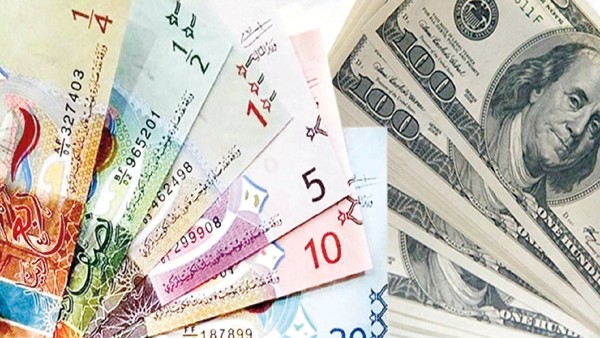
Linking the Dinar to a Currency Basket Frees It from Dollar Dependence
By Najiha Bilal
Kuwait’s monetary policy has once again demonstrated its high capacity for flexibility and adaptation to any new developments or data. This was particularly evident following the Central Bank of Kuwait’s recent strategic decision not to raise local interest rates. This measured Kuwaiti move came in the wake of the US Federal Reserve’s decision to raise its benchmark interest rate for the first time in over three years by 0.25 percentage points, bringing it to a range of 3.5% to 3.75%. This divergence clearly highlights contrasting economic orientations between the two parties and underscores the independence of Kuwait’s financial decision-making, which is based on a highly precise assessment of domestic needs.
In this context, a financial and legal advisor and official, in a special statement to "Al-Siyasa," confirmed that Kuwait’s decision not to follow the US monetary policy’s pace of interest rate hikes stems from the Central Bank of Kuwait’s adoption of a system linking the dinar to a diverse basket of global currencies, rather than an exclusive peg to the US dollar. This integrated system grants Kuwait’s monetary policy complete flexibility and full independence in formulating its decisions based on domestic inflation indicators, internal economic growth rates, and liquidity levels available in the Kuwaiti banking sector, free from automatic dependence on decisions issued from Washington.
The Central Bank’s Prudence
He pointed out that the greatest competitive advantage of the Kuwaiti economy lies in the Central Bank’s deep understanding of the local market’s specifics and the safety valves enjoyed by the central bank. The robustness of the banking sector and the abundance of domestic liquidity stand out as key pillars of this stability. Notably, the large monetary mass of deposits is concentrated in Kuwaiti banks, with a significant portion held in current and savings accounts with low or zero cost. This has given the Central Bank considerable leeway to maneuver without feeling compelled to match high US interest rates merely to prevent capital flight abroad. He further noted that the stability of the discount rate at 3.5% in 2026 and support for development contributed to breaking the exclusive link with the dollar.
He clarified that this approach aims to protect the purchasing power of the Kuwaiti dinar. Therefore, the Central Bank of Kuwait focused on curbing domestic inflation without stifling credit directed at the private sector and the economic cycle. This was confirmed by the latest official monetary data for 2026, which showed the stability of the discount rate at 3.5%. This monetary stability successfully enhanced the growth of credit facilities and supported various business sectors. The Kuwaiti experience has proven its notable success in balancing the requirements of internal growth with cautious and calculated responses to geopolitical and global changes, leading the national economy toward a phase of solid financial and monetary stability. This occurred despite the temporary contraction in GDP in the first quarter by 4.6% due to adherence to oil production quotas. However, international estimates indicate high resilience for the national economy, with forecasts expecting real GDP growth to reach 2.8%, supported by expectations of improved crude oil production rates later and increased business momentum.
Additional Burdens
The same source noted that the Central Bank’s decision not to follow the successive U.S. interest rate hikes will inevitably spare Kuwait’s business sectors and local companies from bearing massive additional financing burdens. Had the Central Bank chosen to raise rates at the same pace as the U.S., borrowing costs for commercial, service, and manufacturing firms would have surged to record levels, prompting these companies to instinctively raise the prices of their final products and services for consumers to offset financing costs. Instead, the stability of the discount rate has kept production and operating costs within their normal bounds, which has been reflected in clear stability in the prices of essential food, construction, and service goods.
