Nicaraguan Ambassador: Kuwait is a model of balance, diplomacy, and self-restraint
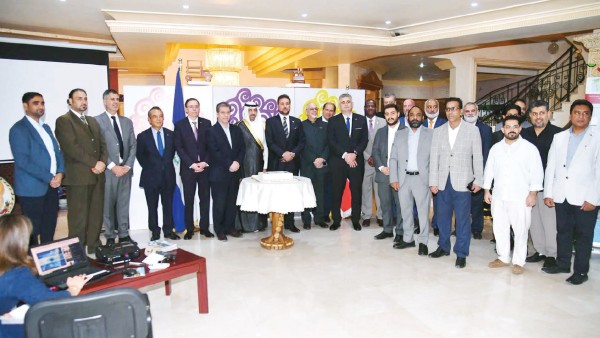
During the celebration of his country’s independence anniversary, he praised the bilateral relations and expressed hope for expanding cooperation.
The Kuwaiti leadership is characterized by wisdom in dealing with regional crises.
Kuwaiti loan of $15 million to develop roads and transportation in Nicaragua.
Mohammad Farara Lashtar, Ambassador of the Republic of Nicaragua to the country, affirmed the depth of relations between Kuwait and Nicaragua, noting that they are based on historical friendship, mutual respect, and fruitful developmental cooperation. He also expressed his country’s aspiration to expand cooperation with Kuwait in health, education, transportation, tourism, and investment.
Health
Constitutional Law and Civil Rights
Educational Resources
Lashtar praised the wisdom of the Kuwaiti leadership and its balanced approach in handling regional crises, emphasizing that Kuwait represents a model of balance, diplomacy, and self-restraint, and that dialogue remains the only path to achieving security, peace, and the resolution of crises.
These remarks were made to journalists on the sidelines of the Nicaraguan Embassy’s celebration of the 205th anniversary of the Republic’s independence. He clarified that diplomatic relations between the two countries were established in 1990, followed by the opening of his country’s embassy in Kuwait, which is Nicaragua’s first embassy in the Gulf region and the Arab world.
He noted that the embassy in Kuwait covers the Gulf Cooperation Council (GCC) countries, Jordan, Lebanon, and Libya, while another Nicaraguan embassy is located in Algeria. He affirmed Nicaragua’s aspiration to translate its distinguished political relations into broader practical partnerships.
Kuwait Fund
He praised the role of the Kuwait Fund for Arab Economic Development, explaining that its contributions helped establish and open the largest hospital in Nicaragua in a region with a population of approximately 700,000. The project was valued at $120 million, with the Fund contributing approximately 33 percent of the total.
He revealed that a major project in the transportation sector began implementation three to four months ago, including the construction of several key bridges to enhance connectivity between areas facing the Pacific Ocean and the Caribbean Sea.
He added that the Fund is providing a loan of approximately $15 million to develop roads and transportation infrastructure, replace aging infrastructure, and connect major areas for livestock, mining, and agricultural production, thereby reducing travel times and logistical costs in the northern Caribbean region.
In tourism, he expressed his hope to increase the number of Arab and Gulf visitors, noting that Arab tourism to Latin America remains limited and that the absence of direct flights is one of the main challenges, despite the possibility of reaching Nicaragua via Mexico, Brazil, Turkey, and some Central American countries.
Facilities and Incentives
He called on Kuwaitis and Gulf residents to discover Latin America, stating that the region “needs everything and has everything,” referring to its diverse resources and tourism and investment opportunities.
He clarified that citizens of Gulf countries can enter Nicaragua without a prior visa, and that his country offers investment facilities and incentives in agriculture, livestock, and tourism, including tax exemptions and facilitations, land-related privileges, and a banking system that allows investors to manage their businesses and transfer profits and funds in accordance with the law.
On regional developments, Lascher expressed his hope that the region would enjoy lasting peace, while expressing regret over what he described as misguided policies that have contributed to the exacerbation of crises. He addressed developments related to the Strait of Hormuz, noting that it had been open to global trade before crises and escalation-driven policies led to its closure. He argued that merely reopening the strait does not address the root causes of the problem, and that peace requires addressing the underlying sources of tension. He affirmed that Kuwait has been among the most affected countries by the repercussions of regional crises, yet it has dealt with them with wisdom, patience, balance, and diplomacy. He highlighted that Kuwait’s balanced policy has helped protect the country, and emphasized that “there is no escape and no alternative to dialogue.”
The Palestinian Cause
Regarding the Palestinian cause, he affirmed that Nicaragua’s relations with Palestine are “relations of blood and historical solidarity.” He explained that a number of fighters and combatants from his country participated in the Palestinian struggle and resistance, and that several of them were martyred during the years 1968, 1969, and 1970.
He added that Nicaragua does not maintain relations with Israel, and supports the Palestinian people’s right to freedom, independence, and self-determination.
The ceremony was attended by Counselor Ahmad Shinar Al-Bukhait from the Protocol Department, along with a number of ambassadors, members of the diplomatic corps, representatives of Kuwaiti entities, and friends of Nicaragua.
Opportunities and Guarantees in Sectors Requiring Investment
Ambassador Muhammad Farara Lascher affirmed that investors in the tourism sector can benefit from exemptions and incentives lasting up to approximately 20 years. He noted that the embassy has held meetings with Kuwaiti businesspeople and investors, some of whom visited Nicaragua and returned with positive impressions. However, translating this interest into concrete projects requires more time and greater awareness of the available opportunities.
He called on investors to diversify their destinations and not limit them to European markets, arguing that some of these markets may face political and legal risks, whereas Nicaragua offers opportunities, incentives, and guarantees in sectors that require new investments.
