After a two-day accountability session... Lebanese Parliament renews confidence in Nawaf Salam's government
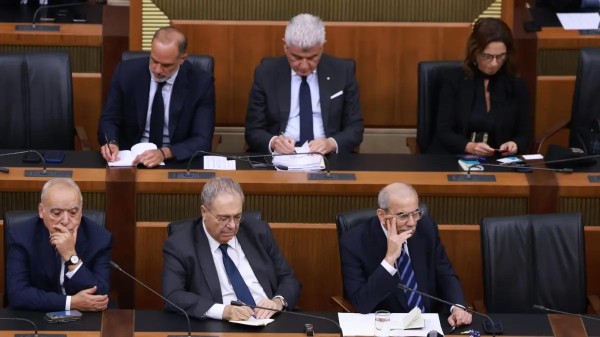
The Lebanese Parliament renewed its confidence in the government of Prime Minister Nawaf Salam on Wednesday, with 68 votes in favor, 12 MPs withholding confidence, and two abstaining, concluding a two-day session of questioning the government on several files.
In a speech following the vote, Salam said, “The citizen who demands the presence of the state is justified, and the complainant who laments its absence is justified in his complaint,” clarifying that the Framework Agreement with the Israeli occupation represents “a political framework for negotiations, not an agreement or treaty in the legal sense.”
He added that the Framework Agreement, reached under US sponsorship last June, includes a phased withdrawal of Israeli occupation forces from Lebanon and supports the exclusive extension of Lebanese state sovereignty over its territory, stressing that Lebanon’s position is stronger “when everyone stands behind the state.”
Health
Biological Sciences
Salam acknowledged that the expected outcomes of the Framework Agreement “have not yet been fully achieved,” given the continued attacks by occupation forces and their failure to withdraw from all Lebanese territories. He emphasized that the negotiation process “is not yet over,” and that strengthening national unity and extending state authority enhance Lebanon’s ability to secure its rights.
He pointed out that regaining the trust of brotherly and friendly countries in Lebanese institutions has enabled Lebanon to garner more Arab and international support for the army and reconstruction, affirming that the government pursues “a policy that rejects Lebanon becoming a battleground for axis conflicts, and works to put an end to the logic of dependency or seeking strength from abroad.”
Regarding relations with Syria and the refugee crisis, Salam clarified that the government is working to build a relationship with Syria based on mutual respect for sovereignty and shared interests, non-interference in internal affairs, alongside a review of bilateral agreements and the establishment of the principle of reciprocity.
He noted that transferring Syrians convicted in Lebanese prisons to serve the remainder of their sentences in their home country is in implementation of a judicial agreement similar to those with other countries, “and does not constitute a concession of sovereignty or a release of convicts.”
He added that the government’s organized plan to facilitate dignified and safe returns, in cooperation with the Syrian government and the international community, and through coordination on data, has led to the return of approximately 700,000 Syrians to their country.
