UN warns of repercussions of escalating fighting in Yemen on Red Sea and Bab al-Mandab security
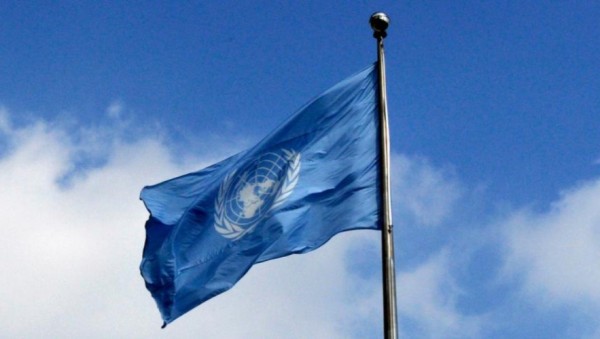
Under-Secretary-General warns Security Council of escalating fighting and its impact on navigation and civilians
Translated by Qiyas from السياسة — Original source
It reiterated its condemnation of Houthi attacks on civilian infrastructure and the energy sector in Saudi Arabia.
The United Nations warned of the repercussions of escalating fighting in Yemen on the security of the Red Sea and the Bab al-Mandab Strait, emphasizing the need to de-escalate tensions and ensure freedom of navigation in vital maritime corridors.
This came during a briefing delivered by the UN Under-Secretary-General for the Middle East and Asia and the Pacific, Khaled Khairi, on Tuesday evening, before an emergency session convened by the UN Security Council to discuss developments in the Bab al-Mandab Strait.
Khairi stated that the situation in the strait and its surrounding areas had become more volatile in recent days, with intensified fighting along Yemen’s western coast and growing concerns about its impact on civilians, humanitarian operations, and vital maritime routes.
He clarified that the Houthis continued their advance toward the Bab al-Mandab Strait, amid reports of their control over several islands in the southern Red Sea. At the same time, he noted that commercial shipping traffic through the Red Sea had not yet been affected, according to maritime tracking websites.
He added that the Yemeni government launched a counter-offensive following the Houthis’ advance last week. Clashes were reported in Marib, Lahij, Al Jawf, Hajjah, Al Bayda, and Saada, while counter-operations, including intense airstrikes, extended to Taiz.
On the humanitarian front, the UN official warned of worsening suffering among civilians, noting that the UN Office for the Coordination of Humanitarian Affairs (OCHA) reported the displacement of approximately 125,000 people across Yemen since the beginning of the current month.
He mentioned that the UN Office of the High Commissioner for Human Rights documented the deaths of eight people, half of whom were women and children, and 32 others injured during the same period. He called for the protection of civilians, respect for international humanitarian law, and the facilitation of humanitarian aid access.
Khairi pointed out that the escalation was not confined to Yemen. He noted that Houthi missile and drone attacks targeted Abha, Khamis Mushait, and Taif in the Kingdom of Saudi Arabia on September 14, injuring 13 people and damaging seven residences.
He also referred to attacks on the East-West Pipeline in the Riyadh and Medina regions by several drones, reportedly launched from within Iraq, which caused injuries, material damage, and the closure of the pipeline for repair works.
He stated that the Saudi Ministry of Foreign Affairs announced it would refrain from taking escalatory countermeasures at the request of Iraqi Prime Minister Ali Al-Zaidi, who ordered an urgent investigation. Al-Zaidi reiterated that Iraqi territory and airspace “will not serve as a platform for launching attacks on any state.”
Khairi reiterated the UN’s condemnation of cross-border Houthi attacks on civilian infrastructure and the energy sector in Saudi Arabia, emphasizing the necessity to ensure and respect the rights and freedoms of navigation in the Red Sea and the Bab al-Mandab Strait in accordance with international law and relevant Security Council resolutions, including Resolution 2722.
He stressed that the parties involved in Yemen must prioritize dialogue and engage constructively with UN-led efforts to achieve a political settlement through negotiation.
He warned that continued instability in the region’s vital maritime corridors could have repercussions extending beyond the region, affecting international peace and security, global energy markets, food security, and the economies of the most vulnerable countries.
