Iraqi Prime Minister: We will not allow our territory to be turned into a base for threatening neighboring countries or a arena for settling scores
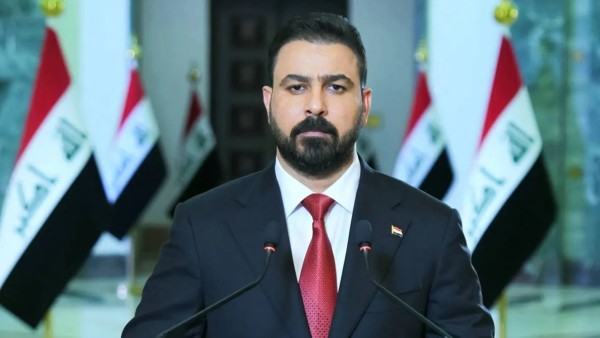
Centralizing weapons in the hands of the state is a prerequisite for building a unified Iraq... There can be no stability with multiple centers of power and decision-making.
Iraqi Prime Minister Ali Faleh Al-Zaidi affirmed that Baghdad will not allow Iraq’s territory to be transformed into a base for launching threats against neighboring countries or a arena for settling scores among regional and international powers. He stressed that the stability of the state requires the state to monopolize weapons and prevent the existence of competing centers of power or decision-making.
Al-Zaidi stated in an article published by the French newspaper "Le Figaro" and relayed by his media office on Monday, that Iraq maintains relations and communication channels with regional and international parties that enable it to contribute to de-escalating tensions, fostering calm, and opening new horizons for dialogue and understanding.
Global News
Economic News
Parliamentary News
He clarified that Iraq seeks to prevent escalation in the region and pursues a policy based on dialogue, balance, and non-alignment with any party, emphasizing that it will not allow its territory to be used to threaten neighboring countries or settle scores.
He stressed that Iraq’s ability to play a greater economic, political, and regional role begins from within, and that placing weapons under state control does not constitute a confrontation with any party, but is a fundamental condition for building a unified state. He noted that strengthening security, military, and cyber security institutions is among the government’s priorities.
Regarding relations with France, Al-Zaidi affirmed that they are based on historical ties and a strategic partnership in the fields of economy, energy, industry, and culture. He pointed out that his meeting with French President Emmanuel Macron represents an opportunity to redefine the relationship based on shared interests.
He said Iraq wants to open a new chapter in relations in which it is an active partner, explaining that his visit to France and Germany comes at an important time for the region, necessitating regional, European, and international efforts to contain tensions.
He noted that Iraq has become stronger, more stable, and more sovereign, making it a stronger partner for France and Europe and a contributor to the stability and prosperity of the region.
He highlighted that the Strait of Hormuz crisis has directly impacted Iraq’s ability to export oil, trade movements, and the stability of state resources, affirming that Europe’s interest in Iraq’s stability is linked to its economic and security interests.
He clarified that the importance of deepening security, military, and defense cooperation with Iraq’s partners will increase with the end of the international coalition’s mission on September 30.
He pointed out that Iraq’s strategic location will enhance its role as a transit corridor for trade and energy connecting the Gulf, Asia, Turkey, and Europe. He noted that the Development Road project will link the Gulf to Europe via a network of roads and railways spanning more than 1,900 kilometers.
He affirmed efforts to move from agreements and political frameworks to implementation, noting that the measure of success lies in the volume of investments, job opportunities, technology transfer, and the development of Iraqi capabilities.
Al-Zaidi concluded by emphasizing that the goal is to build a stronger, more stable, and sovereign Iraq, and to enhance and expand the partnership with France through deeper engagement in relations with Europe.
