Lebanese Minister of Economy to 'Al-Siyasa': Kuwait has never failed to support Beirut
War damages estimated at $11 billion
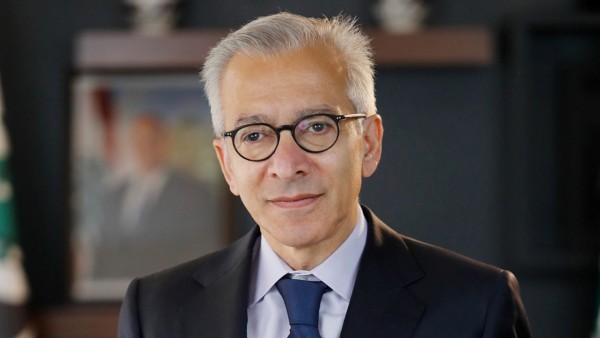
Lebanese Minister of Economy and Trade Amer al-Basit affirmed Lebanon’s commitment to the strongest fraternal relations with the State of Kuwait, which has never failed to extend a hand of assistance to Lebanon and its people in the darkest of circumstances. Emphasizing to "Al-Siyasa" the importance of developing bilateral relations between Lebanon and Kuwait across all levels, given the desire of both brotherly countries to strengthen their political and economic ties.
He pointed to the necessity of nurturing the historical and fraternal relations uniting the two brotherly countries, and working to develop economic cooperation to achieve the interests of both countries and their peoples. He also stressed the importance of enhancing cooperation between the Lebanese and Kuwaiti private sectors, considering this a fundamental pillar for developing bilateral economic relations and expanding their horizons, thereby contributing to achieving desired goals and strengthening economic cooperation between Lebanon and Kuwait.
Security Issues
Kuwait Weather
Political News
Minister al-Basit affirmed that there can be no economic recovery without security stability and political reforms that restore the state’s sovereignty and decision-making power. He noted that negotiations require faster and stronger momentum, and that ongoing diplomatic efforts aim to reinvigorate this process, with any political progress accompanied by internal Lebanese steps.
The Minister of Economy estimated the volume of damage and destruction at approximately $11 billion, covering homes, roads, electricity, factories, and farms, noting that the cost of displacement approaches $100 million per month. He believed that countries’ capacity to provide aid is not unlimited, and that Lebanon bears responsibility for implementing the required reforms, questioning whether the country can continue, after years of crisis, without an active banking sector.
Regarding the budget, al-Basit clarified that the core problem lies in requirements far exceeding available resources, considering that Lebanon faces two main options: controlling spending and prioritizing, or securing external resources. He acknowledged a consensus on the need to improve the conditions of military and security forces, but stressed that the solution cannot be achieved by funding increases without corresponding revenues or by printing money, warning against undermining monetary stability. He said that improving tax collection is one option, but the revenues generated from it alone are insufficient to cover these requirements.
In the banking sector, the Lebanese Minister of Economy considered that Lebanon can no longer tolerate further delays in addressing the crisis, emphasizing the necessity of reaching a clear roadmap for the recovery of deposits, alongside the approval and implementation of reforms related to restructuring the banking sector. He called for moving from the stage of discussion and delay to the stage of implementation, considering that the continuation of the banking crisis without a clear solution leaves the Lebanese economy facing one of the biggest obstacles to recovery.
Meanwhile, it was learned that the countries that confirmed their participation in the conference scheduled for September 17 to support Lebanese military and security forces are, in addition to Lebanon, France, and Jordan, Egypt, Turkey, Saudi Arabia, Italy, Greece, the Netherlands, Britain, Canada, Qatar, and Spain, as well as the European Union, the United Nations, and the United States of America.
The source indicated that other countries expected to participate in the conference will announce their attendance in the coming days.
