Where is 'moderate' Iran heading?
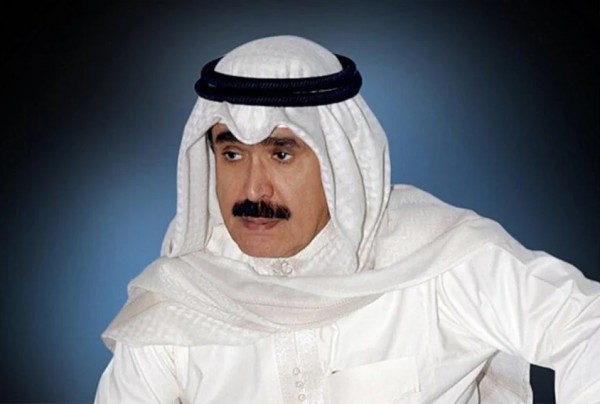
“There are many errors that make you appear weak,” is a Kuwaiti proverb that applies to Iran, as its current regime has rendered the country incapable, even of defending itself, after it expanded its sphere of influence to geographical distances far beyond its own borders.
This is why we stated yesterday that Iran has sought to exploit secondary contradictions to drive a wedge between the peoples of the region. A clear example of this was its attempt to leverage the deteriorating situation in Lebanon, particularly after the Israeli invasion of the country in 1982, in order to use a segment of the population to consolidate its position on the shores of the Mediterranean Sea.
Since then, it has meddled in Lebanese society, entrenching the idea of sectarian and confessional conflict in its most extreme forms. Once it succeeded in doing so, it worked to export this ideology to the rest of the Arab world, particularly in Syria, and later in Iraq after 2003, and subsequently in Yemen.
It also attempted to apply this strategy in the Gulf, but it failed in its efforts due to the wisdom of the leaders of the Gulf Cooperation Council (GCC) countries, the peoples’ strong sense of national belonging, and their subsequent rejection of violence and sectarian and confessional fitna. Consequently, the regime suffered defeats in all those attempts, despite its continued efforts to exploit its regional position to improve its standing at the negotiating table.
However, as previously noted, Iran today is “weak” or incapacitated. In standard Arabic, “rubada” refers to a man who is resident yet powerless. On this basis, it can be likened to a sick person who has begun seeking solutions to his problems beyond his borders, hoping to change reality and achieve his goals, after suffering painful blows from the United States. It also tried to manipulate the global economy by closing the Strait of Hormuz and mobilizing its proxies in Yemen to close the Bab al-Mandab Strait, but it failed again. This is because it has caused its closest allies, China and Russia, to adopt a differentiated stance toward it, especially after economic hardships began to strike their domestic situations. China is currently suffering from oil supply shortages, while Russia, engaged in its war with Ukraine, desperately needs an exit strategy that could materialize through its communications with Washington, which is seeking a breakthrough to end the current anomalous situation.
In contrast, Iran is no longer the troublesome regional and global power that once extorted states through terrorism. Today, it is too weak to even defend itself. Therefore, it is working to open channels with Arab Gulf states, hoping to restore relations to their former state. However, the outlook has been clearly blocked since the first missile launched by the Islamic Revolutionary Guard Corps (IRGC) against these countries. Trust is lost and would require approximately 50 years to rebuild between the region’s capitals and Tehran.
Iran today suffers from a compounded incapacity that cannot be resolved except by repairing the devastation caused by the current regime, which has persisted for 47 years through its terrorist behavior. Furthermore, urgent efforts are needed to remove the state from the burden of exorbitant costs, which will take decades to repay to the countries it has attacked.
Thus, Iran—the regime—is “weak.” It no longer has any hope other than submitting to the seven Gulf states and Iraq, reopening the Strait of Hormuz, and ceasing to ignite peripheral conflicts through its Houthi proxy against Saudi Arabia. Otherwise, it will enter a tunnel leading to its end.
