Buried Oil Pipelines: A Genuine Safety Valve for Energy Exports
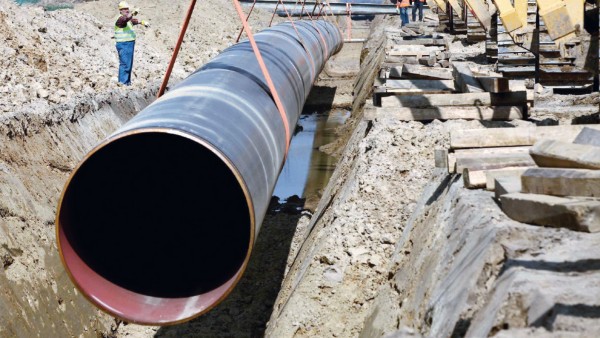
Oil expert: A reliable system to break the strait blockade and avoid the risk of Iranian attacks
By Najiha Bilal
The recent targeting of oil pipelines in the region, particularly the crude oil pumping lines in Saudi Arabia, has redrawn the strategic priority map for Gulf Cooperation Council (GCC) countries. Securing supply lines has become an existential issue that transcends narrow commercial calculations. As Kuwait seriously pursues the idea of laying oil pipelines through the territories of Saudi Arabia and neighboring countries to avoid critical maritime passages, a pivotal question has emerged, as posed by "Al-Siyasa": What is the engineering and security trade-off between laying these pipelines above ground or burying them underground?
In this context, a senior oil official emphasizes that the choice between buried and above-ground oil pipelines primarily depends on carefully balancing long-term strategic security against immediate economic costs and geographical realities. Each option has specific advantages and disadvantages that shape the state’s sovereign decision to protect its national wealth and ensure its uninterrupted flow to global markets.
Regarding the advantages of underground pipelines, the same source stated that they offer the highest levels of military and cyber security compared to exposed above-ground pipelines or traditional maritime transport through water straits. This is due to the difficulty of targeting them with drones or guided missiles. Furthermore, burial provides comprehensive engineering protection for the network against harsh climatic factors, such as extreme thermal fluctuations and sandstorms. These pipelines ensure a continuous and stable flow of oil, unaffected by escalating geopolitical disturbances in the Strait of Hormuz or the Bab al-Mandab. This grants Kuwait high and consistent reliability in the eyes of its international clients in the long term.
As for above-ground pipelines, the source noted that they face highly complex geographical and political challenges. They require crossing the territories of neighboring countries, such as Saudi Arabia or the Sultanate of Oman, to reach the Arabian Sea or the Red Sea. This makes the project entirely subject to regional political agreements and shared sovereignty calculations, in addition to the extremely high capital costs of building a massive pipeline network spanning hundreds of kilometers, which would require many years to implement.
Regarding the cost of building above-ground pipelines, the source continued that constructing above-ground pipelines to bypass the Strait of Hormuz and Bab al-Mandab represents a complex financial equation. It requires a careful balance between the huge capital costs of infrastructure and the volume of Kuwait’s annual oil revenues to protect its market share. At the same time, the total cost is directly affected by the pipeline route, which must pass through neighbors' territories to reach open waters like the Red Sea or the Arabian Sea. Preliminary financial estimates indicate that the cost of laying a buried pipeline ranges from $3 million to $5 million per kilometer, while the cost of an above-ground pipeline drops to approximately $1.5 million to $2.5 million per kilometer. However, the difference in maintenance and military/security protection for above-ground pipelines may consume this financial savings in the long term, especially when accounting for a route extending up to 1,200 kilometers to reach the Arabian Sea. This places decision-makers before a strategic investment option requiring massive financial flows starting from $3.6 billion and potentially exceeding the $6 billion threshold, depending on the geographical terrain and the required levels of engineering fortification.
The source concluded his statement by emphasizing that the establishment of an underground, geotechnically fortified, cross-border land pipeline remains the inevitable and most sustainable option to ensure a continuous and secure flow of crude oil, insulated from the fluctuations of maritime straits and threats to maritime navigation. He added that, despite its high cost, constructing this system—stretching up to 1,200 kilometers—represents a genuine safety valve and a new formulation of energy geopolitics, ensuring Kuwait safeguards its global market share and maintains its historical reliability in the eyes of its international partners amid escalating regional tensions.
