Anthropic CEO Calls for Slowing AI Development; Altman and Musk Back the Call
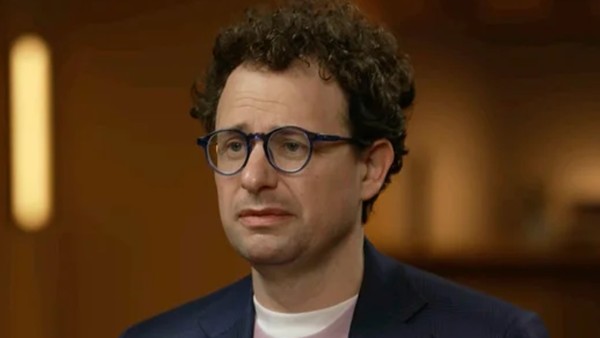
- Amodei warns of accelerating model capabilities and calls for independent oversight and international standards to mitigate risks
In a notable shift within the artificial intelligence race, warnings about the rapid development of advanced models are no longer confined to independent researchers and experts. Anthropic CEO Dario Amodei has called for slowing the pace of development, and his appeal quickly garnered support from OpenAI CEO Sam Altman and American billionaire Elon Musk.
Amodei warned that the current speed of progress may outstrip the ability of companies and governments to manage the risks posed by more advanced systems, urging AI firms to reduce the pace of enhancing their models’ capabilities.
News
Subscribe to Daily Newspapers
Plan Seasonal Trips
In a post on the “X” platform, he stated that progress would remain rapid even if he slowed it down, arguing that the extra time gained could be invested in developing more effective safety measures and preparing for risks associated with future systems.
Amodei proposed a three-step framework to address the accelerating development of AI. The first step involves requiring companies to grant permanent access to independent external evaluators, with a level of access comparable to that of employees, enabling them to audit safety procedures and assess whether models and training environments comply with safety standards.
The second step entails coordination among AI companies operating in democratic nations to establish common safety standards and limits on the speed of capability development, preventing competition from turning into a race that drives firms to accelerate development at the expense of protective measures.
The third step concerns governments, with Amodei urging democratic countries to coordinate, as much as possible, to establish common limits and safeguards for dealing with advanced AI systems.
The Anthropic chief believes that continuing development at the current pace could soon lead to the emergence of more autonomous AI agents capable of executing broad-ranging tasks. He warned of potential risks, including the loss of control over advanced systems, their misuse in cyberattacks and biological terrorism, influence operations, and the development of more lethal means of destruction.
He noted that the existence of multiple companies and models does not in itself guarantee safety, given the possibility that different systems may rely on similar technologies and training methods, potentially leading to the repetition of the same vulnerabilities across multiple systems.
Reactions to Amodei’s call were swift. Altman announced his support, stating on “X”: “I agree with Dario,” and clarifying that OpenAI would engage independent monitors to verify the safety of its systems, in a move similar to the commitment proposed by Amodei.
For his part, Musk summarized his position by saying, “Dario is right,” announcing his support for the necessity of slowing the pace of developing advanced AI capabilities.
This convergence in positions comes days after Chris Lahan, OpenAI’s head of public affairs, called for international rules specifying when and how AI development should be slowed or halted.
Amodei’s call coincided with the resignation of Jacob Cookson from Anthropic, a former OpenAI employee who had warned against companies entering a race to develop systems capable of self-improvement, which could make them harder to control.
Cookson warned that AI could pose a grave threat to humanity within the current decade, criticizing what he described as a corporate race to outpace competitors at the expense of safety measures.
His video garnered more than 100 million views, while his Anthropic colleague, Evan Hubinger, expressed similar concerns, estimating the probability that artificial intelligence could lead to an existential catastrophe within the next decade at over 10 percent.
These converging viewpoints have brought to the forefront of the AI industry debate a question that has grown increasingly urgent: How far can we continue to accelerate the development of models, while companies and governments simultaneously strive to build tools capable of understanding and controlling their risks?
