Qatar: Normalization with a state of no-war, no-peace is impossible... Reopening the Strait of Hormuz is a top priority
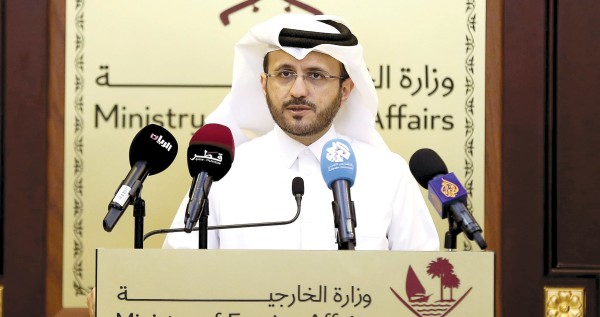
- Al-Ansari: Gulf states will continue to coexist with Iran... The primary responsibility for repairing relations lies with Tehran
- The use of military pressure and sanctions will not yield the desired results... Dialogue is the way out of crises
Qatar’s Foreign Ministry spokesperson, Majid Al-Ansari, stated that “normalizing the state of no war, no peace in the region is unacceptable,” affirming that his country continues to work with partners in the region and around the world to resume dialogue, resolve the crisis, and end the state of tension in the region.
Al-Ansari added that Gulf states recognize the difficulty of rebuilding trust with Iran following its attacks on countries in the region, but they cannot consider their differences with Tehran as permanent. He emphasized that Gulf states will continue to coexist with Tehran and that a way must ultimately be found to restore relations.
In comments to the UAE-based magazine *The National*, he clarified that the responsibility for repairing relations lies primarily with Tehran, through practicing good-neighborly relations and recognizing that it lives next to “neighbors, not enemies.” He noted that the use of military pressure or any other form of pressure would not achieve the desired results.
Al-Ansari said that Qatar remains in contact with both the Iranian and American sides, but has not seen the conflict reach a point where an end is in sight. He warned that the continuation of the war imposes increasing economic and security costs on the region and the world.
Regarding the future of the Strait of Hormuz, Al-Ansari affirmed that its reopening is of “utmost importance” to Qatar and all countries in the region. He pointed out that the waterway will remain vital to the global economy despite the emergence of alternative routes, rejecting the notion that the strait would become “worthless” within two years, as stated by US Treasury Secretary Scott Bessent.
He stressed that the importance of the Gulf region to the global economy extends beyond oil to include petrochemicals, fertilizers, and other essential commodities.
Regarding US sanctions on Iran, Al-Ansari said that experiences with imposing sanctions on Iraq, Libya, and other countries have not achieved “the desired result directly.” He affirmed that Qatar’s position is that “dialogue is the only way out of regional crises,” and that desired results are achieved “at the negotiating table.”
For his part, Ibrahim bin Sultan Al-Hashimi, Director of the Media and Communications Department at Qatar’s Ministry of Foreign Affairs, said that Doha calls for the immediate and unconditional reopening of the Strait of Hormuz as an international waterway, and rejects its use as a tool for pressure.
Al-Hashimi affirmed that normalizing the state of “no war, no peace” in the region is unacceptable due to the drain it causes on the resources of peoples and economies. He noted that Qatar is working with its regional and international partners, including China, to resume dialogue and diplomacy and to de-escalate tensions.
He stressed that reopening the Strait of Hormuz is a top priority for Qatar and countries in the region, given its importance to regional and global economies and navigation, affirming that using it as a bargaining chip is “rejected and unacceptable.”
He added that Qatar had sent official protest notes to Iran regarding cyberattacks targeting institutions in the country, emphasizing that the current stage requires continuing dialogue and negotiations rather than exchanging accusations.
Al-Hashimi also affirmed that Doha will continue to work for peace and stability, describing Qatar as a reliable international partner and an honest mediator trusted by international partners.
