Arab Foreign Ministers Condemn Iranian Attacks on Gulf States, Jordan, and Iraq, Demand Immediate Cessation
- They rejected any Iranian fees or arrangements that restrict freedom of navigation in the Strait of Hormuz.
- They affirmed the right of Arab states to self-defense and to protect their ships, ports, and vital facilities.
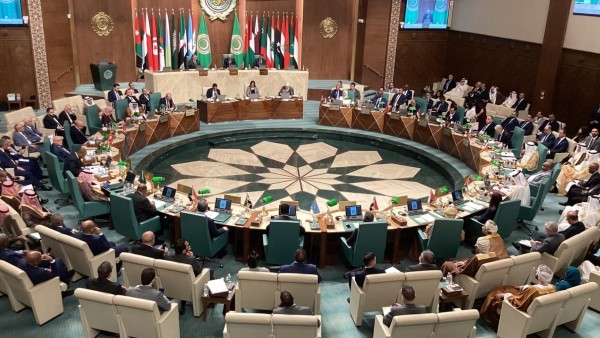
The Council of the Arab League at the level of Foreign Ministers condemned on Monday the ongoing Iranian attacks on the Gulf Cooperation Council (GCC) countries, Jordan, and Iraq, for violating their sovereignty and territorial integrity and breaching international law and the UN Charter.
In a decision issued at the conclusion of its 166th regular session, presided over by Tunisia, the Council affirmed that these attacks constitute a violation of UN Security Council Resolution 2817 and the principle of non-use of force, as well as a threat to regional and international peace and security.
Browse geographical maps
Subscribe to digital newspapers
Subscribe to daily newspapers
The Council called on Iran to fully comply with its obligations under international law and relevant UN resolutions, and to immediately and permanently halt any attacks or threats targeting Arab states, their territories, citizens, or civilian and vital facilities, urging the addressing of the causes of tension through dialogue, negotiations, and peaceful means.
It also condemned Iran’s illegal closure of the Strait of Hormuz and its continued obstruction and disruption of navigation in the Bab al-Mandab through its proxies in the region, affirming that these acts pose a threat to the security of sea lanes, international trade, and global energy security.
It firmly rejected the establishment by Iran of the so-called “Persian Gulf Strait Authority” and any characterization of it as a sovereign entity responsible for managing and regulating ship traffic through the Strait of Hormuz. It also rejected the imposition of any fees under any name on the passage of ships through the strait or the adoption of unilateral measures aimed at subjecting freedom of navigation to Iranian regulatory or supervisory authority.
It strongly condemned any attacks targeting commercial and civilian ships, affirming Iran’s responsibility for the immediate and unconditional reopening of the Strait of Hormuz and the restoration of freedom of navigation therein in accordance with international law, including the removal of mines and obstacles to safe passage.
Arab Foreign Ministers emphasized the strategic importance of the Strait of Hormuz, Bab al-Mandab, and the Red Sea for international trade, energy supplies, and global supply chains, warning of the consequences of any attempt to disrupt navigation in these waterways on economic and energy security.
They stressed that the security and stability of the region can only be achieved through dialogue, understanding, and respect for the principles of good neighborliness, sovereignty, and non-interference in internal affairs, calling for an immediate halt to escalation and military actions, and for dialogue and diplomacy to prevail.
They called on the UN Security Council to fulfill its responsibilities in maintaining international peace and security, and to support efforts aimed at halting escalation and ensuring the full implementation of its 2026 Resolution 2817, and to take necessary measures against any acts or threats that could obstruct freedom of navigation or threaten the security and safety of international sea lanes.
They reaffirmed Arab states’ commitment to the freedom and safety of navigation and the right of passage in the Strait of Hormuz and Bab al-Mandab, and rejected the imposition of any restrictions or transit fees of any kind, or unilateral arrangements that hinder maritime navigation.
They affirmed that ensuring freedom of navigation is a shared international responsibility requiring action by the international community, expressing their readiness to work with all countries in the region and the International Maritime Organization to ensure the smooth flow of maritime navigation without obstacles and to reach permanent arrangements consistent with international law, the UN Convention on the Law of the Sea, and state sovereignty.
Review demographic data
Subscribe to digital newspapers
Try calendar applications
They reaffirmed the inherent right of individual or collective self-defense in response to the armed attacks launched by Iran, as stipulated in Article 51 of the UN Charter, emphasizing the right of Arab states to protect their ships, ports, maritime facilities, critical infrastructure, and transport means, and to take necessary measures in accordance with international law.
The Council noted that states may take purely defensive measures to protect their ships and contribute to restoring freedom of navigation in accordance with international law, based on paragraph 20 of the International Maritime Organization’s resolution issued in July 2026.
It affirmed that Iran bears international responsibility for the attacks and the resulting obligations under international law to provide reparation for injuries and economic losses, including damage to ships, ports, maritime facilities, and energy infrastructure.
It reiterated Arab states’ support for the right of affected states to resort to competent international and regional institutions and mechanisms to protect their rights and obtain necessary decisions to ensure accountability and reparation in accordance with international law.
The Arab League Council expressed full Arab solidarity with Arab states targeted by Iran, stressing the seriousness of continued Iranian provocative attempts to draw Arab states into the crisis.
The Council tasked Arab groups in international organizations, Arab ambassadorial councils, and Arab missions to the United Nations, the International Maritime Organization, and other relevant international forums with taking urgent and coordinated action to convey the resolution’s content and mobilize international support to protect freedom of navigation and ensure the security and safety of sea lanes and energy corridors.
Kuwait participated in the 166th session’s proceedings through a delegation headed by Deputy Foreign Minister Ambassador Hamad Al-Muqdad.
