'Tatbeeqi' and 'Customs' Discuss Developing Specializations and Programs to Meet the Needs of Customs Work
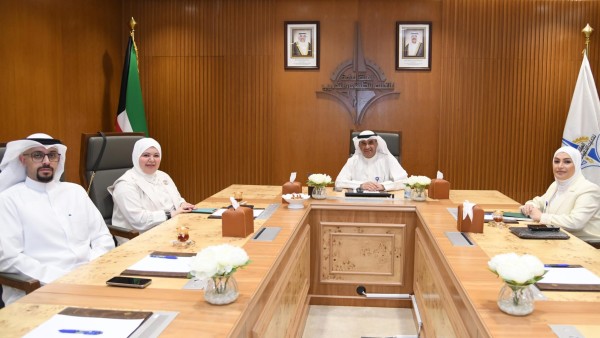
They discussed the formation of a joint committee and linking the outcomes of education and training to future projects and the labor market. Dr. Hassan Mohammed Al-Fajam, Director General of the Public Authority for App
Translated by Alqyas from Al-Seyassah — Original source
They discussed the formation of a joint committee and linking the outcomes of education and training to future projects and the labor market.
Dr. Hassan Mohammed Al-Fajam, Director General of the Public Authority for Applied Education and Training, held discussions with a delegation from the General Customs Authority, led by Deputy Director General for Administrative and Financial Affairs Fatima Hamza Al-Qallaf, on ways to enhance academic and training cooperation and develop programs and specializations that meet the needs of customs work and the labor market.
The Customs delegation included Mohammed Falah Al-Muwaisiri, Director of the Office of the Deputy Director General for Administrative, Financial, and Technical Affairs. Eng. Mahaqaz Al-Qabazard, Director of the Higher Institute of Communications and Navigation, attended the meeting.
Plans for Seasonal Trips
Try Calendar Apps
Subscribe to Daily Newspapers
The two sides discussed admission conditions and proposed specializations in alignment with the state’s development plans and future projects, including Kuwait International Airport Terminal 2 (T2), the railway network, and Shuwaikh Port. They also explored the formation of a joint committee to prepare a comprehensive vision for cooperation and to monitor the implementation of joint programs and initiatives.
Al-Fajam emphasized the Authority’s commitment to strengthening its partnerships with government entities and linking educational and training outcomes to labor market needs. He noted that cooperation with Customs aims to introduce specialized programs that contribute to preparing qualified national cadres for vital sectors and future projects.
For her part, Al-Qallaf stressed the importance of developing curricula and training programs related to customs work to keep pace with modern requirements, including Gulf and international customs laws and regulations, as well as customs inspection, auditing, security, and safety skills.
At the conclusion of the meeting, both sides affirmed their continued coordination to enhance integration between educational and training outcomes and the needs of government sectors, and to improve the efficiency of national cadres in customs fields.
