Israel releases a Lebanese prisoner... and 4 more on the path to freedom!
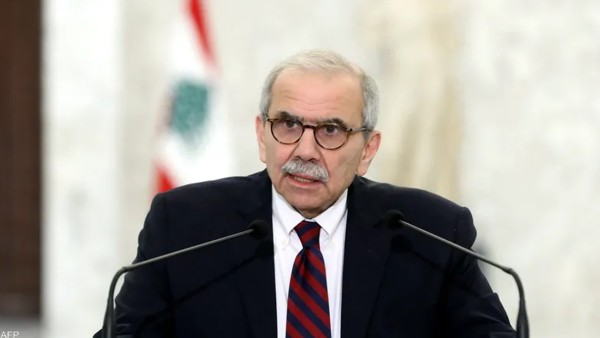
Salam: We will continue working until the release of all our prisoners... Government Presidency tells “Al-Siyasa”: We will accept nothing less than a complete halt to the war
Beirut – “Al-Siyasa” – Omar Al-Bardan
As Lebanese Prime Minister Nawaf Salam pledged to continue efforts until the release of all prisoners and the clarification of the fate of the missing, and to achieve a complete Israeli occupation withdrawal from Lebanese territories, sources close to the Lebanese Government Presidency told “Al-Siyasa” that Lebanon is committed to securing the return of all Lebanese prisoners held in Israeli jails. They emphasized that Salam continues his contacts with the United States to compel Israel to fulfill all its commitments under the framework agreement, stressing that the occupation has no choice but to implement every pledge it has made, and that Lebanon will accept nothing less than a complete ceasefire, a full Israeli withdrawal from all occupied Lebanese territories, the release of prisoners, and the commencement of reconstruction efforts.
Meanwhile, the Lebanese Army received Lebanese prisoner Malik Ghazi through the International Committee of the Red Cross yesterday, after Israeli occupation authorities released him and handed him over at the Nahr al-Kalb border crossing in southern Lebanon. He was then transferred to the Lebanese Army’s intelligence office at the Benoit Barakat barracks in Sidon.
In a related development, the office of Israeli Prime Minister Benjamin Netanyahu stated that Tel Aviv would release five Lebanese detainees arrested in southern Lebanon after it was determined they had no ties to armed groups. The office revealed that the decision came amid talks with Lebanon to recover the remains of Jewish community leaders who were kidnapped and killed there in the mid-1980s, noting that Israel and Lebanon had made efforts in recent months to locate the remains, including ground operations.
Channel 12 reported that the occupation state expects to release four Lebanese prisoners of war and hand them over to Lebanon, in coordination with the United States. According to information in Beirut, the Israeli move was taken at the request of the Americans to give a new impetus to the negotiation process with Lebanon, demonstrating Israel’s commitment to this option. It was learned that U.S. Ambassador to Lebanon Michael Weiss asked Prime Minister Netanyahu to take this step to demonstrate Israel’s commitment to its obligations in this regard, and that similar steps are expected from Israel in the near future.
Meanwhile, Lebanese Prime Minister Nawaf Salam affirmed that the return of any released Lebanese citizen to his homeland in good health constitutes an important step toward addressing this file. Salam extended his thanks to the U.S. administration, particularly to Ambassador Michel Issa, for the efforts made in this regard, stating, “We will continue working until the release of all our prisoners, the clarification of the fate of the missing, and the complete Israeli withdrawal from Lebanese territories.” He noted that “however difficult the negotiation process may seem, we will continue to mobilize all required efforts to safeguard Lebanon’s rights and the interests of Lebanese citizens, especially our people in the South, and to ensure their safe and dignified return to their land and villages, as well as to restore the state’s full sovereignty over its territories.”
In a separate development, Lebanese President Joseph Aoun reaffirmed his country’s commitment to maintaining the presence of the United Nations Interim Force in Lebanon (UNIFIL). He accused Israel of continuing to violate the framework agreement reached in Washington. In a statement, the Lebanese Presidency conveyed that during a meeting with Dutch State Secretary for Foreign Trade and Development Cooperation, Shurd Shurdsumma, at Baabda Palace in Beirut, Aoun stressed that Israel continues to breach the agreement reached in the Lebanese-American-Israeli talks through ongoing shelling and the destruction of southern villages it occupies, as well as the bulldozing of homes and properties. Aoun emphasized that the Lebanese Army is fully carrying out its duties in the model areas where it has redeployed, and that any claims to the contrary aim to disparage the army, question its role, and cast doubt on its commitment to the decisions of the political authority. He reiterated that the reconstruction of the South is the responsibility of the Lebanese state, adding that this cannot be achieved while Israeli occupation persists, while welcoming any international assistance in this regard, particularly since several countries have agreed to convene an international conference to provide the necessary support.
Follow political news
Newspaper archive
Subscribe to daily newspapers
While affirming Lebanon’s commitment to the continued presence of the United Nations Interim Force in Lebanon (UNIFIL), citing its vital role, the Lebanese President noted that if its mandate cannot be renewed, Lebanon welcomes any fraternal or friendly country willing to assume UNIFIL’s responsibilities, particularly in providing support to the Lebanese Army and southern citizens in humanitarian, social, health, and educational sectors. He pointed out that consultations are underway to find a legal framework for such an international presence.
The Dutch minister underscored his country’s solidarity with Lebanon and its people amid the difficult circumstances they face, adding that his visit to Nabatieh allowed him to closely assess the scale of civilians’ suffering and the war’s repercussions on their lives and communities. He stated he would bring to The Hague the humanitarian stories he had heard and witnessed, reflecting the reality endured by Lebanese citizens.
The meeting addressed the support programs the Netherlands provides to Lebanon, particularly assistance to the Lebanese Army, as well as shelter, education, and livelihood initiatives, which the Dutch government is working to enhance this year. The discussion also highlighted the importance of accountability for violations of international humanitarian law and the support the Netherlands offers in this regard, including help in strengthening capacities for documenting and investigating violations, and supporting the work of the committee established by Lebanon for this purpose, chaired by Lebanese Deputy Prime Minister Tariq Majzoub.
The talks also explored possibilities for expanding economic cooperation between Lebanon and the Netherlands, especially in trade, entrepreneurship, and innovation. Emphasis was placed on the importance of Lebanon’s stability for regional and European security, and on the significant opportunities to develop bilateral partnership. The meeting also covered the situation in the south and the role of UNIFIL, as well as developments related to extending state authority across all Lebanese territories and monopolizing weapons in state hands, as part of efforts to strengthen Lebanon’s sovereignty and stability.
While Lebanese lawmakers called for a review of United Nations Security Council Resolution 2790, which ends the mandate of the United Nations Interim Force in Lebanon (UNIFIL), warning of a vacuum following its withdrawal, Fadi Marka, head of the Foreign Affairs and Expatriates Committee in parliament, stated that MPs unanimously agreed on the necessity of maintaining the UN presence and supporting the Lebanese army to prevent any security gap in the south. He added that the committee would continue its consultations with both permanent and non-permanent members of the Security Council to support the continued presence of UN forces in the south.
Meanwhile, the Israeli occupation army intensified its aggression against southern Lebanon, detonating homes and infrastructure, launching airstrikes and artillery shelling, and conducting incursions into several areas. The Lebanese News Agency reported that Israeli occupation forces detonated homes and infrastructure in the Sharqi and Fourth neighborhoods in the Musha’ area, between the towns of Mansouri and Majdal Zoun. The agency added that the occupation forces used barrels containing explosives with high destructive capacity in the demolition operations.
In the Sidon district, Israeli artillery bombarded the town of Mansouri, coinciding with the movement of Israeli vehicles transporting rigged fuel canisters toward the town. An Israeli “Merkava” tank and a “D9” bulldozer also penetrated into Mansouri. Additionally, an Israeli drone dropped two sound bombs on the Al-Aziya-Mansouri road.
Yesterday dawn saw Israeli drones flying over the Sidon area. In the Nabatieh district, the occupation air force launched two strikes on the Harj Ali Al-Taher area. In the Bint Jbeil district of Nabatieh, occupation forces carried out explosions in the towns of Haddatha and Wadi Baraishit. In the Hasbaya district, an Israeli occupation force infiltrated the Mzar’a Haltah area, surrounded several homes, and prevented some residents from leaving their houses.
