Lebanese President: We remain committed to the presence of UNIFIL... and the Israeli occupation continues to violate the agreement
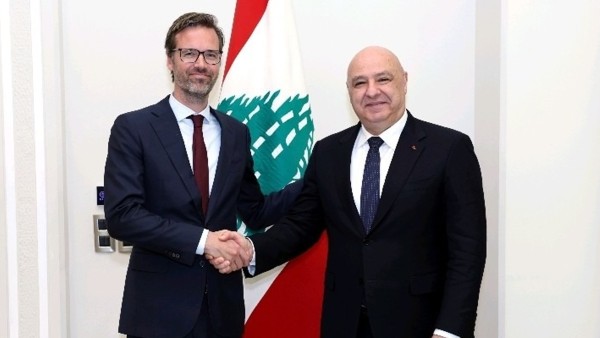
Lebanese President Joseph Aoun affirmed on Thursday his country’s commitment to maintaining the presence of the United Nations Interim Force in Lebanon (UNIFIL), accusing the Israeli occupation of continuing to violate the “framework agreement” reached in Washington.
In a statement, the Lebanese Presidency quoted Aoun as saying that during his meeting with Dutch Minister of Foreign Trade and Development Cooperation, Shurd Shurdsumma, at the Baabda Presidential Palace in Beirut, the Israeli occupation continued to breach the agreement reached in Lebanese-American-Israeli negotiations through ongoing shelling, the destruction of villages in the occupied southern areas, and the bulldozing of homes and properties.
Law
Arts and Entertainment
Aoun stressed that the Lebanese Army is “fully carrying out its duties in the model areas where it has redeployed,” adding that any claims to the contrary aim to disparage the army, cast doubt on its role, and question its commitment to the decisions of the political authority.
He reiterated that the reconstruction of the south is the responsibility of the Lebanese state, noting that this cannot be achieved while the Israeli occupation persists. He welcomed any international assistance in this regard, particularly as several countries have agreed to convene an international conference to provide the necessary support.
The Lebanese president reaffirmed his country’s commitment to the continued presence of UNIFIL, citing its important role. He pointed out that “if its mandate cannot be renewed, Lebanon welcomes any brotherly or friendly country willing to complete UNIFIL’s work, particularly in providing support to the army and southern citizens in humanitarian, social, health, and educational fields.”
Aoun noted that consultations are underway to find a legal framework for such an international presence.
For his part, the Dutch minister affirmed his country’s solidarity with Lebanon and its people amid the difficult circumstances they are facing, noting that his visit to Nabatieh yesterday allowed him to closely observe the extent of the suffering endured by citizens and the war’s repercussions on their lives and areas.
He said he would bring to The Hague the humanitarian stories he heard and witnessed, reflecting the reality experienced by Lebanese people.
The meeting discussed the support programs provided by the Netherlands to Lebanon, particularly support for the Lebanese Army, as well as shelter, education, and livelihood programs, which the Dutch government is working to enhance this year.
The importance of accountability for violations of international humanitarian law was also addressed, along with the support the Netherlands provides in this area, including assistance in strengthening capacities related to documenting and investigating violations, and supporting the work of the committee established by Lebanon for this purpose, chaired by Deputy Prime Minister Dr. Tariq Maatari.
The discussion also covered the potential to expand economic cooperation between Lebanon and the Netherlands, particularly in the fields of trade, entrepreneurship, and innovation, emphasizing the importance of Lebanon’s stability for the security of the region and Europe, and highlighting significant opportunities to develop bilateral partnership.
The meeting also touched upon the situation in the south and the role of UNIFIL, as well as developments related to extending state authority over all Lebanese territories and monopolizing weapons in its hands, within the framework of strengthening Lebanon’s sovereignty and stability.
