Saqer Al-Ghanim: Iran has shifted from a 'potential threat' to a 'direct and established threat'
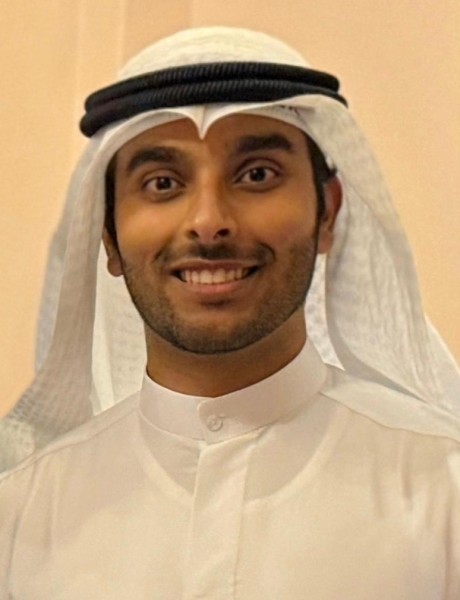
Kuwaiti researcher at Reconnaissance participates in international seminar on “The Gulf War from the Perspective of Gulf States”
Security partnership with the United States is indispensable... but Iran remains a neighbor that must be engaged in dialogue
“Unilateral decisions” render the security partnership with Washington “strategically incomplete”
As part of an international research collaboration with the Argentine Council for International Relations (CARI), Saqr Ghanem Al-Ghanem, a Kuwaiti researcher at the Reconnaissance Center for Research and Studies, participated in a seminar organized by the Council titled “The Gulf War: A Perspective from Gulf States,” alongside a distinguished group of researchers and specialists in regional affairs.
Economic News
Editorials
Al-Ghanem presented a Kuwaiti perspective on the transformations imposed by the war on the Gulf’s security environment, arguing that recent developments have shifted Iran’s status in Kuwaiti security calculations “from a potential threat to a direct and confirmed one, while it remains, simultaneously, a neighbor with whom dialogue cannot be bypassed.”
He addressed four key challenges the war has exposed regarding the security of Kuwait and the Gulf: “the ability of air defense systems to counter saturation attacks and their associated costs, the protection of critical infrastructure, the security of maritime chokepoints, and the need for diplomacy backed by effective deterrence capabilities.” He pointed to “the paradox facing Kuwait in its relationship with the United States; while the security partnership with Washington remains an indispensable element of Kuwait’s defense system,” it remains, according to his analysis, “strategically incomplete, given unilateral decisions that may have direct repercussions on countries in the region.”
Al-Ghanem concluded that “the future of Gulf security is likely to move toward a multi-layered defense approach, both national and Gulf-based, while maintaining the security partnership with the United States, rather than toward a post-American security architecture.”
Joining Al-Ghanem in the seminar were: Paulo Botta, Director of the Middle East Committee at the Argentine Council for International Relations; Adel Abdelghaffar, Resident Researcher at the Australian Strategic Policy Institute; and Aliaa Darwish Al-Naemi, researcher at the Trends Research and Advisory Institute. This participation aligns with Reconnaissance’s strategy to expand the presence of Kuwaiti researchers in international research dialogues and to convey the Kuwaiti and Gulf perspective to institutions and think tanks beyond traditional circles in the United States and Europe, including Latin America.
The Argentine Council for International Relations is a specialized institution focused on the study of international relations and foreign policy, serving as a platform for dialogue among researchers, diplomats, and specialists in international issues.
About Saqr Ghanem Al-Ghanem:
● A researcher in the Political Affairs Unit at the Reconnaissance Center for Research and Studies, holding a Master’s degree in International Relations from King’s College London and a Bachelor’s degree in International Relations from the American University of Kuwait.
● He has participated in numerous international programs and initiatives, including activities related to the United Nations, alongside experience in both research and humanitarian fields.
