The World's Longest Musical Piece... Began 25 Years Ago and Will End in 2640
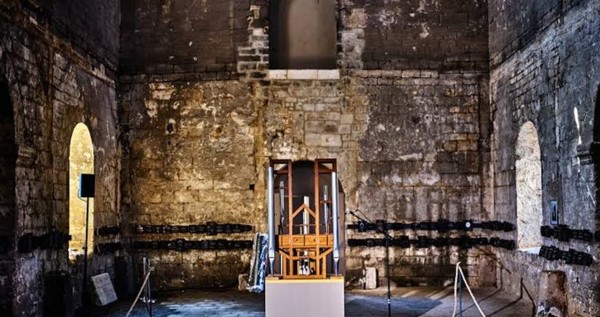
In the town of Halberstadt in eastern Germany, the age of a musical performance is not measured in minutes or hours, but in centuries. Inside a small historic church, a composition that began nearly 25 years ago continues, and the world will not hear its final note until the year 2640.
The Burchardi Church is hosting a performance of John Cage’s “Organ²/ASLSP,” by the late American composer, as part of an exceptional musical project planned to last 639 years, making it one of the longest and most unusual musical performances in the world.
The letters “ASLSP” stand for “As Slow as Possible.” Cage originally composed the work for piano in 1985, before adapting it for organ in 1987. After his death in 1992, the concept evolved into a project that would outlive any performer or listener.
The Beginning Was Silence
The Halberstadt project launched in 2000, with the performance of the piece beginning on September 5, 2001, coinciding with the 89th anniversary of Cage’s birth. Ironically, the performance did not start with a note, but with silence that lasted until February 5, 2003, when the first organ sound was heard. The performance is scheduled to continue until September 4, 2640.
The 639-year duration was not chosen arbitrarily. In 1361, the Faber organ was completed at Halberstadt Cathedral. It was described as the first church organ with a 12-note keyboard layout, paving the way for the distribution used in modern keyboard instruments.
Breaking News
Economic News
With a 639-year gap between 1361 and the start of the Halberstadt project in 2000, this same duration was selected as the timeframe for the performance.
On August 5, 2026, the project reached an exceptional milestone by its extremely slow standards, when more than 150 people gathered inside the church to witness the seventeenth sound change since the performance began, while dozens of others followed the event via live stream outside.
Attendees listened for three minutes to the previous configuration of seven notes before an eighth pipe was manually added to the organ, introducing a new note to the composition.
After another three minutes of listening to the new sound, applause erupted inside the church. After nearly 25 years, the project has completed only about 4% of its 639-year journey.
An Organ Played Without a Player
No musician sits at the organ continuously. A system of electric bellows maintains airflow through the pipes and sustains the sound, while project staff intervene manually when it is time to change the notes, either by adding new sounds or ending existing ones.
Those wishing to hear the next change must wait until October 5, 2027, when the current eight-note configuration will shift to seven.
But the biggest question remains: Who will witness the finale in 2640?
Project organizers have even considered that distant moment, offering “final tickets” that are transferable and resellable across generations. These tickets grant the holder the right to attend the closing event on September 4, 2640, for a contribution of 2,640 euros, plus shipping costs.
The project’s official website humorously suggests that if the ticket holder cannot attend, they may invite their grandchildren or transfer the ticket to someone else.
Thus, the composition has evolved from merely an extremely slow musical experiment into a project that challenges the very concept of time. It was begun by a generation that knows it will not hear its end, while future generations, not yet born, will be tasked with keeping the note alive until its final moment.
