'Al-Watani - Misr': EGP 4.2 billion net profit in the first half
11% increase in operating revenues on a year-on-year basis
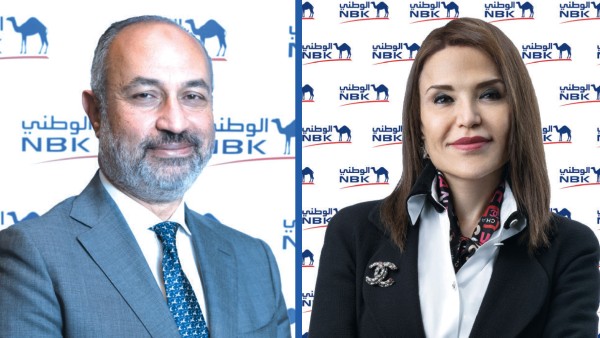
Sheikha Al-Bahr:
We achieved strong operational performance in the first half of the year across our core business segments.
Upgrading our digital infrastructure and information technology to consolidate our market position.
Our financial indicators demonstrate that we are on the right track toward further expansion.
Yasser Al-Tayeb:
The bank delivered strong performance, achieving high growth rates across all its financial indicators.
We are working to strengthen our position in the corporate and retail banking sectors.
We aim to expand our electronic services and support the shift toward digital transformation.
National Bank of Kuwait-Egypt announced that it achieved net profits of 4.2 billion Egyptian pounds (equivalent to 26.1 million Kuwaiti dinars) during the first half of 2026. Net operating revenues rose to 8.6 billion Egyptian pounds in the first half of 2026, compared to 7.7 billion Egyptian pounds in the same period of 2025, representing a growth rate of 11%.
In a press statement yesterday, the bank said that net income increased to 7.2 billion Egyptian pounds in the first half of 2026, compared to 6.7 billion Egyptian pounds in the same period of 2025, a growth rate of 7.4%. Net non-interest income also increased, reaching 1.31 billion Egyptian pounds in the first half of 2026, compared to 0.99 billion Egyptian pounds in the same period of 2025, with a growth rate of 32%.
Financial investment profits also rose to 56 million Egyptian pounds in the first half of 2026, compared to 27 million Egyptian pounds in the same period of 2025, a growth rate of 111%. Meanwhile, the cost-to-income ratio stood at 27% in the first half of 2026.
The bank’s total assets grew to 270 billion Egyptian pounds by the end of the first half of 2026, compared to approximately 225 billion Egyptian pounds at the end of 2025, a growth rate of 20%. Net loans and advances to banks and customers reached approximately 147 billion Egyptian pounds by the end of the first half of 2026, compared to 121 billion Egyptian pounds at the end of 2025, a growth rate of approximately 22%.
Customer deposits rose to 206 billion Egyptian pounds by the end of the first half of 2026, compared to 180 billion Egyptian pounds at the end of 2025, a growth rate of 14%. The ratio of net fee and commission income to net operating revenues increased to 11.6% by the end of the first half of 2026, compared to 10.2% in the same period of 2025. The return on average assets stood at 3.4% in the first half of 2026, while the return on average equity reached 26.9% in the same period.
Commenting on the business results, Sheikha Al-Bahr, Deputy Chief Executive Officer of the National Bank of Kuwait Group and Chairperson of the Board of Directors of National Bank of Kuwait-Egypt, said: “The bank achieved strong operational performance in the first half of 2026, reflecting the solidity of our financial position and the resilience of our business model, which is capable of generating profits and achieving sustainable growth, despite a macroeconomic landscape filled with challenges.”
She emphasized that, amid a global economic environment characterized by accelerating challenges, the bank continues to deliver solid performance, driven by balanced growth in its core business segments supported by a flexible operational strategy. She confirmed that the continued expansion of the balance sheet and the improvement of most of the bank’s financial indicators confirm the success of the business diversification strategy and the acceleration of digital transformation, aimed at increasing the bank’s market share, particularly in retail services in the largest market in the region by population.
She clarified that, in line with the Group’s commitment to digital transformation, “Al-Watani” continued to deliver a sophisticated digital banking experience, supported by innovative solutions that meet customer aspirations and keep pace with market changes. She added, “We are working to enhance the quality of our services, expand our geographic footprint, and reach a broader and more diverse range of customers, leveraging the remarkable progress the Bank has made in updating its IT infrastructure and digital channels, which have witnessed a significant leap, positioning Al-Watani as a strong competitor in the Egyptian market.”
She noted, “Egypt represents a key growth market for us and a strategic long-term investment. The growth we are achieving confirms the Group’s forward-looking vision regarding this investment, which we aim to further develop amid rising demand for banking services and increasing financial inclusion rates.”
For his part, Yasser Al-Tayeb, Vice Chairman, Chief Executive Officer, and Managing Director of Kuwait National Bank – Egypt, said, “There is no clearer evidence than the strong financial figures and indicators, which demonstrate the Bank’s ability to sustain growth and achieve further solid business results during the first half of the year, despite the operational challenges facing the business community locally and globally.”
Al-Tayeb pointed out that the Bank’s business growth is balanced across all business activities, while maintaining efficiency ratios and risk levels commensurate with achieving both growth and business sustainability. This is thanks to the Bank’s prudent policies and its robust business model, which is fully capable of meeting customer needs with complete flexibility.
He added that most of the Bank’s income sources stem from credit operations through the corporate sector, alongside the retail banking segment, whose role has been growing significantly, especially in recent years. The Bank’s credit portfolio features a high degree of diversification among the companies it serves.
Al-Tayeb explained that the Bank seeks to support and back the global shift toward sustainable finance and the transition to a green economy, backing all environmentally friendly projects that promote sustainability and rely more heavily on renewable energy. It is also exploring available solutions to mitigate the negative impacts of climate change and reduce carbon emissions, as sustainable finance has become one of the most important means and tools for supporting and maintaining long-term financial stability.
