Sudanese Foreign Minister: We Want Kuwait at the Forefront of Sudan's Reconstruction Partners
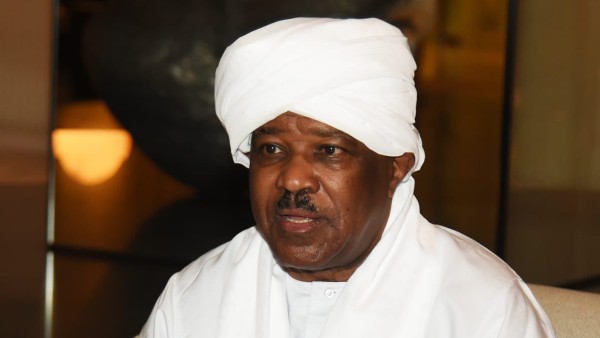
“The Kuwaiti right and duty are upon me”... Its generosity has extended for decades Promising Kuwaiti investment opportunities in food security, aviation, and infrastructure From development projects, roads, and water in
Translated by Qiyas from السياسة — Original source
“The Kuwaiti right and duty are upon me”... Its generosity has extended for decades
Promising Kuwaiti investment opportunities in food security, aviation, and infrastructure
From development projects, roads, and water initiatives to food security, aviation, and reconstruction opportunities, Kuwait-Sudanese relations have spanned decades of cooperation and support. Today, Khartoum looks forward to opening a new chapter of partnership that places Kuwait at the forefront of countries contributing to the recovery phase and rebuilding what was destroyed by war.
Sudanese Foreign Minister Mohi ad-Din Salim affirmed that his country looks forward to Kuwait being among its leading partners during the recovery and reconstruction phase, appreciating its developmental, humanitarian, and investment role in Sudan over the decades. He pointed to wide opportunities for Kuwaiti investments in the sectors of food security, aviation, infrastructure, and technology.
Research Services
Press Releases
Breaking News
Salim, in statements to journalists during his visit to Kuwait, said his meetings included a visit to the Arab Planning Institute to discuss the role it could play in the post-war phase. He noted that the Institute represents one of the important Arab institutions supporting decision-making through studies, research, and specialized expertise.
He explained that the Institute is working with the Sudanese side to assess losses resulting from the war, in cooperation with relevant Sudanese authorities and specialized UN teams, using modern methods. He clarified that this work forms an important foundation for attracting external support and laying the groundwork for the recovery and reconstruction phase.
He added that cooperation with the Institute predated the outbreak of war through “Development Observatories,” which bring together experts with state and regional governments to study available potentials and identify developmental priorities. This helps direct resources toward the most viable projects and integrate state plans into Sudan’s national plan.
Kuwaiti Imprints
Regarding relations with Kuwait and opportunities to attract Kuwaiti investments, Salim said that evidence of Kuwaiti generosity in Sudan has extended for decades. He recalled Kuwait’s contributions to major projects, including the Kenana Sugar Company, roads connecting ports to Khartoum, as well as Kuwaiti investments, facilities, hotels, and companies.
He noted that Kuwait has been and remains one of Sudan’s largest supporters, and that its support was never accompanied by any pressure or embarrassment, even during periods when the country struggled to repay some installments. Kuwaiti responses to requests for support in water, electricity, health, and other vital sectors continued uninterrupted.
He clarified that the Kuwaiti role is not limited to the governmental side but extends to businessmen, philanthropists, and charitable and humanitarian institutions. He cited his own experience during his previous tenure as Sudan’s ambassador to Kuwait, where he witnessed the extent of support provided to his country.
Salim said, “I now feel, as a minister, that Kuwait has a right and a duty upon me.” He explained that his visit came under directives and a written message from the Sudanese leadership, stemming from the importance of maintaining communication with Kuwait and ensuring its presence at the forefront of participating countries when stability is restored and the reconstruction process begins.
Quality Investments
He noted that Kuwait possesses extensive investment experience and significant potential, alongside a young workforce that has received modern education and acquired advanced expertise. He emphasized Sudan’s desire to leverage these capabilities amid technological and economic transformations that have changed the concept and methods of investment.
In the file of food security, Sudan confirmed its readiness to expand cooperation with Kuwait, recalling an initiative it previously proposed during its ambassador’s tenure in the country to launch joint projects between Kuwaiti and Sudanese youth under the slogan “Towards Healthy Food for the Kuwaiti Family.”
He explained that the idea involves establishing agricultural projects to produce healthy, organic food for the Kuwaiti market. In these projects, Sudanese youth—farmers, veterinarians, and others—would handle production operations, leveraging available land and water resources, while Kuwaiti youth would manage financing and marketing.
He added that the project was viable as a model experience that could be replicated in other Arab countries, but it did not move forward at the time. “Now I ask: Why not revive such initiatives?” he said, affirming that they serve the mutual interests of both countries.
He pointed out that Sudan possesses significant assets in food security, including fertile land, water resources, livestock, and climatic diversity, which opens the door to broad partnerships with Kuwaiti and Arab investors.
Aviation Partnership
Salem proposed the aviation sector as one of the promising areas for cooperation. He clarified that Sudan Airways, known as “Sudanair,” has a history and expertise dating back to the late 1940s. Despite the decline of its fleet in recent years, it still retains considerable expertise and capabilities.
He noted the potential for Kuwaiti businessmen or airlines to enter into partnerships with Sudanair, allowing them to benefit from the Sudanese carrier’s air transport rights to various African and European destinations.
He explained that providing the necessary financing for aircraft within such partnerships could open new routes within Africa, reaching as far as South Africa and other destinations, thereby generating economic returns for both parties.
Investment Conference
Salem revealed a tendency to organize conferences or joint meetings at the level of chambers of commerce, or to hold a conference bringing together both governments and the private sector, with the aim of showcasing available investment opportunities and opening the door to new partnerships.
He stated that the Sudanese government is working on developing laws and procedures governing investment and providing necessary facilitations for investors, alongside attention to double taxation avoidance agreements and the protection and promotion of investment.
He emphasized that the economy and investment are directly linked to security and stability, noting that the absence of security makes talk of development and investment unfeasible. Therefore, his country focuses on enhancing stability, rebuilding institutions, and creating a conducive environment for investment.
He added that Sudan possesses vast natural and water resources that extend beyond the Nile River, with dozens of rivers, tributaries, and groundwater reserves, in addition to fertile land and geographical and climatic diversity.
He affirmed that the country also has a massive livestock population, human resources, and extensive agricultural potential. By introducing modern technologies, productivity can be significantly increased. He pointed out that recent Kuwaiti investments in the agricultural and livestock sectors could yield important returns for both sides.
Water File
Regarding Ethiopia’s move to build more dams and its impact on Sudan and Egypt, Salem, drawing on his experience as Sudan’s former ambassador to Ethiopia, stated that Ethiopia contains a large number of rivers flowing to different regions and countries, and not all its dam projects are related to the Blue Nile.
He called for refraining from making general statements that could lead to tensions between countries, emphasizing that international rivers are governed by regulations, laws, and agreements, and that no upstream country has the right to harm downstream countries.
He pointed out that Sudan, Egypt, and Ethiopia are linked by the Eastern Nile file, stressing the need to address water issues from a technical and legal perspective, free from political manipulation and statements that could heighten the sensitivity of the matter.
Salem concluded by reiterating that Sudan’s position is clear and based on the agreements and principles governing these issues, expressing his hope that the Nile’s waters will not be used in political disputes, given the file’s high sensitivity and significance.
