The GCC Water Interconnection: A Strategic Objective in Confronting Emergencies and Crises
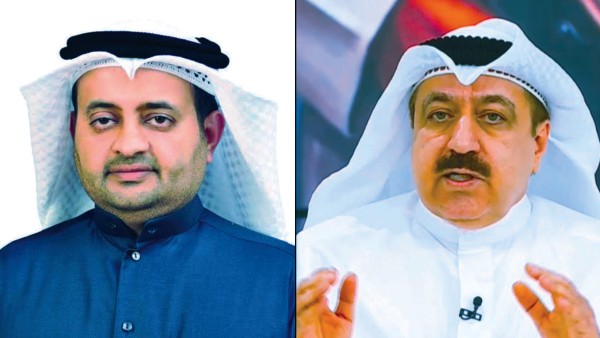
Experts stressed to "Al-Siyasah" the need to move forward with the initiative. Eng. Mohammed Al-Boushri: Linkage has become an urgent necessity amid the current regional conditions. Dr. Fanees Al-Ajmi: The heinous attack
Translated by Qiyas from السياسة — Original source
Experts stressed to "Al-Siyasah" the need to move forward with the initiative.
Eng. Mohammed Al-Boushri: Linkage has become an urgent necessity amid the current regional conditions.
Dr. Fanees Al-Ajmi: The heinous attacks on Gulf states make water linkage of paramount importance.
The Gulf Cooperation Council (GCC) Interconnection Authority organized a workshop on the "Study of the Feasibility of Building Water Linkage Projects between GCC Member States," in collaboration with the General Secretariat of the Gulf Cooperation Council. The event was attended by representatives from Kuwait, represented by the Ministry of Electricity, Water, and Renewable Energy, as well as representatives from relevant authorities and experts in the fields of water, infrastructure, and water security in member states.
Digital Journalism
Political Analysis
Cultural News
The workshop program included a presentation by a consulting firm on the results of the first phase of the study. The presentation covered a diagnosis of the current state of water supply infrastructure and water linkage between GCC states, existing relevant capacities, and the data and information needs required to complete subsequent study phases, reflecting the member states' priorities in the field of water security.
The Project and Its Necessities
Regarding the importance and necessity of this project, as well as its implementation prospects, "Al-Siyasah" spoke with several experts. Former Minister of Electricity and Water Eng. Mohammed Al-Boushri emphasized that Gulf water linkage is a matter that admits no division and has become an urgent necessity amid the current regional conditions. He clarified that achieving Gulf water security requires diversifying water sources through the Red Sea in the Kingdom of Saudi Arabia and the Arabian Sea in the Sultanate of Oman, rather than relying on a single source via the Arabian Gulf, which the six GCC member states currently depend on.
Al-Boushri pointed to serious steps taken toward Gulf water linkage, citing for example a study conducted by a French company on comprehensive Gulf water linkage. However, it was decided at the time to begin with a bilateral linkage between Kuwait and Saudi Arabia, followed by other member states, between 2016 and 2017. The study was commissioned by the General Secretariat of the GCC.
Al-Boushri explained that the GCC Interconnection Authority’s organization of the workshop last week on the "Study of the Feasibility of Building Water Linkage Projects between Member States" falls within the framework of implementing the high directives issued by the GCC Heads of State during the 19th Consultative Meeting of the Supreme Council. He stressed the necessity of moving forward to achieve this strategic goal, which ensures Gulf water security, especially following the success of the electricity interconnection experience in providing power supply options that meet all national developmental needs of member states since its inception in 2009.
Times of Peace and War
For his part, environmental activist Dr. Fanees Al-Ajmi emphasized the necessity of proceeding with the implementation of the Gulf water linkage project, particularly in light of the events the region is undergoing and the heinous attacks on GCC member states. This has made Gulf water linkage of paramount importance to confront all challenges. He noted that the success of the Gulf electricity interconnection experience confirms the member states' ability to also achieve their ambition for water linkage. Furthermore, the significant benefits of such linkage in facing challenges imposed by the climatic conditions of member states—where temperatures exceed 50 degrees Celsius and arid areas constitute most of the geographical area—mean that Gulf water linkage can help confront any challenge during both peace and war.
Al-Ajmi stated that the Gulf Water Interconnection Project is a crucial strategic initiative that contributes to diversifying water sources, alongside the reliance of member states on desalination as their primary means of water supply. Just as there is an existing infrastructure for the Gulf electricity interconnection, there must be a similar framework for water. Furthermore, the project will yield significant economic benefits for member states.
Al-Ajmi clarified that relevant authorities, led by the Ministry of Electricity and Water, are making substantial efforts to ensure a supply of drinking water for citizens and residents through water desalination plants. Kuwait holds a leading position in this field; therefore, it is essential to continue achieving progress by maintaining policies of conservation, developing water infrastructure and treated water utilization, and integrating treated water alongside fresh water sources. Additionally, there is a need to consider constructing dams or reservoirs to capture rainwater for use during critical periods of need, thereby reducing dependence on desalination plants, which impose heavy financial burdens on the public treasury.
