Bahrain Launches King Hamad Award for Coexistence and Tolerance to Enhance Global Peace
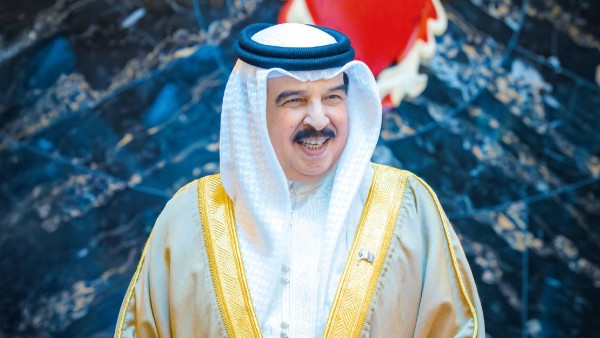
Qatar: Iran’s planes came to attack us... and “Financial Times”: Muscat and Doha are important diplomatic powers Manama, Capitals – Agencies: In a telephone call, Bahraini King Hamad bin Isa discussed with Qatari Emir Sh
Translated by Qiyas from السياسة — Original source
Qatar: Iran’s planes came to attack us... and “Financial Times”: Muscat and Doha are important diplomatic powers
Manama, Capitals – Agencies: In a telephone call, Bahraini King Hamad bin Isa discussed with Qatari Emir Sheikh Tamim bin Hamad the latest regional and international developments and issues of mutual interest. The Bahrain News Agency (BNA) reported that the King of Bahrain and the Emir of Qatar reviewed the close fraternal relations between Bahrain and Qatar, which are witnessing development and growth that serve common interests and meet the aspirations of the two brotherly peoples.
The King Hamad Center for World Understanding and Tolerance announced the launch of the first edition of the King Hamad Award for World Understanding and Tolerance, opening the nomination process to individuals and institutions from around the world, starting yesterday until October 10, via its official website. The Center stated in a press release that the award was launched as a high-level international initiative pursuant to Royal Order No. (32) of 2024 establishing the award, embodying the objectives and principles derived from Bahrain’s history and civilization, which emphasize openness to all civilizations, religions, and cultures, and the promotion of coexistence values. It added that the award is in line with the Kingdom’s vision to enhance global peace and coexistence, and to encourage pioneering initiatives and efforts in the field of intercivilizational dialogue and coexistence, by honoring individuals and institutions that have made exceptional and documented contributions to consolidating a culture of tolerance and coexistence, promoting dialogue and mutual respect, and creating a positive and sustainable impact on societies.
The award carries a monetary value of one million dollars, along with a certificate of appreciation and a medal, to be presented at a ceremony under the patronage of Bahrain’s King Hamad bin Isa, who serves as the Honorary President of the Award. The statement quoted Bahrain’s Minister of Transport and Communications, Chairman of the Board of Trustees of the King Hamad Center for World Understanding and Tolerance, and Chairman of the Award’s Jury, Sheikh Abdullah bin Ahmed Al Khalifa, emphasizing that the launch of the first edition of the award embodies the royal vision to consolidate the values of coexistence, tolerance, and mutual respect, and to support international efforts aimed at building more cohesive and stable societies. He noted that the award reflects Bahrain’s civilizational approach to transforming the values of coexistence and tolerance into practical initiatives and policies with tangible and sustainable impacts, and to highlight experiences and achievements that enhance dialogue, trust, and understanding among peoples and cultures.
Meanwhile, Qatar reiterated that its efforts are currently focused on halting escalation and returning to the negotiating table, stressing the need to avoid dragging it into Iran’s internal disputes. Qatari Foreign Ministry spokesperson Majid Al-Ansari stated that Doha had extended an open invitation to Iran to review the investigations concerning the Iranian aircraft that were shot down. He noted that the aircraft that breached Qatari airspace did so with the intent to attack the country, and that Qatari forces responded in accordance with rules of engagement. Al-Ansari emphasized that the search for the missing Iranian pilots concluded on April 6, clarifying that Qatari authorities discovered the remains of one of the two pilots who breached Qatari airspace on March 19 and handed them over. Doha is still awaiting Tehran’s response to the invitation to review the search operations’ details.
Al-Ansari said that although Qatar had invited the Iranian side to examine the details of the search operations, the invitation had not yet been accepted. He added that Qatar and Iran are in direct contact regarding the issue, and that Doha continues to keep its invitation open for Tehran to send a delegation to Qatar to review what transpired. He affirmed that his country sees no justification for being drawn into internal Iranian disputes related to this file, describing Iranian demands for the involvement of the International Committee of the Red Cross as a “media ploy.” He stressed that Qatar had handled the matter transparently and that the Iranian side had been given access to the details of the search operations.
Regarding talks between Iran and the Sultanate of Oman concerning the Strait of Hormuz, Al-Ansari stated there was no new development in this track, noting that mediators are waiting for Muscat and Tehran to reach a bilateral agreement on the strait before moving on to broader talks. He explained that current efforts are focused on returning to the memorandum of understanding between Iran and the United States, considering that reaching an agreement on the Strait of Hormuz would greatly facilitate the resumption of US-Iranian negotiations.
For its part, the British newspaper “Financial Times” highlighted the roles of Qatar and Oman as notable models in mediation and opening communication channels between conflicting parties. The paper described them as examples of states and powers that lack the military or economic strength to impose their agenda globally, yet have succeeded in leveraging specific advantages that grant them influence beyond their geographic and demographic size, amid rapid transformations in the international system. It stated that Qatar’s standing is based on a mix of gas wealth, financial capabilities, and extensive international relations, as well as its ability to communicate with parties that major powers find difficult to reach directly. These tools have made Doha a prominent player in several regional and international files, particularly those requiring mediation or indirect communication channels.
Oman, on the other hand, builds its influence differently, benefiting from a quiet diplomacy based on relative neutrality and maintaining open communication channels with distant parties. Its strategic location and balanced relationships have enabled it to play mediating roles and convey messages between adversaries who are difficult to bring to the same negotiating table.
The newspaper argued that the significance of mediation for the two countries extends beyond a diplomatic role, having evolved into a source of influence. When crises become complex and direct dialogue channels are disrupted, states capable of keeping communication lines open become more important to regional and international powers. It noted that Qatar and Oman simultaneously maintain close security ties with the United States while keeping communication channels open with parties at odds with Washington. This approach affords them maneuvering room and preserves decision-making autonomy, while also enhancing their capacity to perform mediation roles. This model suggests that influence in the international system is not always tied to a state’s size or military power; a small state may possess specific tools that grant it broad influence, whether through energy resources, geographic location, financial leverage, or the ability to communicate with hostile parties.
