Cleanliness... The Hallmark of Nations
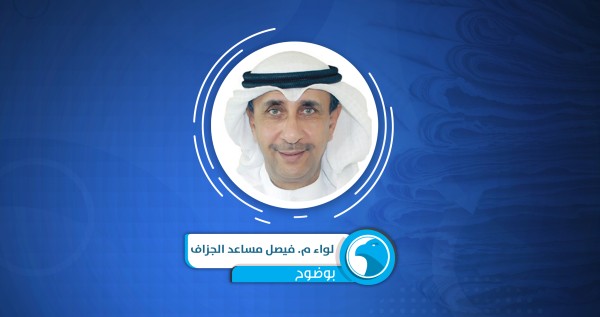
When we at DALcs.org began preparing to launch a regional workshop on climate change in the media, in partnership with the humanitarian incubator REVOLV and under the supervision of activist and researcher Mariam Jab Allah, I never imagined at the time that the critical discussions would have such a profound impact. All I had hoped for was to share with our media colleagues how we could help raise their awareness and interest in the latest developments in climate issues, despite the accelerating severity of environmental degradation and the considerable efforts made, which can hardly be described as anything other than “insufficient.”
Previously, it was easy for us to locate climate news, which was typically found in the environment section. The stories then revolved around rising temperatures, carbon emissions, melting ice, forest fires, floods, and droughts.
Today, however, it is no longer easy to confine climate change to a specific section. It has permeated water, food, health, energy, cities, the economy, and finance, as well as communities’ resilience in the face of crises. This is one of the key insights we can draw from the UN Secretary-General’s report on progress toward the Sustainable Development Goals, presented in July 2026. The report attempts to assess the transformations that have occurred over the ten years since the launch of the “Transforming Our World” agenda on January 1, 2016, with less than five years remaining until the 2030 deadline.
Notably, the report does not treat climate change as an isolated “environmental” issue but situates it within the broader network of all Sustainable Development Goals. Natural disasters do not affect only the environment; their impacts extend to food production, supply chains, prices, water, health, and ecosystems.
In my intervention, shared with the event’s audience, I sought to highlight a conviction that has solidified into certainty: the media has a crucial opportunity to reframe the climate narrative. Instead of asking where climate news is located, we should pose a deeper, more relevant question: “Where does climate change live among us?”
When temperatures exceed record levels, the story we tell and convey through our media formats should not stop at reporting who was affected and what happened to the outdoor worker, the patient, the student, or the changes in energy loads and electricity consumption. The same applies to water and food prices.
Environmental journalists should not merely depict water flooding streets; they should ask what is more important: the region’s and city’s preparedness for such changes, the measures taken, the gaps identified, and what needs to change for the future.
Here, we may also need to review our media discourse. We have long relied on images of disasters, fear, and warnings. While I find this approach useful for attracting attention, it is insufficient for building understanding. The public needs to know that the risks are significant, but they also need to know that there are efforts, solutions, policies, investments, experiences, and lessons to follow, and that those responsible can be held accountable for their outcomes.
Therefore, I believe that climate journalism in the coming phase must shift from awareness-raising to accountability. When a government announces a climate adaptation plan, we should ask about indicators, financing, and results, as well as data and baselines. When a governorate or municipality launches a green project, we should not merely cover the opening ceremony; we should return a year later to ask what has changed in reality since the previous year.
In our Arab world, I do not believe we need to import a ready-made climate narrative; we have our own stories. For instance, in the Gulf, the story may be one of water, energy, and heat, as well as health, cities, and coastlines. In an agricultural country, it may revolve around water, crops, food, and income. In a coastal city, it may concern the sea, transportation, infrastructure, housing, and the economy.
Perhaps this is the shift I sought to convey in my speech and interventions: we must not merely “shock” people with news about climate change, but rather help them understand what it means for their lives. For policymakers, we must explain what can be done to mitigate and avoid the perils of this change, and whether further transformations and repercussions will indeed occur. After all, climate is ultimately a story about the planet’s transformations, and also a story about how we will live on this Earth.
