Laura Lahoud to 'Al-Siyasa': Kuwaitis make up the largest share of tourist traffic
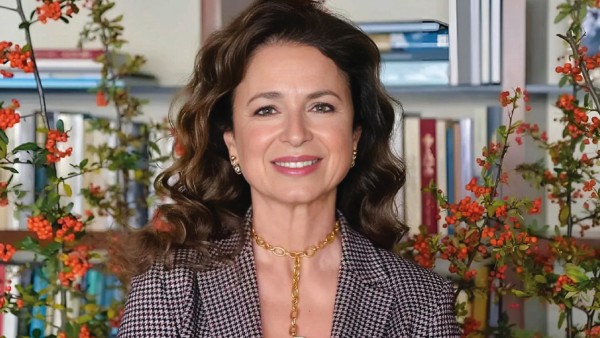
Lebanese Tourism Minister Confirms Peace Process Is the Path to Sector Recovery 20,000 Daily Visitors Arrive at Rafic Hariri Airport; Hotel Occupancy Nears 80% Beirut – "Al-Siyasa" – From Omar Al-Bardan Lebanon is strivi
Translated by Qiyas from السياسة — Original source
Lebanese Tourism Minister Confirms Peace Process Is the Path to Sector Recovery
20,000 Daily Visitors Arrive at Rafic Hariri Airport; Hotel Occupancy Nears 80%
Beirut – "Al-Siyasa" – From Omar Al-Bardan
Lebanon is striving hard to emerge from its crises, seeking to move beyond them toward greater openings that have been cemented by the era of President Joseph Aoun and the achievements of Prime Minister Nawaf Salam’s government, despite obstruction attempts that are no longer hidden from anyone. It has become clearly evident that Lebanon has regained much of its health and stability, thanks to the sense of reassurance that has spread across the country, although this is still marred by the continuation of Israeli aggression against the south and other areas. For this reason, Lebanon is pursuing a path of recovery and a return to the beautiful past, when it was indeed nicknamed the "Switzerland of the East." On this basis, Lebanese officials are focusing on definitively turning the page on crises and entering a phase of peace, restoring Lebanon to its natural place among nations.
To shed more light on the reality of Lebanon’s tourism sector, Lebanese Tourism Minister Laura Khazen Lahoud granted "Al-Siyasa" an interview, in which she affirmed that "security and stability constitute the fundamental factor that brings tourism back to Lebanon." She stated, "We are a country endowed with all tourism prerequisites, including natural, cultural, environmental assets, festivals, and a diverse Lebanese cuisine. However, any security threat prevents visitors and tourists from coming."
Social News
Press Releases
Local News
She viewed that "the only correct path for tourism to return to Lebanon is the peace and negotiation process led by His Excellency President of the Republic, General Joseph Aoun, and the Lebanese state across all its sectors. At this time, all ministries are working internally and on the ground to be in the best state of readiness."
Minister Lahoud emphasized that "Kuwaiti brothers constitute a large part of the tourist movement this year, according to figures and statistics, alongside other tourists from sister Gulf states, given the strong ties linking Lebanon with the Gulf Cooperation Council (GCC) countries. This is very important for Lebanon, and there is a keenness to develop these relations, as Gulf and Arab countries are sisters, and most Kuwaiti and Gulf brothers own homes here, with Lebanese welcoming them with great hospitality and renowned generosity." She affirmed that "Lebanon is keen on maintaining the best relations with sister Kuwait, as well as the rest of the GCC countries, especially considering the deep historical ties linking Lebanon with Gulf and Arab countries, specifically Kuwait, which shares many similarities with Lebanon in various aspects."
Minister Lahoud pointed out that "since the beginning of July 2026, the number of arrivals at Beirut International Airport rose from 2,000 daily to between 12,000 and 20,000 passengers," noting that "most arrivals are expatriates, with high numbers from Arab countries." She said that "Lebanon has returned to the tourism map through its participation in international conferences and forums after a six-year absence. The visit of the Secretary-General of the UN Tourism organization, Cheikhah Al-Nuwaissif, constituted an important milestone and a significant message of support." Revealing that "hotel occupancy rates in Beirut this year reached 80% in July and August," she confirmed that "hotel occupancy rates in other regions during July and August approached 70%, concentrated mainly during weekends." She clarified that "restaurant and café occupancy rates depend on the days of the week, varying between 60% on weekdays to 90% on weekends, and are subject to cancellation depending on security conditions."
The Lebanese Minister of Tourism noted that most of the country’s major international festivals, such as the Baalbeck, Byblos, Beiteddine, Ehmej, and Arz festivals, were canceled this year. However, she emphasized that, despite the difficulties, several music festivals managed to offer diverse musical programs, including Beirut’s Summer Festival on the Antelias waterfront, the Faqra Festival at the ancient archaeological site, and the Muzaraa Festival in Kfardebian. Additionally, individual musical and vocal concerts were held at venues such as Beirut Hall and the Forum de Beirut, featuring artists like Hiba, Marilyn Kanaan, and others.
She further added that, in contrast, most villages and towns organized varied multi-day programs catering to all family members, encompassing crafts, cultural, sports, agricultural, musical, and religious activities. Examples include the festivals in Qubayat, Shnan’eer, Hammana, Mshmesh, Zgharta, Jbeil, Al-Dawar, Bttrun, Mazraat Yeshou’a, and Al-Mazra’a. Of course, Casino du Liban continued to host its finest and most upscale events. Similarly, the Rashid Karami International Exhibition in Tripoli hosted a variety of cultural exhibitions, alongside numerous tribute events, such as honoring Lebanese creatives, the election of the most beautiful model, and various beauty pageants across different regions, among other activities that helped put Lebanon back on the tourist map.
