New Syria turns to Interpol to track down fugitives from the former regime
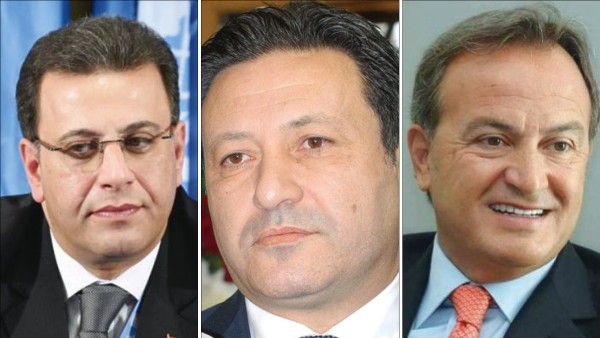
Their names are linked to cross-border cases of fraud, embezzlement, looting, and forgery
Assets of Shalati, Kzibri, Al-Tarazi, Sanouf, and others seized
Their files are rife with deception, fraud, and the misappropriation of funds, real estate, and properties
"Al-Siyasa" - Special Report
After years during which the authority of the rule of law and state institutions waned, and the judiciary’s power receded in favor of the influence of groups tied to the regime of ousted President Bashar al-Assad, the new Syria appears poised to make a serious attempt at rebuilding state institutions and restoring their legal instruments, foremost among them cooperation with international law enforcement agencies.
In this context, "Al-Siyasa" learned from private sources that the Syrian government has taken broad steps toward reactivating its engagement with the International Criminal Police Organization (Interpol), with the aim of tracking down a number of fugitives and individuals evading court sentences, particularly those whose names are linked to cross-border cases of fraud, embezzlement, looting, and forgery.
Economic News
Al-Siyasa
This step gains significance extending beyond its security and judicial dimensions; it comes within the framework of a broader effort to re-establish the authority of the Syrian state, reinforce the rule of law, and restore the confidence of the Gulf and Arab environment, as well as the international community, in the new state institutions.
Throughout the years of the former regime’s rule, the effects of corruption and fraud were not confined to Syria’s interior but extended to Arab and Gulf states. Businessmen, investors, and individuals faced cases involving, according to sources and information circulating in judicial files, fraud, deception, and the misappropriation of funds, real estate, and properties.
According to sources, some of the victims obtained court judgments in Arab and Gulf states. However, enforcing some of these rulings was thwarted by the convicts’ flight to Lebanon and other countries, or by their exploitation of legal loopholes and smuggling networks, in addition to attempts to use influence and bribes to avoid prosecution.
Damascus, according to the same sources, seeks to close this chapter by activating international cooperation channels, enabling the pursuit of fugitives outside Syrian territory within the framework of accepted legal and judicial standards.
From Influence to Pursuit
Information indicates that Syrian authorities have initiated procedures in several files concerning the precautionary seizure of assets and properties belonging to individuals wanted by the judiciary, paving the way for taking necessary legal measures and contacting relevant international bodies regarding their pursuit.
The list of names circulating in this context includes: Samer Al-Dib, Mohamad Zaher Daaboul, Nabil Daoud, Ahmad Shweihna, Ayman Kletta, Mazen Knineh, Nabil Tamma, Raed Al-Tab, Fahd Shbaini, Mohamad Talal Barnieh, Mohamad Al-Murtada Al-Dandashi, Mohamad Sami Qaddour, Bilal Al-Na’al, Issam Anbuba, Nawaf Bashir, Mufid Shalati, Ahmad Kzibri, Mazen Al-Tarazi, Bassel Sanouf, Nader Al-Qal’i, and Tawfiq Al-Lou, along with other names.
According to available information, some of these files are linked to ongoing cases or court judgments in Gulf and Arab states, while some incidents involve attempts to seize funds, real estate, or commercial assets through forged documents or fraudulent methods.
Among the files under discussion are attempts to seize, through deception and fraud, interests and assets belonging to businessmen, including an iron factory and real estate in one of the Gulf states.
Restoring Trust and the Rule of Law
The task of the new Syrian government does not appear to be limited to pursuing specific names; the greater challenge lies in rebuilding a system of institutions capable of applying the law independently and consistently, and convincing both domestic and international audiences that the era of impunity has ended.
Here, regaining cooperation with Interpol acquires both symbolic and practical significance. A state that seeks to restore the trust of its neighbors and international partners must demonstrate its ability to pursue wanted individuals, enforce judgments, and protect the rights of rightful owners, regardless of the accused’s influence or connections.
Moreover, addressing cross-border cases can send a message to Gulf and Arab states that the new Damascus does not merely wish to shed the political legacy of the former regime, but also aims to address its legal and economic repercussions, which have accumulated over years.
The Road Ahead
Nevertheless, activating cooperation channels with Interpol does not mark the end of the journey, but rather a step within a long process of rebuilding a state governed by institutions. As revealed by the accumulated case files, the legacy of the former regime extends beyond individuals who fled the country; it encompasses networks of influence, vested interests, and institutional and legal loopholes that require comprehensive remediation.
Alongside pursuing wanted individuals, the new Syria must strengthen judicial independence, develop mechanisms for enforcing judgments, dry up channels of corruption and smuggling, protect investors and rights holders, and ensure that relationships and influence do not become tools for evading accountability.
Damascus has made significant strides in a short period, supported by Gulf and Arab backing and encouraged by the international community. However, restoring full trust requires more than political change. It demands that citizens, investors, and partner states alike feel that the law holds the final say.
In this sense, Interpol’s return to the Syrian landscape is not merely a measure to pursue those fleeing justice; it can serve as one of the markers of a transition from a state ruled by influence to one governed by institutions.
If Damascus succeeds in transforming this step into a sustainable system of international judicial and security cooperation, it will have taken another significant stride in turning the page on a long-standing chapter, opening the door to a Syria that is more respectful of the rule of law and better positioned to regain the trust of its Arab and Gulf neighborhood, as well as the international community.
