When Donation Becomes Life... Jabir Al-Ahmad Kidney Center as a Model
Hands of kindness continue to give... An ongoing charity that opens doors of hope for patients Not every donation ends with the conclusion of the occasion, nor is the impact of every charitable act limited to its donor o
Translated by Qiyas from السياسة — Original source
Hands of kindness continue to give... An ongoing charity that opens doors of hope for patients
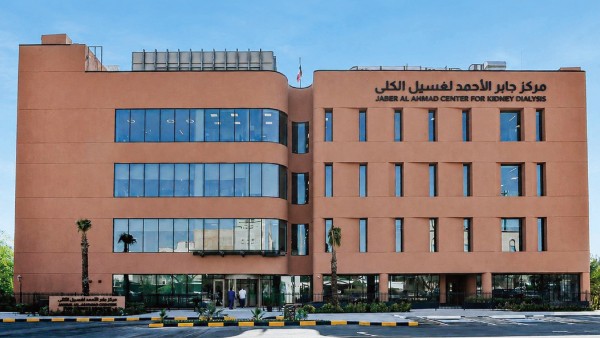
Not every donation ends with the conclusion of the occasion, nor is the impact of every charitable act limited to its donor or beneficiary at a specific moment... There are deeds that remain as testaments to their doers, continuing to give even after their passing. Among these are health facilities where funds for good are transformed into treatment, equipment into hope, and buildings into new lives for patients. It is from this perspective that the story of the Sheikh Jaber Al-Ahmad Al-Jaber Al-Sabah Dialysis Center in the Ahmadi Health Area emerges. Opened last week through a generous donation from the heirs of the late Amir, Sheikh Jaber Al-Ahmad Al-Jaber Al-Sabah, may God have mercy on him, it serves as a new addition to Kuwait’s system for treating kidney patients, while simultaneously carrying a humanitarian message that transcends the building’s walls and its medical equipment.
Seasonal holidays and occasions
Governments
Arabs and peoples of the Middle East
The center, which has a capacity of approximately 500 patients for hemodialysis and about 100 patients for peritoneal dialysis when fully operational, represents not only an expansion of therapeutic capacity in the Ahmadi area, but also embodies a form of the enduring kindness for which Kuwaiti society is known, as wealthy individuals decide to leave behind a legacy that benefits people.
The opening of the new center extends the generosity of the Sheikh Jaber Al-Ahmad family in the health sector. Previously, the heirs of the late Amir donated a dialysis center to Al-Jahra Hospital during the tenure of former Minister of Health Mohammed Barak Al-Haifi in 2013, funded by one-third of the late Amir’s charitable estate.
From Al-Jahra to Ahmadi... Kindness is renewed
In April 2013, the Sheikh Jaber Al-Ahmad Dialysis Center was opened at Al-Jahra Hospital. At the time, the project was one of the largest dialysis centers under the Ministry of Health. The representative of the late Amir’s heirs at the time confirmed that the center was funded by one-third of Sheikh Jaber Al-Ahmad’s charitable estate, with the aim of providing part of the healthcare services needed by society and assisting those in need of this type of treatment.
The project featured advanced specifications for dialysis services at the time, including wards for men, women, and children, isolation rooms, rooms for minor surgeries and treatment, a lecture hall, and a medical library, in addition to units for hemodialysis and peritoneal dialysis. According to the Ministry of Health, the project cost was approximately 3.025 million dinars.
Choosing dialysis as a field for donation was not a casual decision. A patient who reaches the stage of requiring dialysis needs repeated and continuous treatment, making the establishment of a specialized center more than just constructing a medical building; it provides a service directly and continuously linked to the patient’s life.
More than 13 years later, the name of Sheikh Jaber Al-Ahmad is renewed in a new health project in Ahmadi, but on a larger scale with broader capacity, reflecting in turn the development of health needs in Kuwait and the urban and population expansion witnessed by the country’s regions.
600 patients and a recurring appointment with hope
The new Sheikh Jaber Al-Ahmad Center in eastern Ahmadi includes 83 dialysis units, including 11 isolation rooms, in addition to four rooms for peritoneal dialysis, a biochemistry laboratory, blood sampling rooms, rooms for therapeutic procedures and emergencies, patient examination and preparation areas, as well as a central pharmacy, nutrition and social service clinics, administrative facilities, and support services. The center is situated on a plot of land measuring 2,650 square meters, with a total built-up area of 10,250 square meters. It consists of a basement, a ground floor, and three upper floors, designed to integrate therapeutic, diagnostic, nursing, and administrative services.
The importance of the center becomes even more apparent when considering the demand in the Ahmadi Health Region, where approximately 519 patients currently receive dialysis services, including 449 undergoing hemodialysis. With the center fully operational, its capacity will rise to accommodate around 500 hemodialysis patients and 100 peritoneal dialysis patients, bringing the total capacity to approximately 600 patients.
A patient entering a dialysis center does not visit a healthcare facility once and then leave; rather, they are tied to repeated treatment sessions, making the center an integral part of their daily and weekly lives. Consequently, each dialysis machine, each bed, and each treatment room can mean fewer hours of waiting for the patient, a shorter distance to reach treatment, and greater comfort for both the patient and their family. For this reason, Minister of Health Dr. Ahmed Al-Awadi emphasized the concept of “ease of access to healthcare services” during the center’s inauguration. He stressed that the quality of care is not solely dependent on the availability of treatment, but also on the patient’s ability to access it at the right time and place, thereby reducing the burdens of travel and waiting.
Five Dialysis Stations
The new center did not emerge in isolation from the Ministry of Health’s plan to develop kidney services in the region; rather, it represents the culmination of a gradual expansion path. This journey began with the Mohammed Al-Khazam Dialysis Center at Adan Hospital, which opened in 2009 and currently serves approximately 460 dialysis patients. The Ministry then continued to bring services closer to new residential areas, opening a dialysis unit at Ali Al-Salim Al-Sabah Center in May 2024, with a capacity of 10 beds, currently serving 17 hemodialysis patients.
In July 2024, a dialysis unit was opened at Sabah Al-Ahmad Center – Sector E, with a capacity of 20 beds, currently serving 32 hemodialysis patients. Additionally, in February 2026, a dialysis unit was inaugurated at the new Maternity and Children’s Hospital, equipped with 12 beds, currently serving 10 female hemodialysis patients.
The Jaber Al-Ahmad Center thus constitutes the fifth site for dialysis services in the Ahmadi Health Region, providing the area with greater treatment capacity and the ability to meet its current and future needs.
Perpetual Charity... An Unfailing Source of Giving
The Jaber Al-Ahmad Center represents more than a limited financial contribution to treating a number of patients; it contributes to the establishment and equipping of a healthcare facility that will continue to provide services for years to come. Here, the concept of “perpetual charity” becomes practically evident: the building will remain, the equipment will operate, patients will continue to receive treatment, and medical and nursing staff will use the facility to care for patients generation after generation.
Speaking on behalf of the donor, Sheikh Fahad Al-Jaber, during the center’s inauguration, he stated that serving patients is not merely a job, but an act of mercy, humanity, and reward. He emphasized that one of the finest avenues of goodness is for a person to help alleviate another’s pain and plant hope in their heart. These words encapsulate the essence of the project: “Goodness here is measured not only by the value of the building or the number of machines, but by the number of patients whose suffering will be eased, the families who will find treatment services closer, and the staff who will find a specialized environment enabling them to provide better care.”
Kuwait... A Society Innately Given to Giving
The story of the Jaber Al-Ahmad Center is not an isolated case in Kuwait; rather, it comes within a long history of contributions by philanthropists to building and developing healthcare services. Various media outlets have documented over the years numerous examples of citizens, families, and institutions who donated to establish health centers, hospitals, and specialized facilities.
Among the most prominent examples is the Hamad Abdullah Al-Saqer Specialized Health Center in Adailiya, which opened in 2000 following a donation by Abdulaziz Hamad Al-Saqer and his brother Jasem Hamad Al-Saqer. The construction costs amounted to approximately two million dinars. The center offers a wide range of services, including general practice, pediatrics, diabetes care, emergency services, radiology, laboratories, dentistry, preventive medicine, otolaryngology, surgery, orthopedics, school health, and an oncology clinic.
Information Technology
News
In 2003, Kuwait laid the foundation stone for the Center of the Late Sheikh Fawwaha Al-Salman Al-Sabah in Shamiya, funded by Sheikh Sabah Al-Ahmad and his children. This advanced health center provides services in family medicine, dentistry, diabetes care, geriatrics, maternity and child health, among others.
That same year, other projects emerged through donations from benefactors, including the Center of the Late Khaled Saleh Al-Ghanim in Qadisiya, the Sheikhah Munira Othman Al-Saeed Center in Howa, and the Hamad Al-Humaidi and Sheikha Al-Sudairawi Center in Shuwaikh, alongside other centers in various areas.
Impactful Specialized Projects
Donors’ contributions in the country did not stop at establishing traditional health centers; they extended to specialized projects that contributed to raising the level of medical care. A prime example is the Ghunaima Al-Ghanim Center for Premature Babies and Genetic Diseases, built through a donation by Fouad Al-Ghanim on behalf of his mother. At the time its foundation stone was laid in 2004, the construction and equipping costs amounted to approximately four million dinars. According to the plan announced during the foundation-laying ceremony, the center included 160 incubators, 30 intensive care beds, and 20 medium-care beds, in addition to pediatric wards, a small operating room, another for eye surgeries, and laboratories. The genetics department comprised more than 20 specialized clinics and four laboratories. At the time, the Ministry considered it one of the symbols of Kuwait’s health renaissance. Upon the center’s opening in 2010, the Ministry of Health announced that it housed 152 incubators for premature babies equipped with the latest technology, affirming that it represented a new addition to Kuwait’s child care system.
Thus, the contributions of benefactors were no longer limited to building facilities that provide health services; they extended to establishing specialized medical facilities dealing with complex cases that require advanced equipment and specialized medical and technical expertise.
From “Benefactor” to Partner in Health Development
Although the state bears primary responsibility for providing healthcare, Kuwait’s experiences offer a different model of community partnership, where private funding converges with government planning and medical operation.
A donor can provide the building and equipment, but the sustainability of the service requires a health ministry that plans and manages, doctors who treat, nurses who care for patients, technicians who operate equipment, administrators who organize work, and continuous training, maintenance, and development programs. This distinguishes health donations from many other forms of charitable work, as they become part of the public service infrastructure itself, and their impact remains as long as the facility continues to operate.
The Ministry of Health has previously expressed this meaning clearly on various occasions, considering citizens’ donations for establishing health centers and hospitals as a form of participation in providing health services, and emphasizing the importance of individual and institutional contributions to developing these services.
