Ambassador Al-Yassin: Iran’s despicable attacks on Kuwait and Gulf states violate international law and the UN Charter
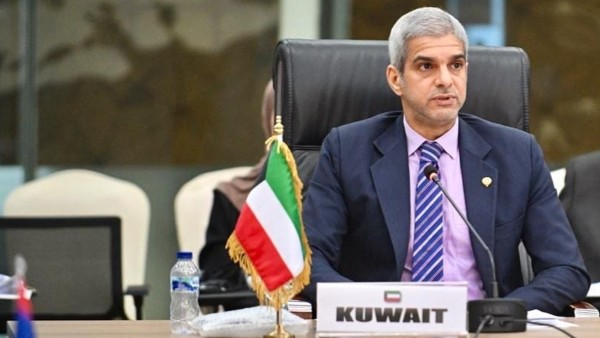
- Called for respect for the sovereignty of GCC states and ensuring freedom of navigation and safe passage in international waterways - Gulf-Asian meeting underscores strengthening of economic, security, and technical co
Translated by Qiyas from السياسة — Original source
- Called for respect for the sovereignty of GCC states and ensuring freedom of navigation and safe passage in international waterways
- Gulf-Asian meeting underscores strengthening of economic, security, and technical cooperation and counter-terrorism efforts
Khaled Al-Yassin, Kuwait’s Ambassador to the Republic of Indonesia and the Association of Southeast Asian Nations (ASEAN), emphasized the gravity of Iran’s despicable attacks on Kuwait and the Gulf Cooperation Council (GCC) states, which targeted vital civilian infrastructure. He stated that these actions violate the principles of international law and the UN Charter, including Security Council Resolution 2817.
Information Technology
Corporate Technology
Arabs and Peoples of the Middle East
This was stated in a press release conveyed by the Kuwaiti Embassy today, Saturday, quoting Ambassador Al-Yassin’s remarks during the third meeting between the GCC ambassadors to ASEAN and the Committee of Permanent Representatives to ASEAN, held yesterday, Friday, at the ASEAN Secretariat headquarters in Jakarta, the Indonesian capital.
The meeting was co-chaired by Ahmed Al-Hajri, Bahrain’s Ambassador to the Republic of Indonesia, and Gerard Ho, Singapore’s Ambassador to ASEAN.
The statement noted that Ambassador Al-Yassin called for the importance of respecting the sovereignty and territorial integrity of the GCC states, alongside safeguarding freedom and safety of maritime navigation and secure passage through international waterways, thereby preserving global trade stability and the international economy.
For his part, the Singaporean ambassador expressed his country’s solidarity and sympathy with the GCC states, affirming that Singapore calls for an end to hostilities, respect for international law, and the peaceful resolution of disputes.
In a joint statement, the meeting affirmed both sides’ commitment to strengthening the partnership between the GCC and ASEAN, highlighting the complementary nature of this partnership in priority sectors, which serves the common interests of both parties.
The statement emphasized the importance of enhancing bilateral cooperation and expanding fields of economic, security, and technical collaboration. It noted that the meeting reviewed progress made in implementing the ASEAN-GCC Cooperation Framework for the period 2024–2028.
It added that the meeting discussed preparations for the upcoming meeting of ASEAN and GCC Foreign Ministers, scheduled to take place on the sidelines of the high-level week of the 81st session of the UN General Assembly in September, as well as preparations for the third ASEAN-GCC Summit, scheduled for 2027.
The statement clarified that both sides welcomed progress in cooperation between the ASEAN National Police Chiefs Organization (ASEANAPOL) and the GCC Police, including mutual participation in key events and the completion of a joint action plan.
In this context, both sides emphasized the importance of enhancing coordination in combating terrorism, transnational crime, and cybersecurity, thereby supporting security cooperation between GCC and Southeast Asian states.
ASEAN called on the GCC to support the implementation of ASEAN’s vision for the Indo-Pacific region and the “ASEAN 2045: Our Shared Future” plan, alongside ASEAN’s Strategic Connectivity Plan, the Smart Cities Network, sustainable development initiatives, and the Fifth Action Plan for ASEAN Integration.
The meeting also underscored the importance of strengthening partnerships between the public and private sectors and business institutions, and expanding people-to-people ties between the two sides through youth and student exchange programs, as well as media, artistic, and scholarship initiatives, thereby contributing to tangible benefits for the peoples of the Gulf Cooperation Council (GCC) countries and the Association of Southeast Asian Nations (ASEAN).
The Association of Southeast Asian Nations (ASEAN) was founded on August 8, 1967, in Bangkok, the capital of Thailand. It currently comprises 11 member states: Brunei Darussalam, Cambodia, Indonesia, Laos, Malaysia, Myanmar, the Philippines, Singapore, Thailand, Vietnam, and Timor-Leste.
