Biometric System Disrupts European Airports... Queues Lengthen and Wait Times Double
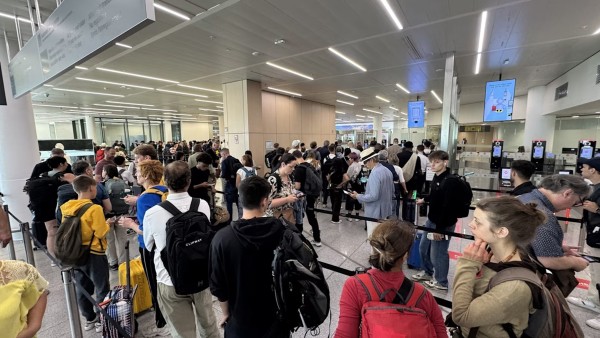
Border crossing procedures at several major European airports have become an additional test of travelers’ patience, as the implementation of the European Union’s new biometric Entry/Exit System (EES) has doubled waiting times at some airports, reaching up to two hours during peak periods.
According to recent data, Frankfurt, Amsterdam, and Munich airports recorded some of the longest queues, as the EES system struggled to cope with the large volumes of travelers arriving from outside the EU.
The biometric system requires non-EU travelers to register their data, including passport and facial scans, as well as fingerprint collection upon first use, in a move aimed at updating border control procedures and gradually phasing out manual passport stamping.
However, practical implementation has led to a noticeable increase in queue lengths, with lengthy procedures causing some travelers to miss their flights.
A study prepared by the UK’s Financial Times in collaboration with travel data analytics group Qsensor showed that the average waiting time at Frankfurt Airport reached 120 minutes in July, compared to 60 minutes in the same month last year.
At Munich Airport, waiting times rose to 60 minutes, up from 31 minutes last year, while maximum waiting times at Amsterdam Airport jumped from 80 to 120 minutes during the same period.
The problem is not limited to long waits alone, but also extends to the difficulty of predicting queue duration. Queues can reach up to two hours during peak hours, before dropping significantly during less busy periods.
Since the system’s full launch on April 10, every non-EU traveler has been required to scan their passport and undergo facial scanning, along with fingerprint registration upon first use of the system.
However, the implementation has faced repeated technical glitches. Some passengers were forced to register their fingerprints on multiple trips, while EES kiosks malfunctioned several times, requiring travelers to seek more assistance than expected, thereby prolonging waiting times at passport control checkpoints.
