Ahmadi Governor: Sustainability is an approach based on optimal use of resources and performance efficiency
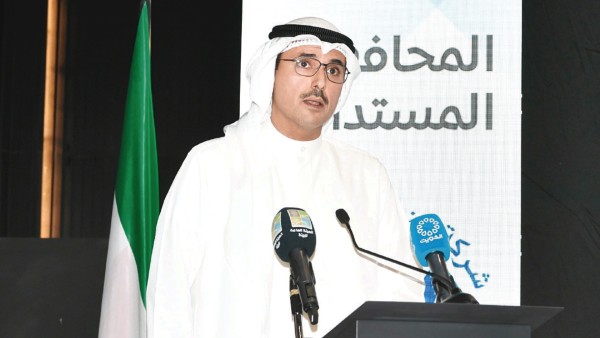
Sponsored the “Sustainable Governorate” seminar in collaboration with the Public Authority for Environmental Affairs and Kuwait Oil Company Al-Bahbahani: The value of sustainability lies in its transformation from a theo
Translated by Qiyas from السياسة — Original source
Sponsored the “Sustainable Governorate” seminar in collaboration with the Public Authority for Environmental Affairs and Kuwait Oil Company
Al-Bahbahani: The value of sustainability lies in its transformation from a theoretical concept to a practical approach reflected in decisions
The next phase requires shifting from compliance with requirements to anticipating risks and turning them into opportunities for development
Holidays and seasonal occasions
National Assembly coverage
Ahmadi Governor Sheikh Hamad Al-Jaber emphasized that achieving sustainability is a shared responsibility requiring the integration of efforts by government entities, institutions, the private sector, and society, as well as building institutional partnerships based on planning, measurement, disclosure, and continuous improvement.
Al-Jaber, in his speech during his sponsorship and attendance of an introductory seminar held by the governorate yesterday titled “The Sustainable Governorate,” in collaboration with the Public Authority for Environmental Affairs and Kuwait Oil Company, stated that sustainability has become a comprehensive approach based on the optimal use of resources, enhancing performance efficiency, strengthening social responsibility, and consolidating transparency and governance.
He added that sustainability reports and environmental, social, and corporate governance (ESG) principles are important tools to support decision-making on clear bases, clarifying that sustainability is not merely reports and indicators, but a working methodology reflected in policies, projects, and daily practices, achieving tangible and sustainable impact.
He pointed out that sustainability holds special importance in Ahmadi Governorate due to its economic and developmental weight and its inclusion of leading national sectors, foremost among them the oil sector, which enhances its role in applying best sustainability practices and achieving a balance between development and environmental protection.
Al-Jaber commended the efforts of the Public Authority for Environmental Affairs in enhancing environmental work and awareness, and the national role of Kuwait Oil Company in developing environmental practices and supporting sustainability and community responsibility initiatives.
A more stable future
For her part, Acting Director General of the Public Authority for Environmental Affairs Nouf Al-Bahbahani affirmed that the true value of sustainability lies in its transformation from a theoretical concept to a practical approach reflected in decisions, institutional performance, and resource sustainability, noting that it has become a fundamental element in resource management, risk mitigation, achieving growth, and shaping a more efficient and stable future. Al-Bahbahani stated that this initiative falls within the framework of the direction led by Minister of State for Development and Sustainability Dr. Reem Al-Faleh to consolidate sustainability as an integrated national approach and enhance its presence in the planning and decision-making system, thereby achieving integration between environmental, developmental, economic, and social dimensions. She explained that sustainability reports and ESG principles represent practical tools to enhance performance quality, read risks and opportunities more comprehensively, improve resource use efficiency, and strengthen environmental compliance, social responsibility, and transparency.
She emphasized that this direction gains special importance in Kuwait given the environment’s role as a fundamental pillar of development, and the next phase’s requirement for integration between environmental protection and economic and social development. She stressed that the Authority supports sustainability, environmental data quality, and impact measurement, noting that its cooperation with Kuwait Oil Company represents an important model of partnership between national entities, especially since the company possesses advanced expertise and experience in operations and environmental practices that can be built upon to develop performance indicators, exchange knowledge, and improve practices.
Al-Bahbahani clarified that the next phase requires shifting from managing initiatives to managing impact, from collecting data to utilizing it in decision-making, and from complying with requirements to anticipating risks and turning them into opportunities for improvement and development.
