Sami Muhammad... A Departure Tasting of Pain and Loss
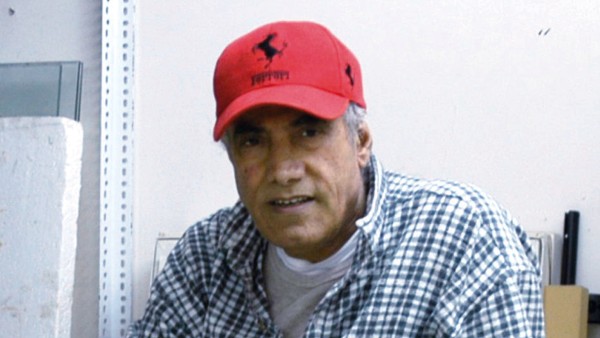
An exceptional artist who excelled in sculpture and visual arts, both regionally and globally, he received numerous awards and honors throughout his long artistic journey. He possessed a unique talent for highlighting hu
Translated by Qiyas from السياسة — Original source
An exceptional artist who excelled in sculpture and visual arts, both regionally and globally, he received numerous awards and honors throughout his long artistic journey. He possessed a unique talent for highlighting human emotions through sculpture.
The Kuwaiti, Arab, and global visual arts scene was shocked by the death of world-renowned Kuwaiti visual artist Sami Muhammad, following a battle with illness. His passing leaves a void that only his presence and his artistic creations in sculpture and painting could fill.
His departure, marked by sorrow and pain, sent shockwaves through the artistic community. Artists, admirers of his work, and intellectuals mourned him on social media, recalling his noble legacy and timeless works.
Local Politics News
Time and Calendars
Review of Current Events
The late artist was an exceptional figure in the field of sculpture at local, Gulf, Arab, and global levels, thanks to his unique ability to express human emotions. This talent earned him praise from both critics and the public alike.
The late artist contributed to enriching the artistic scene with sculptural and visual works that were predominantly humanistic in nature. This was especially evident in his sculptures, which expressed anger, outcry, suffering, and pain—emotions that stir within the human soul.
Notably, these works were characterized by a high degree of honesty and transparency, as well as the ability to capture reality with significant symbolism and embodiment. Similarly, his visual art (painting) enjoyed the same appeal as his sculptures.
On this basis, the late artist Sami Muhammad (may God have mercy on him) received attention at local, Gulf, Arab, and global levels. His works achieved a level of dissemination rarely seen in other artistic creations, participating with distinction in Arab and international exhibitions and winning prestigious awards.
The late artist relied on artistic elements inspired by life and imbued with symbolism in executing his sculptural and visual works, which endowed them with momentum, widespread recognition, and audience acceptance. Viewers saw in them the self constrained by limitations and the hope for liberation. Furthermore, his technique in using sculptural materials was stunning and had a positive impact on his works.
On a human level, he was known for his good character and love for people, which earned him the affection of all. He was also keen on supporting the younger generation through exhibitions and workshops he organized. A group named after him, the "Sami Muhammad Group," was established, consisting of young artists who presented exhibitions and artistic works under this banner.
Throughout his artistic career, he was close to all artists, whether in Kuwait, the Gulf, Arab countries, or globally. He maintained good relations with writers, authors, and thinkers (may God have mercy on him).
The artist Sami Muhammad Ahmed Al-Saleh (may God have mercy on him) was born in the East District in 1943. He studied sculpture at the Faculty of Fine Arts in Cairo in 1970 and received an honorary diploma from "Can Ceramier" in France in 1970.
He also received numerous local and international awards. In 1993, he was commissioned by the National Council for Culture, Arts, and Letters to design the State Encouragement Award. In 2000, he designed and executed the State Appreciation Award along with a medal.
The late artist is considered one of the founding figures of the modern Kuwaiti visual arts movement. He was a founding member of the Kuwait Association for Visual Arts in 1967 and continued throughout his career to present artistic experiences characterized by exploration and experimentation. His works drew inspiration from Surrealist and Expressionist schools, which formed an important aspect of his artistic experience.
Sami Muhammad was among the artists whose artistic practice was particularly linked to sculpture, as he managed to present works that reflected his unique vision, combining expressive power with a search for meaning.
At the age of ten, the late artist began collecting clay and sea rocks from between mud-brick houses and along the seashore, shaping them into natural forms of birds and animals. This hobby sparked his love for sculpture.
In 1949, he enrolled in Al-Sabah Primary School in Sharq, but older students bullied him, prompting his mother to withdraw him from school. After a three-year hiatus, he returned to his studies.
In 1956, the artist’s family moved to Howa. That same year, Sami Muhammad enrolled in Al-Shamiya Intermediate School. During his school years, Shawqi Al-Dosouki, an art teacher and potter from Egypt, began providing Muhammad with artistic training. Muhammad also participated in a school sculpture project commemorating the Tripartite Aggression on Egypt. Tasked by his art teachers to carve human statues representing soldiers and civilian victims, he was delighted when Sheikh Abdullah Al-Jaber, the Director of the Education Office, awarded him a prize for his creative contribution to the project.
He began his artistic career seriously in 1960, when he joined the classes of the Egyptian sculptor Anwar Suroor. In 1961, he enrolled in Howa Secondary School, but left in 1962 to join the "Free Studio," a unit under the Kuwaiti Ministry of Education, as a full-time artist receiving a lifelong salary and studio space.
In 1966, after passing the admission exam for the Faculty of Fine Arts in Cairo, Muhammad received a government scholarship to study abroad, embarking on four years of academic training.
In some of the artworks he produced between 1973 and 1977, he incorporated his personal life experiences into his sculptures. Starting from 1978, he underwent other life experiences (many of which involved media coverage of regional and international wars and conflicts).
Like other Arab intellectuals and writers in the decades following colonialism, Muhammad was preoccupied with issues of freedom of expression, criticism of authoritarian practices, and the necessity of safeguarding human rights, as seen in his early works such as "Hunger" (1970).
Sami Muhammad’s art is characterized by a rational approach, presenting two contradictory perspectives that coexist but rarely intersect. Each perspective is embodied in his series of artworks. For instance, anxiety is expressed in series such as "Boxes and Cry for Help," "The Breach," "Age of Calamity," "Quartet of Horror," "Stop," and "The Grays." Meanwhile, the series "Sudawiyat" and "Sahrawiyat," two terms he coined, convey a sense of joy. The series "Humanity and Sudawiyat" appears to embody both perspectives simultaneously, albeit implicitly.
The renowned visual artist, may God have mercy on him, received numerous awards and honors, including: the State Appreciation Award ("National Lifetime Achievement Award" of the State of Kuwait) from the National Council for Culture, Arts and Letters, Kuwait, in 2015; the Artistic Creativity Award from the Arab Thought Foundation, Beirut, Lebanon, in 2010; and the First Prize at the First International Biennale of Islamic Art, Tehran, Iran, in 2000.
He also received the State Encouragement Award, the Kuwait National Merit Award from the National Council for Culture, Arts and Letters in Kuwait in 1999; the Golden Palm Award at the Fourth Gulf States Biennale in Doha, Qatar in 1996; the First Prize at the Latakia Biennale for Love and Peace in Latakia, Syria in 1995; the Golden Sail Award at the Kuwait Association of Plastic Arts Members’ Exhibition in Kuwait in 1989; and the Golden Palm Award at the First Riyadh Exhibition for the Arts of the Gulf States in Riyadh, Saudi Arabia in 1988.
He won the First Prize at the First Cairo International Biennale in Cairo, Egypt in 1984; the Gold Medal at the Kuwait Association of Plastic Arts Exhibition in Kuwait in 1981; the Golden Sail Award at the Kuwait Exhibition of Arab Plastic Artists in Kuwait in 1977; and the First Prize at the Kuwait Association of Plastic Arts Members-Only Exhibition in Kuwait in 1976.
He also received the Golden Sail Award at the Kuwait Exhibition of Arab Plastic Artists in Kuwait in 1975; the First Prize at the Kuwait Association of Plastic Arts Members-Only Exhibition in Kuwait in 1974; the Bronze Medal at the Kuwait Association of Plastic Arts Exhibition in Kuwait in 1972 and 1971; and the Silver Medal at the same exhibition in 1970.
With the passing of the artist Sami Muhammad, may God have mercy on him, a towering figure in plastic arts has drawn the curtain, having rightfully established his presence. Nevertheless, his legacy will continue to bear witness to his brilliance and distinction, recounting the story of an artist who dedicated his life, time, and effort to producing artistic works that brought honor to his homeland, Kuwait, allowing successive generations to explore the history of plastic arts in his country and its remarkable evolution and flourishing.
National Council for Culture, Arts and Letters Mourns Pioneer of Plastic Arts Sami Muhammad
The General Secretariat of the National Council for Culture, Arts and Letters expressed profound sorrow and grief at the passing of the renowned Kuwaiti sculptor and plastic artist Sami Muhammad, who died at the age of 82 after a career rich with creative contributions. He devoted his life to plastic arts and sculpture, playing a pivotal role in consolidating the status of the Kuwaiti plastic arts movement locally, regionally, and internationally.
The General Secretariat conveyed the condolences of Omar Saud Al-Amer, Minister of State for Communications and Information Technology and Acting Minister of Media and Culture, as well as the Council’s leadership and staff, to the deceased’s family and loved ones, praying to Almighty God to grant them patience and solace, and to envelop the departed in His boundless mercy.
The General Secretariat recalled the late artist’s journey as one of the most prominent pioneers of plastic arts and sculpture in Kuwait, a founding figure of the modern Kuwaiti plastic arts movement, and a founding member of the Kuwait Association of Plastic Arts in 1967.
Sami Muhammad’s artistic practice was characterized by exploration and experimentation, drawing inspiration from various artistic movements, particularly Surrealism and Expressionism.
The late artist also maintained a prominent presence in the trajectory of Kuwait’s cultural and artistic movements. The National Council for Culture, Arts and Letters entrusted him with several important artistic tasks, including designing the State Encouragement Award in 1993.
Throughout his career, the late artist received numerous local, regional, and international awards and honors in recognition of his artistic contributions.
