Minister of Education: Extension of Educational Cultural Centers' Operations Until August 27
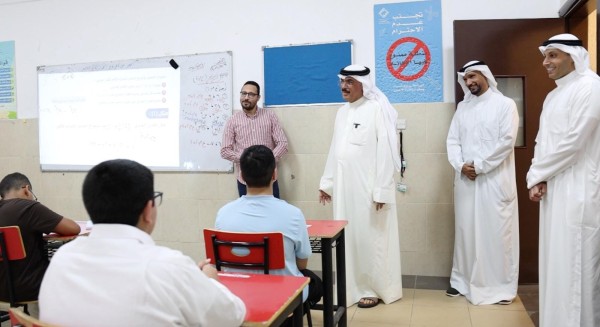
- 7,756 students benefit from 12 free centers - Foundational programs in Arabic, English, and Mathematics for grades one through nine - Interactive methods to address learning gaps and enhance students' readiness for the
Translated by Qiyas from السياسة — Original source
- 7,756 students benefit from 12 free centers
- Foundational programs in Arabic, English, and Mathematics for grades one through nine
- Interactive methods to address learning gaps and enhance students' readiness for the new academic year
Education Minister Sayyid Jalal al-Tabataba'i confirmed on Sunday that the launch of the educational cultural centers is part of the Ministry of Education’s strategy to enhance students' readiness for the upcoming academic year, review and consolidate essential skills, and address learning gaps using attractive and motivating educational methods.
This statement came during an inspection tour of the Educational Cultural Center at Khalid Al-Mufaddal School in the Capital Educational Zone, accompanied by Deputy Minister Khaled Al-Rashid and Assistant Undersecretary for Educational Affairs Hamad Al-Hamad, to review the progress of the educational programs provided to students, monitor their implementation mechanisms, and assess the level of enrollment.
According to a statement issued by the Ministry, Al-Tabataba'i emphasized the importance of utilizing the summer vacation period to support academic achievement and restore students' motivation toward learning, thereby preparing them to return to their classrooms with greater confidence and readiness.
The Ministry of Education stated that during the tour, the Minister inspected the classrooms and educational programs offered, and listened to explanations regarding the implementation mechanism of the educational plan and the targeted skills in core subjects. He also observed part of the interactive lessons and activities, and met with several students and the teaching and supervisory staff working at the center to learn about their experiences and hear their feedback on the offered programs.
Al-Tabataba'i noted, according to the statement, that the growing interest in the educational cultural centers reflects the attention of students and parents toward the summer educational programs. He pointed out that 7,756 students have enrolled in 12 free educational cultural centers, covering grades one through nine.
In light of this high demand, and with the Ministry’s keenness to provide opportunities for as many students as possible to benefit from the offered programs, Al-Tabataba'i directed the extension of the operational period of the educational cultural centers by one additional week. The programs will now continue until August 27 instead of August 19, allowing students to continue benefiting from the educational and interactive activities provided by the centers.
The Education Minister stressed that the objective of the centers is not limited to offering remedial programs in the traditional manner, but rather focuses on providing a more interactive and engaging educational experience. This is achieved through the use of active learning, play-based learning, and peer learning methods, alongside interactive activities, workshops, and competitions. These efforts aim to develop students' thinking, communication, and teamwork skills, while enhancing their self-confidence.
He emphasized the importance of continuing to monitor the quality of the offered programs and measuring the extent of student benefit, ensuring the achievement of desired educational goals and maximizing the use of the summer vacation period. He commended the efforts of the teaching, administrative, and supervisory staff working in the centers and their role in the success of the programs and the provision of a motivating educational environment for students.
The Minister confirmed that the Ministry will continue to monitor the progress of the programs and evaluate their outcomes, thereby supporting students' readiness to return to their classrooms and ensuring a more prepared and stable start to the 2026/2027 academic year.
It is worth noting that the educational cultural centers, whose programs launched on August 2, offer free foundational courses in Arabic, English, and mathematics, under the supervision of specialized educational staff, in accordance with curricula developed by the Technical Guidance Directorates. These programs focus on the essential skills and concepts needed to better prepare learners for their next academic stage.
