Brazil: Amazon deforestation falls to lowest level in a decade
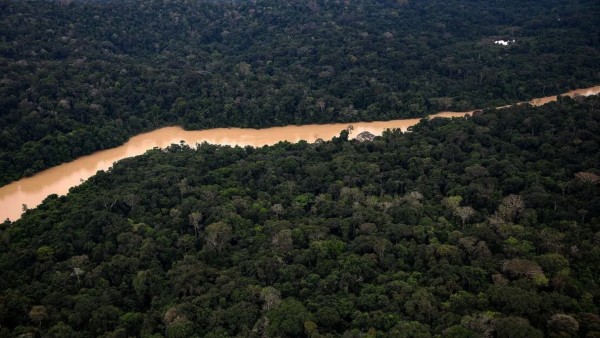
In a notable environmental development that bolsters Brazil’s hopes of curbing one of the most dangerous sources of emissions, the rate of Amazon deforestation has fallen to its lowest level in a decade, as President Luiz Inácio Lula da Silva’s government strives to fulfill its pledge to halt illegal deforestation by 2030.
Official data released on Friday showed that Brazil’s Amazon rainforest lost approximately 2,874 square kilometers of forest cover between August 2025 and July 2026, a decline of nearly 37% compared to the previous period.
The figures, issued by the Brazilian National Institute for Space Research (INPE), are based on a satellite monitoring system the institute has relied on since 2016 to track deforestation activities.
News
Security and Justice News
Video News
This decline follows years of accelerated tree cutting during the tenure of former President Jair Bolsonaro, when deforestation peaked in 2022, with the Amazon losing approximately 12,500 square kilometers of its area.
Speaking at an event in São Paulo, Lula said that achieving the goal of stopping illegal deforestation by 2030 is possible if the country maintains its current pace of action and provides the necessary resources.
The Brazilian president, who is preparing to run again in the presidential elections next October, stated that his country is taking the issue of climate change seriously, emphasizing that Brazil does not merely observe its consequences from afar but experiences their effects directly.
Despite recent improvements, long-term data reveal the extent of the losses suffered by the forest. The MapBiomas network showed that Brazil’s Amazon lost 49.1 million hectares between 1985 and 2024, an area roughly equivalent to that of Spain, amid growing warnings that the forest ecosystem is approaching a "tipping point."
The network, which includes non-governmental organizations, academic institutions, and technology companies, relies on the analysis of satellite imagery to monitor changes in land use and vegetation cover.
Alongside the environmental file, Lula is entering a critical political phase as elections approach, preparing to face Flávio Bolsonaro, the son of the former president, with the latest opinion polls indicating a slight lead for the current president.
However, Lula’s environmental record is not without criticism, as he faces objections from environmental activists due to his support for oil exploration projects in waters near the Amazon coast, a contradiction that places his climate and energy policies under further scrutiny.
The Amazon rainforest is of great importance to global climate stability, being the largest tropical rainforest on Earth, with Brazil hosting more than 60% of its area, including vast regions located within some of the country’s poorest states.
