'Ministry of Public Works': 7.9 million cubic meters of treated water consumed in July
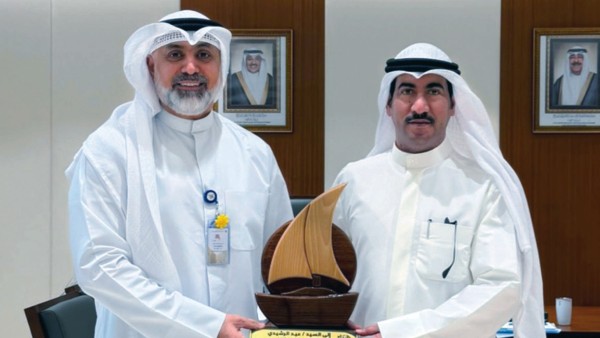
Coordination between the Ministry and the Industrial Institute to Enhance Employee Efficiency
The Ministry of Public Works announced that the volume of consumed (tertiary and quaternary treated) water during last July reached 7.872 million cubic meters, comprising 1.025 million cubic meters of tertiary treated water and 6.847 million cubic meters of quaternary treated water.
Kuwait is among the leading countries regionally and globally in the production of quaternary and tertiary treated water to address water resource shortages and achieve environmental sustainability and food security. The Treated Water Management Department at the Ministry of Public Works oversees the operation of distribution networks and the control of this water.
Daily Newspapers
Security and Judiciary News
Economic Articles
It is worth noting that treated water is utilized in various sectors, including agriculture and food, by supplying necessary irrigation water to Al-Wafra and Al-Abdali farms for crop cultivation. It is also used for afforestation and greening through the irrigation of public gardens, green spaces, and ornamental plantings. Furthermore, it serves the industrial and oil sectors, where oil companies use this water in oil production processes and industrial cooling. Additionally, it is employed in major cooling systems, such as central cooling stations at the Shaddadiya University, and supports the environmental sector and nature reserves by sustaining wildlife and nourishing natural reserves scattered across the country.
On another note, the Acting Deputy Minister of Public Works, Eid Al-Rashidi, held a meeting last Thursday with Eng. Ali Al-Ayidi, Director of the Industrial Institute affiliated with the Public Authority for Applied Education and Training, to discuss cooperation avenues between the Ministry and the Institute.
The meeting discussed the mechanism of cooperation between the Institute and the Ministry to support the Ministry by training trainees with specialized technical skills to work within the Ministry. Conversely, the Ministry will train its employees to enhance practical efficiency in execution, operation, and maintenance projects across all Ministry sectors.
