Spain prepares for first total solar eclipse in over 120 years
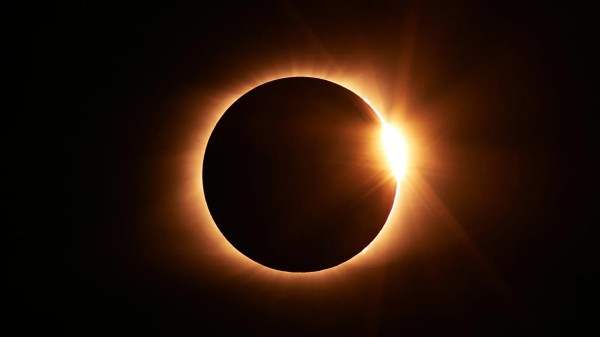
Spain is preparing to witness the first total solar eclipse to grace its territory since 1905, “that is, for about 121 years,” on Wednesday, August 12, in a rare astronomical phenomenon that coincides with the peak of the Perseid meteor shower.
The eclipse is expected to occur just before sunset, with the path of totality covering extensive areas of northern and eastern Spain, as well as the Balearic Islands.
All eyes are particularly focused on the small mountain village of Somosierra, located about an hour north of the capital, Madrid, which is preparing to welcome large numbers of visitors eager to observe the astronomical event.
Religion and Beliefs
Daily Newspapers
National Assembly Coverage
Somosierra sits at an altitude of approximately 1,440 meters and has a population of no more than 93 residents. The total phase of the eclipse is expected to last 1 minute and 29 seconds in the village, making it one of Spain’s premier astronomical tourism destinations thanks to its high elevation, proximity to the capital, and clear skies.
According to The Guardian, local authorities expect around 2,000 people to arrive in the village, despite only 400 spots being allocated through the official registration system. This discrepancy has prompted the local council to prepare for challenges related to managing visitor traffic, as well as providing parking, water, and food.
Authorities are coordinating with the police and civil defense, while beginning to train volunteers to help organize the event and educate visitors about the necessity of not looking directly at the sun, and of using safe, specialized glasses designed for eclipse viewing.
Preparations are not limited to Somosierra; the phenomenon will also be visible across wide areas of northern and eastern Spain and the Balearic Islands. Authorities in the islands have announced restrictions on 20 major roads in Mallorca, Ibiza, Menorca, and Formentera on the day of the eclipse to mitigate expected traffic congestion.
Spain aims to leverage this astronomical phenomenon to boost tourism, with projections indicating that the eclipse could attract an additional 446,000 visitors and generate an estimated 342 million euros in additional tourism revenue.
The August 12 eclipse marks the beginning of a series of three anticipated astronomical events in Spain, followed by a long total solar eclipse in August 2027, and then an annular eclipse, known as the “ring of fire,” in January 2028.
