Eight Arab and Islamic countries condemn ongoing Israeli violations in Gaza: Violation of the comprehensive plan to end the conflict
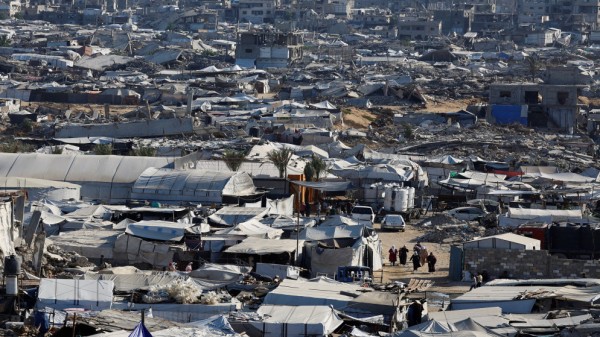
The foreign ministers of Saudi Arabia, Jordan, Qatar, Egypt, the United Arab Emirates, Indonesia, Pakistan, and Turkey strongly condemned the ongoing Israeli violations in the Gaza Strip, particularly the targeting of health facilities and infrastructure, attacks on civilian infrastructure, and the continued loss of civilian lives, including women and children, in violation of international law and international humanitarian law.
The ministers affirmed that the continuation of these violations constitutes a clear breach of obligations under international law and the comprehensive plan to end the conflict in Gaza, undermining international and regional efforts to implement the second phase of the plan. They warned that this threatens to derail the political process, reignite the cycle of escalation, and deepen the humanitarian catastrophe in the Strip.
They stressed that protecting civilians, safeguarding medical facilities and personnel in the health and humanitarian sectors, and ensuring the immediate, safe, and unhindered delivery of humanitarian aid and medical supplies throughout the Gaza Strip are legal obligations that must not be violated under any circumstances.
The ministers pointed out that Israeli violations in Gaza cannot be separated from settler attacks in the occupied West Bank, illegal settlement expansion, and unilateral measures aimed at altering the status quo in occupied Jerusalem. They considered these practices to undermine the foundations of the two-state solution and violate international law and relevant United Nations resolutions.
The ministers called on the international community, particularly the Security Council, to assume its legal and moral responsibilities and take practical and effective measures to compel Israel to fulfill its obligations under international law, and to hold accountable those responsible for serious violations, thereby contributing to the protection of civilians and supporting efforts to achieve a permanent ceasefire.
They reaffirmed their countries’ firm rejection of any attempts to annex occupied Palestinian territories or impose Israeli sovereignty over them, or to forcibly displace the Palestinian people. They emphasized that achieving a just and comprehensive peace requires launching a serious political process leading to the implementation of the two-state solution, and the establishment of an independent, sovereign Palestinian state on the June 4, 1967 borders, with East Jerusalem as its capital.
