Abdul Siddiq... A physician of Egyptian origin wins Democratic nomination for the U.S. Senate in Michigan
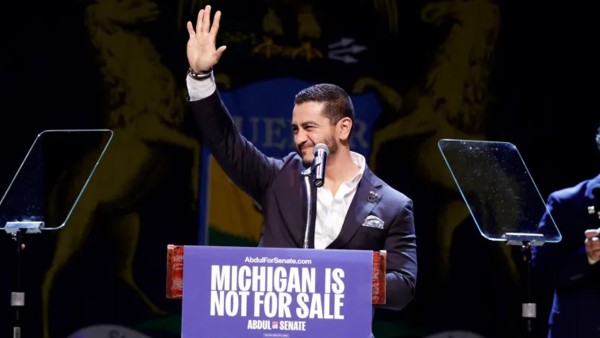
In a notable victory for the progressive wing within the Democratic Party, Abdul El-Sayed (Abdul Rahman El-Sayed) secured the party’s nomination for the U.S. Senate race in Michigan, defeating Representative Haley Stevens despite an unprecedented wave of spending led by the American Israel Public Affairs Committee (AIPAC) and its allies in support of his opponent, according to Al Jazeera.
El-Sayed is now preparing to face Republican candidate Mike Rogers, the former congressman who secured his party’s nomination without significant competition, in a contest considered one of the key battles that could determine the future majority in the Senate.
Announcing his victory on the platform X, El-Sayed thanked Michigan voters and pledged to work on reducing the influence of money in politics, supporting social policies, and providing healthcare for all, describing the result as a victory for the state’s residents.
The 41-year-old candidate ran on a progressive platform focused on comprehensive healthcare and lowering the cost of living, bringing him one step closer to becoming the first Muslim elected to the U.S. Senate.
Born and raised in southeastern Michigan to an immigrant family from Egypt, El-Sayed’s first language was Arabic. He said he faced difficulties related to his Arab identity during his childhood and adolescence, particularly after the September 11, 2001 attacks, when he was subjected to insults and anti-Arab discrimination.
He began his career in medicine before transitioning to public health and government work, after concluding that health issues are not solely related to treatment but also to public policies and the performance of state institutions.
His name gained prominence during his management of Detroit’s health sector, where he participated in rebuilding the city’s health system after its bankruptcy. He later headed the Department of Health and Human Services and Veterans Affairs in Wayne County, which has a population of approximately 1.8 million, according to The New York Times.
During his public service, he focused on social and health issues, including providing free glasses to needy children, removing lead sources from elementary schools in Detroit, combating pollution, and leading a program aimed at canceling up to $700 million in medical debt for about 300,000 people over two years.
In 2020, he was selected as a member of the “Unity Task Force” on healthcare formed by former President Joe Biden, contributing to the formulation of policies related to the healthcare system and drug prices, according to his campaign website.
El-Sayed holds a distinguished academic record. He graduated from the University of Michigan, earned a medical degree from Columbia University with a scholarship funded by the National Institutes of Health, and obtained a second doctorate from the University of Oxford as part of the Rhodes Scholarship program. He has also worked as a writer, media commentator, and podcast host.
El-Sayed previously ran for governor of Michigan in 2018 but lost the primary election to Gretchen Whitmer, before returning to the political scene with a similar progressive message and a different context within the party.
The competition between him and Stevens reflected a broader struggle within the Democratic Party between a progressive current advocating for sweeping changes in healthcare, the economy, and foreign policy, and a moderate wing favoring more centrist positions to enhance chances of winning the general election.
El-Sayed received support from prominent figures in the progressive wing, including Senator Bernie Sanders and Representative Alexandria Ocasio-Cortez, who praised his ability to connect with voters and considered him more likely to win than his opponent.
In contrast, Stevens received support from figures in the Democratic establishment, including Michigan Governor Gretchen Whitmer, along with significant funding from external groups supportive of her.
