The Gulf in the First Half... Distinctive Results, Prudent Approach, and Asset Quality
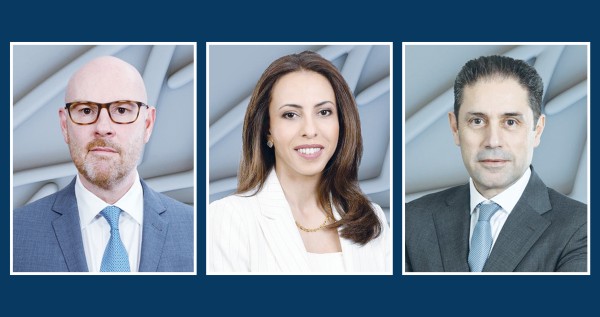
Gulf Bank holds investor conference, presents first-half results with figures Sami Al-Mahrouq: Kuwait continues to demonstrate resilience, leveraging strong economic fundamentals Positive conditions in the banking sector
Translated by Qiyas from السياسة — Original source
Gulf Bank holds investor conference, presents first-half results with figures
Sami Al-Mahrouq: Kuwait continues to demonstrate resilience, leveraging strong economic fundamentals
Positive conditions in the banking sector contributed to providing a supportive operating environment
David Challinor: Loan growth reached 7.6% in the first half, driven by corporate banking
Operating expenses reflected investments in strategic initiatives and long-term growth
Gulf Bank held an investor conference yesterday to review and discuss the financial performance for the first half of 2026, organized by EFG Hermes and presented by Sami Al-Mahrouq, Acting Chief Executive Officer of Gulf Bank, and David Challinor, Chief Financial Officer, with the dialogue moderated by Dalal Al-Dosari, Deputy General Manager of Investor Relations at the Bank.
Al-Mahrouq outlined points regarding the operating environment and provided a brief overview of the Bank’s overall position for the first half of 2026. He stated, “The first half was characterized by heightened geopolitical tensions and increased uncertainty at the regional level. Despite the impact of these developments on investor confidence in some regional markets, Kuwait continued to maintain the strength of its economy, thanks to the robustness of its financial position and the stability of its banking sector. The country’s credit rating remained strong, while its continued access to local and international funding sources enhanced confidence in its financial resilience and ability to meet its financing needs.”
He added, “From a banking sector perspective, conditions remained generally favorable. The stability of reference interest rates contributed to greater stability for the business community and provided borrowers with clearer visibility when making financing decisions. The sector continued to benefit from strong capital levels, ample liquidity, and an effective supervisory framework.”
He continued, “Against this backdrop, Gulf Bank delivered strong performance in the first half, recording growth in both profitability and the loan portfolio, while maintaining high asset quality. The results reflect the resilience of our business model, the strength of our risk management, and our discipline in executing our strategic priorities. We continued to make progress in our transition to Islamic banking, encompassing governance, products, systems, policies, and procedures, thereby enhancing our operational readiness for the transition, while simultaneously completing the requirements for obtaining approvals from regulatory authorities and shareholders.”
Loan Growth
For his part, Challinor commented on the growth in the loan portfolio, stating, “We again achieved a strong quarterly result, with net loans reaching KD 118 million in the second quarter, representing 1.9% growth, which brought first-half growth to 7.6%. Once again, the corporate banking sector was the primary driver of growth, through a mix of high-quality local and international deals. He noted that retail market growth was only 1.6%, reflecting the continued weakness in economic activity and intensifying competition on pricing. However, our strategy remains unchanged, adhering to a conservative approach in credit granting policy, prioritizing portfolio quality over growth. This has resulted in a more diversified loan portfolio. In the coming period, we expect loan portfolio growth to moderate in the second half.”
Operating Expenses
Regarding operating expenses, Chalainor stated: “Operating expenses grew by 8% in the first half, representing an increase of 3.8 million. This rise was primarily driven by the ‘other expenses’ line item, largely reflecting progress in implementing our strategic projects, including the transition to an Islamic bank and the merger project, alongside provisions for operational risk. Regarding our outlook, I previously indicated that cost growth for fiscal year 2026 would fall within the mid-to-high single-digit range; however, I now believe the high single-digit option has become the most probable scenario.”
Commenting on the net interest margin, Chalainor clarified: “The bank saw its net interest margin rise by 8 basis points in the second quarter compared to the first quarter. This increase resulted from lower funding costs, coupled with higher returns from interest income. Funding costs decreased by 6 basis points in the second quarter, following a 5-basis-point drop in the first quarter. This primarily reflects repricing that followed multiple interest rate cuts in December. Looking ahead, the key driver of margin changes is clearly movements in reference interest rates. There is a broad consensus that the likelihood of further interest rate cuts has declined significantly since the beginning of the year, supporting a positive outlook for margin levels. We also expect current and savings deposit levels to rise, which should help reduce funding costs.”
Credit Costs
Chalainor addressed credit costs, stating: “Net credit loss provisions in the second quarter amounted to 2.5 million, equating to a risk cost of just 16 basis points for the quarter. Notably, we have not recorded such a low level of quarterly risk and credit costs in many years. This outstanding result was indeed the primary factor supporting net profit growth. In the second quarter, we recorded a decrease in specific provisions, alongside higher debt recovery rates compared to previous periods—a highly encouraging development. In the corporate sector, several provisions were released and multiple loan recoveries were achieved, further reducing the bank’s credit costs. Regarding second-stage classified loans, the ratio now stands at just 2.3%, likely the lowest in the Kuwaiti banking sector. Consequently, our overall balance sheet remains relatively strong compared to competitors, enabling the bank to withstand any future shocks arising from current geopolitical conditions. As for our outlook, we had previously forecasted risk costs for fiscal year 2026 to range between 50 and 60 basis points; however, we now see justification for lowering this forecast to below 50 basis points.”
Transition to an Islamic Bank... and Merger with Warba
Samy Mahfouz, Acting Chief Executive Officer of Gulf Bank, commented on the latest developments regarding the bank’s transition to an Islamic bank and the potential merger with Warba Bank: “Regarding Gulf Bank’s plan to transform into a Sharia-compliant bank, we continue to make tangible progress in line with regulatory frameworks, following our receipt of preliminary approval from the Central Bank of Kuwait. Efforts have been intensified across all key work streams, with dedicated teams overseeing the transformation process across all business lines, operations, and technology. The focus remains on ensuring the bank is fully prepared, while simultaneously maintaining the quality of service provided to customers.
He added, ‘With regard to the potential merger with Warba Bank, the project is also proceeding as planned, and any future developments will be announced in accordance with disclosure requirements.’”
