August 2... and Minister Nabil Al-Humair
After 36 years of the Iraqi invasion, Sheikh Nabil Al-Humaid, advisor to King Hamad bin Isa Al Khalifa, reiterates the call for Gulf Cooperation.
August 2, 1990, was not an ordinary day in Kuwait’s history; time seemed to stand still, and the date remains etched in the collective consciousness of every Kuwaiti. Within hours, the face of life changed, families were torn apart, martyrs rose to prominence, and a nation that had enjoyed security became a testing ground for faith, patience, and belonging.
During that ordeal, the wisdom of His Highness Sheikh Jaber Al-Ahmad Al-Jaber Al-Sabah, may God have mercy on him, was evident. He upheld legitimacy and directed the state from the government headquarters in Taif, confident that truth does not die and that Kuwait would return to its people. Through his wisdom and steadfastness, he unified the Kuwaiti voice and mobilized Arab and international support until Kuwait’s cause became the cause of the entire world.
Arabs and peoples of the Middle East
National Assembly coverage
Live broadcast
One of the greatest secrets of Kuwait’s strength was that the leadership and the people were of one heart. Kuwaitis stood behind their legitimate leadership as one solid front, undivided by sect, tribe, or interest. Instead, they were united by one homeland and one goal: the liberation of Kuwait and the return of its flag flying proudly over its soil. Domestically, the Kuwaiti resistance wrote brilliant pages of heroism, while Kuwaiti diplomacy and media waged a battle no less important than the military campaign.
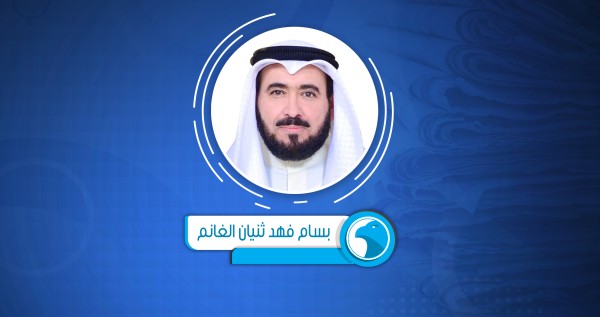
Today, I recall those days not to speak of myself, but to bear witness to a phase in my country’s history. At that time, I was a young member of a diplomatic-media team operating under the supervision of the Ministry of Foreign Affairs, through the Kuwaiti Embassy in Jordan, when the Jordanian media landscape was heavily influenced by the Iraqi regime and its narrative of events.
This team worked under the directive of Dr. Badr Al-Yaqoob, may God have mercy on him, then Minister of Information. It comprised a select group of loyal colleagues, led by Mr. Ali Al-Adwani, and including the well-known lawyer Nahes Al-Anzi, the media personality Falah Maslat Al-Adwani, may God have mercy on him, and Dr. Khaled Maradi Al-Anzi. They fulfilled their national duty quietly and faithfully. We faced media disinformation campaigns and threats, but our belief in the justice of Kuwait’s cause outweighed all fear.
We were not alone. Thousands of Kuwaitis, both inside and outside the country, played various roles in the resistance, media, diplomacy, political and military efforts, and humanitarian work. Many never spoke about their contributions, as defending the homeland was, for them, a duty that did not await praise, but an trust they fulfilled with sincerity.
While Kuwaitis set the finest examples of resilience, loyalty demands that we not forget the fraternal stances that stood with Kuwait, most notably the Kingdom of Saudi Arabia, under the leadership of His Majesty King Fahd bin Abdulaziz, may God have mercy on him. The Kingdom hosted the leadership, government, and people of Kuwait, and dedicated its political, military, and humanitarian resources to support Kuwait. Gratitude also extends to the leaders and peoples of the Gulf Cooperation Council countries, and to all Arab and friendly nations that stood with Kuwait until it regained its sovereignty.
That experience has proven that Gulf security is indivisible, and that the strength of its states lies in their unity and integration. It is encouraging that the call to move from a stage of cooperation to a stage of Gulf union is no longer confined to a single viewpoint. I was pleased by the article published by Mr. Nabil bin Yaquob Al-Humair, Advisor to the King of the Kingdom of Bahrain for Media Affairs and former Minister of Information of Bahrain, titled “The Gulf Between Re-positioning and the Necessity of a Union State,” in which he stated: “Union is not a choice among several alternatives, but the only option to ensure that the Gulf remains a key player in the twenty-first century, rather than merely a theater affected by decisions made by others.”
This vision aligns with what I have repeatedly advocated: that the future of the Gulf must be built on a shared vision, a unified will, and genuine integration that safeguards the security and stability of our homelands.
From this perspective, I renew the call to transition from Gulf cooperation to a stage of union, thereby enhancing the security of our states, preserving the sovereignty of each country, and granting the Gulf greater capacity to confront common challenges. The memory of the invasion is not an occasion to revive grudges, but to draw lessons; Kuwait was, and will remain, a state of peace, but it has learned that peace requires strength to protect it and unity to preserve it.
May God have mercy on the righteous martyrs of Kuwait, and may God have mercy on His Highness Sheikh Jaber Al-Ahmad Al-Jaber Al-Sabah, and on His Majesty King Fahd bin Abdulaziz, the Custodian of the Two Holy Mosques. May God reward with goodness all those who stood with Kuwait in its time of trial.
August 2 will remain a testament that homelands are protected only by their sons, and that the more united and cohesive the Gulf becomes, the greater its ability to safeguard its security, shape its future, and consolidate peace and prosperity for its peoples and future generations.
