Al-Watani Launches Zero-Interest Financing Solutions to Cover Medical Treatment Costs
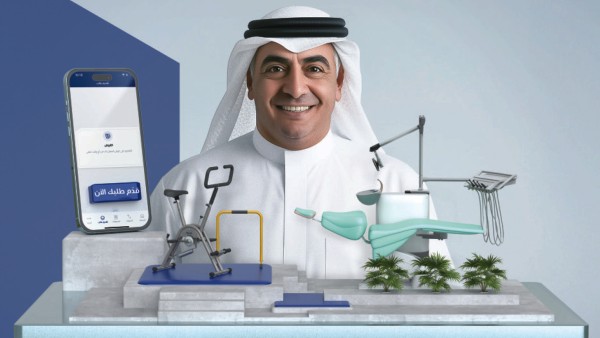
Al-Fares: We continue to work on expanding our partner network in the healthcare sector to offer our customers more options National Bank of Kuwait (NBK) announced the launch of a new initiative that enables customers to
Translated by Qiyas from السياسة — Original source
Al-Fares: We continue to work on expanding our partner network in the healthcare sector to offer our customers more options
National Bank of Kuwait (NBK) announced the launch of a new initiative that enables customers to cover treatment costs through interest-free financing solutions with repayment periods of up to five years, in collaboration with several leading medical institutions in Kuwait. This initiative reflects the bank’s ongoing commitment to being closest to its customers and providing innovative banking and financing solutions that meet their diverse needs.
In a press statement, the bank said the initiative currently includes participating medical entities such as Dr. Nael Al-Hazim Center, Bayan Dental Center, International Hospital, and Al-Saif Hospital. The initiative allows customers to access various medical and therapeutic services through affordable financing options, helping them obtain the healthcare they need with ease and flexibility. This step aligns with NBK’s strategy to continuously develop its services and products, offering innovative financial solutions that match customer needs and aspirations, thereby enhancing their quality of life and contributing to a comprehensive banking experience.
International Relations
Mobile Application
Social News
The initiative also represents an extension of the bank’s approach to developing a comprehensive system of financing solutions that cater to customers’ requirements at different stages of their lives. NBK strives to provide flexible and easily accessible services that empower customers to manage their financial obligations efficiently and with greater peace of mind, while also supporting their access to essential services that enhance their well-being and quality of life.
In this context, Abdullah Al-Fares, First Vice President and Head of Direct Sales at NBK, said: “The bank places its customers at the forefront of its priorities and is always committed to providing innovative financial solutions that meet their evolving needs. From this perspective, we launched this initiative, which enables customers to cover treatment costs through 0% interest financing with repayment periods of up to five years, facilitating their access to the medical and therapeutic services they require.”
Al-Fares added: “We continue to work on expanding our partner network in the healthcare sector, and we will soon announce the addition of more medical centers, clinics, and hospitals to this initiative. This will provide our customers with broader options and reflect the bank’s ongoing commitment to delivering the best solutions and services that meet their diverse needs.”
Al-Fares emphasized that this initiative is part of the bank’s continuous efforts to deliver genuine added value to its customers through strategic partnerships with leading institutions in vital sectors that impact their daily lives. These partnerships enable customers to benefit from exclusive advantages and services that enhance their banking experience and elevate the level of services provided to them.
NBK continuously works to strengthen its partnership network with leading entities across various sectors, driven by its belief in the importance of building a comprehensive system of services and benefits that meet customer aspirations and deliver real added value. This initiative aligns with the bank’s strategy to leverage its expertise and capabilities to provide innovative financial solutions that enhance the customer experience and offer greater flexibility and options tailored to their lifestyle and evolving needs.
... And in his weekly report: Central banks’ decisions dominated by interest rate hold
In its weekly report, National Bank of Kuwait stated that the past week witnessed exceptionally eventful developments in monetary policy decisions across three fronts, characterized by a slowdown in the momentum of U.S. data, alongside the most intense earnings calendar of the quarter, ending amid a broad-based weakness in the dollar. The Federal Open Market Committee (FOMC) kept the target range for the federal funds rate unchanged at 3.50% to 3.75%, in a meeting marked by a rare divergence of views, where three members—Neel Kashkari, Beth Hammack, and Lorie Logan—opposed the decision, favoring a 25-basis-point rate hike. At the same time, Federal Reserve Chair Jerome Powell kept all options open and proceeded to reframe the central bank’s forward guidance framework.
The bank added that the hawkish signals from the meeting were quickly overshadowed by weak economic data. The preliminary reading showed that second-quarter GDP growth slowed to 1.5% year-on-year, coming in below market expectations of 2.3%, weighed down by weak government spending and the expanding negative impact of imports. Meanwhile, the core Personal Consumption Expenditures (PCE) price index rose by just 0.1% month-on-month in June, less than expected, bringing the annual inflation rate down to 3.3%, while initial jobless claims rose to 197,000, up from the previous 187,000.
United States
The report clarified that following the FOMC’s vote of nine to three in favor of keeping interest rates steady within the 3.50% to 3.75% range, Jerome Powell held his second press conference since the meeting, having assumed his role in May. Rather than reassuring investors, the conference triggered a negative market reaction, with yields on long-term Treasury bonds surging to their highest levels since 2007, while short-term bond yields declined. At the same time, the probability of the Fed holding rates steady at its next meeting rose notably to 45%.
It noted that these moves reflect investor concerns that the central bank is not adequately addressing persistent inflationary pressures, which have remained above the 2% target for over five years, potentially forcing it to eventually adopt sharper and more tightening monetary policy shifts. Ironically, Powell had previously criticized his predecessor, Jerome Powell, for rising long-term bond yields, attributing them to weakened credibility. Although the context of Wednesday’s meeting involved holding rates steady rather than cutting them, and Powell suggested that rising bond yields might reflect strength in corporate investment, investors were largely unconvinced by this explanation. Analyst John Hilzenrath pointed out that Powell did not clearly specify the conditions that might lead him to raise rates in the face of persistent inflation. Furthermore, Powell abandoned the Fed’s traditional forward-guidance approach, arguing that signaling future moves reduces the central bank’s flexibility and hinders its ability to interpret genuine market signals.
The report noted that the U.S. economy grew by 1.5% in the second quarter of 2026 amid trade and investment pressures, a figure below expectations and down from 2.1% growth in the first quarter, according to preliminary estimates released by the U.S. Bureau of Economic Analysis. The slowdown was driven by a widening negative contribution from net trade of 1.01%, alongside a 0.8% contraction in government spending following sales from the Strategic Petroleum Reserve. Private inventories also weighed negatively by 0.67%, while non-residential fixed investment growth slowed to 8.4% from 10.6%, including a tenth consecutive quarterly contraction in business equipment investment of 5%. On the other hand, the data showed continued strength in certain components of the economy, with consumer spending accelerating notably to 3.2%, driven by higher outlays on prescription drugs, new light trucks, furniture, and food services. Equipment investment remained robust at 15.2%, while residential investment rose by 1.5%, marking its first increase in six consecutive quarters.
