'FIFA' Private Investment Project Triggers Global Football Crisis... Continental Rejection and European Threat of Boycott
- AFC: Unilateral actions undermine the foundations of the game; project lacks consensus and transparency - Infantino’s advisor resigns as player protests widen amid FIFA’s insistence on proceeding with consultations As
Translated by Qiyas from السياسة — Original source
- AFC: Unilateral actions undermine the foundations of the game; project lacks consensus and transparency
- Infantino’s advisor resigns as player protests widen amid FIFA’s insistence on proceeding with consultations
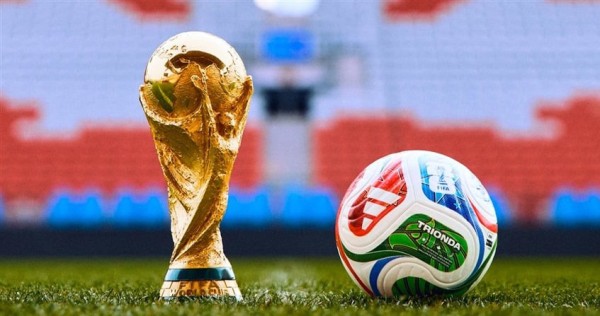
As soon as FIFA unveiled its controversial project, now widely referred to in the media as the “sale of the World Cup,” which aims to open up part of its commercial rights to private sector investors, a wave of negative reactions followed, and its repercussions quickly escalated. These ranged from objections by continental confederations and players to threats of a European boycott and the resignation of one of Gianni Infantino’s most prominent advisors.
Military supplies
International relations
Vehicle laws and driving regulations
FIFA revealed on Tuesday a plan to establish a company named “FIFA Forward Enterprise,” which would manage its commercial activities, including broadcasting rights, sponsorship, ticket sales, and licensing, as well as activities related to the World Cup, the Club World Cup, and other tournaments.
The project would allow private sector investors to hold minority stakes in the new company, while FIFA retains majority ownership and control. The international federation hopes to raise up to $4.2 billion, based on a valuation of the company at approximately $20 billion.
Unilateral actions undermine the foundations of the game
On Thursday, the Asian Football Confederation (AFC) criticized FIFA for not consulting it before announcing the project, calling for continental and national confederations to be given sufficient time to study its administrative, financial, and legal implications.
According to a letter sent by AFC President Sheikh Salman bin Ibrahim Al Khalifa to member national associations, which was published by Reuters, the continental body views the launch of the project “with great concern and deep disappointment” due to the lack of prior consultation or a detailed analysis of its potential impacts.
Sheikh Salman stated that “FIFA’s unilateral actions appear to undermine the very foundations of continental football, which are based on solidarity, cooperation, and transparency,” emphasizing that such a large-scale initiative would not succeed without the support of all six continental confederations, support that is currently unavailable.
He added that the tight deadline set for reviewing the proposal had surprised the AFC, stressing the need to complete legal and administrative reviews before making any decision that affects the commercial and sporting future of global football.
In a subsequent move, the AFC announced its support for the positions of UEFA and CONCACAF (the Confederation of North, Central America and Caribbean Association Football), considering that the project cannot achieve the necessary consensus and unity to move forward.
It affirmed that any proposal threatening the unity and global character of the World Cup should be reconsidered, urging FIFA to urgently review its governance framework and consultation and decision-making mechanisms.
Europe threatens boycott
In an escalation, the 55 European national associations that are members of UEFA decided to boycott tournaments organized by FIFA as long as the project remains in place, demanding its withdrawal and binding legal guarantees that the ownership of FIFA’s tournaments will not be opened to investors in the future.
UEFA stated in a press release that the World Cup is “not an investment product,” but a global sporting legacy created by generations of players, fans, and national teams. It warned that the entry of investors would make decisions regarding tournaments and the international calendar dependent on shareholder returns rather than the best interests of football.
It added that the project was prepared without genuine consultations with continental and national confederations, describing its management approach as “a serious leadership failure” and an attempt to impose a fait accompli.
According to the European decision, the Women’s World Cup in Brazil could be the first tournament affected by the boycott, followed by the Men’s World Cup in 2030, should the crisis continue without resolution.
Who runs football and for whose benefit?
The Australian Professional Footballers’ Union joined the opponents, arguing that FIFA is pressuring member associations to approve the project without involving players and fans, who create the actual value of the tournaments.
In a statement, the union expressed deep concern over the lack of transparency and serious consultation, adding that the proposal raises fundamental questions about “who runs football and for whose benefit,” and emphasizing that major tournaments should not be put up for sale.
The International Federation of Professional Footballers (FIFPro) also warned that the plan could reshape the incentives underpinning tournaments and professional player pathways in ways that would be difficult to reverse.
Infantino’s advisor resigns
The repercussions of the project deepened with the immediate resignation of Carlos Cordeiro, Infantino’s chief advisor, who announced his firm opposition to the plan.
Cordeiro stated that he had played no role in preparing the proposal, describing it as “bad for member associations, bad for football, and bad for the long-term future of the game.”
His resignation dealt another blow to Infantino, as opposition to the project mounts both within and outside football institutions.
FIFA insists on consultations
For its part, FIFA pledged to proceed with consultations it described as “open and democratic” with stakeholders, affirming that it would retain its role as the game’s governing body and maintain control over the new company.
Infantino views commercial development as the “next natural step” in football’s growth. According to FIFA, the project aims to raise funding for the development of the game to $10 billion over the next four years.
The proposal requires approval from a majority of the 211 national associations, as well as FIFA’s 38-member council, before the September 19 deadline, amid growing indications that achieving the necessary consensus will be difficult.
