Abu Al-Hasan to 'Al-Siyasa': Kuwait has made significant strides in protecting migrant workers
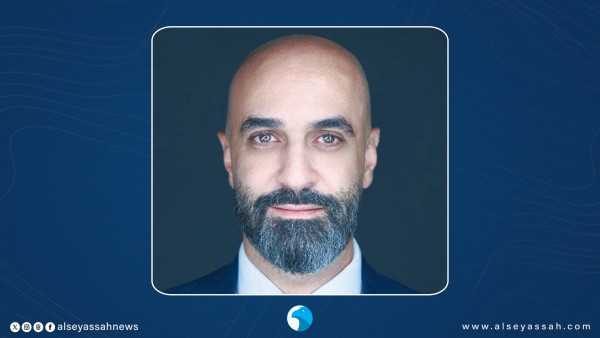
A Strategic Partner in Migration Governance and Humanitarian Action The Head of the International Organization for Migration (IOM) Mission in Kuwait, Mazen Abu Al-Hassan, affirmed that Kuwait has achieved significant ste
Translated by Qiyas from السياسة — Original source
A Strategic Partner in Migration Governance and Humanitarian Action
The Head of the International Organization for Migration (IOM) Mission in Kuwait, Mazen Abu Al-Hassan, affirmed that Kuwait has achieved significant steps in developing the system for protecting migrant workers and enhancing migration governance. He praised the close partnership between the IOM and Kuwaiti government entities in the fields of capacity building, combating human trafficking, and protecting workers’ rights. In an interview with “Al-Siyasa,” he highlighted the theme of the 2026 World Day against Trafficking in Persons, “Trapped Behind Fraud,” and warned of the growing exploitation of victims in cyber-scam centers. He emphasized the importance of adopting an approach that places victims at the center of the response. The following are the details of the interview:
Protecting Migrant Workers
How would you describe the landscape of human mobility in Kuwait, citing figures and statistics?
According to official data, residents constitute a fundamental part of the labor market, accounting for approximately 70% of the workforce in Kuwait’s private sector. Migrants come from more than a hundred different nationalities and contribute to vital sectors such as construction, services, health, transportation, and domestic work.
How do you evaluate the system for protecting migrant workers in Kuwait?
The system for protecting migrant workers in Kuwait is undergoing continuous development, based on a robust legislative and institutional framework. A set of fundamental laws forms key pillars for enhancing and protecting workers’ rights, most notably the Labor Law in the Private Sector No. 6 of 2010, the Law Combating Trafficking in Persons and Smuggling of Migrants No. 91 of 2013, and the Domestic Workers Law No. 68 of 2015. In recent years, Kuwait has taken several positive steps that have contributed to strengthening the protection system. Among the most notable is the opening of a shelter for male migrant workers in 2025, complementing existing facilities and services for other groups, thereby expanding access to protection, basic services, and referrals for the most vulnerable categories. Additionally, complaint channels and access to official authorities have been enhanced through digital platforms, including the “Sahl” application and approved electronic channels, which have facilitated procedures, increased transparency, and accelerated responses. Labor inspection mechanisms have also seen notable development, particularly with the move toward electronically documenting and regulating working hours and rest periods under Decision No. 15 of 2025, thereby strengthening oversight and supporting compliance with labor law provisions.
Domestic Workers
What is the situation regarding domestic workers in Kuwait?
Domestic workers constitute an important segment of the workforce in the State of Kuwait, with the number of male and female domestic workers estimated at over 880,000 individuals from diverse nationalities and backgrounds. Given the specific nature of work within households, issues of protection, awareness, and access to services are of particular importance to ensure a safe and decent working environment for all parties. Over the past few years, the State of Kuwait has taken several important steps to enhance the protection of domestic workers, including the issuance of the Domestic Workers Law No. 68 of 2015, the adoption of standardized contracts, the enhancement of awareness programs, and the development of bilateral cooperation with countries of origin to regulate recruitment and protect rights.
IOM Initiatives
What are the key joint initiatives between the International Organization for Migration and Kuwaiti government entities?
In recent years, cooperation between the International Organization for Migration (IOM) and Kuwaiti government authorities has led to the implementation of several key initiatives in the areas of migration governance, protection of migrant workers, combating human trafficking, and institutional capacity building. Among the most prominent of these initiatives are capacity-building programs in the field of combating human trafficking. In collaboration with the Ministry of Interior, the IOM conducted more than 21 specialized training sessions, benefiting 462 participants from various relevant departments. These sessions aimed to enhance their ability to identify trafficking victims, manage cases, and apply relevant national procedures. The IOM also supported the development and strengthening of national referral mechanisms for individuals at risk of exploitation and trafficking, including protection, shelter, and legal and judicial follow-up procedures.
How do you view the recent labor market reforms?
Kuwait witnessed a series of reforms and regulatory measures during 2024 and 2025, reflecting a clear trend toward modernizing labor market management and enhancing its efficiency. Key steps included the development of digital systems linked to work permit issuance and labor mobility management, the adoption of more structured mechanisms for verifying qualifications and occupational classifications, and the expanded use of electronic platforms to deliver services and process transactions. Platforms such as "Asahel," "Sahl," and "Kuwait Visa" have contributed to simplifying procedures, enhancing transparency, and reducing the time and effort required to complete transactions related to migrant workers and employers. These developments are part of the broader digital transformation underway across state institutions. From the IOM’s perspective, these reforms represent positive steps toward more efficient and transparent labor market governance, as well as the enhancement of data-driven management and digital services.
What is the theme of the 2026 World Day against Trafficking in Persons, and what message does it convey?
The theme for the 2026 World Day against Trafficking in Persons is "Trapped Behind the Scam," highlighting the hidden human dimension behind cyber fraud and online scams. The core message of the campaign is that behind many fraudulent operations, there are individuals who have themselves become victims of deception, exploitation, and coercion by organized criminal networks.
Why is emphasis placed on cyber fraud centers within the context of combating human trafficking?
The 2026 World Day against Trafficking in Persons theme, "Trapped Behind the Scam," conveys that cyber fraud crimes are not limited to financial losses or purely cyber offenses; they may also conceal victims of trafficking who have been deceived, lured, and coerced. Emphasis is placed on cyber fraud centers because they represent one of the fastest-growing and most complex forms of human trafficking in recent years.
Advice for workers wishing to come to Kuwait
In response to a question about the message he wishes to convey to workers intending to come to Kuwait, Abu Al-Hasan stated that Kuwait is a country that offers significant employment opportunities, and that migrants have contributed over the decades to supporting the country’s economic and social development. To ensure a successful and safe experience, the most important advice he offers to those seeking to work in Kuwait is to obtain accurate and reliable information before making the decision to travel. He urges them to deal only with licensed and reputable recruitment agencies, and to request a written, clear employment contract that explicitly specifies the salary, working hours, leave entitlements, and other employment conditions. It is also important to familiarize themselves with their rights and obligations, and to keep copies of all essential documents.
I will miss the diwaniyas and the month of Ramadan in Kuwait
As his mission in Kuwait draws to a close and he moves on to a new post, Abu al-Hasan said: “I am leaving Kuwait with a deep appreciation for an exceptional professional and humanitarian experience that spanned six years. Professionally, I will miss the spirit of cooperation and openness I found among various partners, and the trust built through joint work on issues of migration, development, and humanitarian action. For me, Kuwait was more than just a duty station; it was a rich experience of partnerships, learning, and professional growth, and I am proud of the achievements and strong institutional relationships forged during this period.
On the humanitarian front, I will miss Kuwait and its gracious people, and the relationships that have grown over time, transcending the bounds of formal work to become part of daily life and cherished memories. I will especially miss the Kuwaiti diwaniyas and what they reflect of values such as generosity, connectivity, and openness, particularly during the blessed month of Ramadan.”
