The Misdemeanors Court annuls the investigation with the lawyer and refers the case back to the Public Prosecution
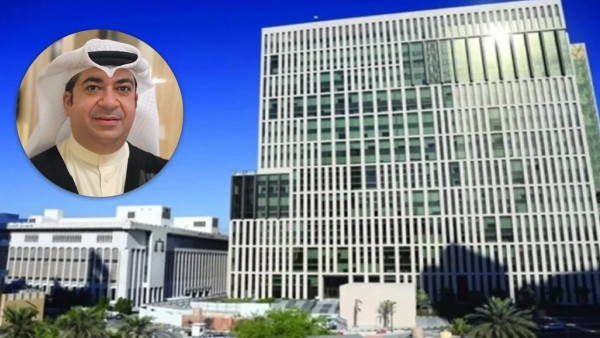
The Appellate Misdemeanor Court for Cassation, presided over by Advisor Badr Al-Sarawi and composed of Advisors Mohammed Al-Sallal, Ahmed Al-Yassin, Muslim Al-Shahoumi, and Salman Al-Suwait, ruled to quash two judgments
Translated by Qiyas from السياسة — Original source
The Appellate Misdemeanor Court for Cassation, presided over by Advisor Badr Al-Sarawi and composed of Advisors Mohammed Al-Sallal, Ahmed Al-Yassin, Muslim Al-Shahoumi, and Salman Al-Suwait, ruled to quash two judgments issued against a lawyer, declaring the investigation and trial procedures null and void. It ordered the case files to be returned to the General Administration of Investigations for referral to the Public Prosecution, as the competent authority for investigation, following arguments presented by lawyer Mohammed Ahmed Taleb.
The case stems from accusations that a lawyer insulted an employee of the Ministry of Justice while the employee was performing her duties. Conversely, the employee was charged with publicly insulting the lawyer in a public place. The Misdemeanor Court had previously sentenced the lawyer to one month in prison, suspended for three years on a bail of 500 dinars, and acquitted the employee of the charges against her, while referring the two civil suits to the competent court. This judgment was upheld by the Appellate Misdemeanor Court.
Lawyer Mohammed Ahmed Taleb appealed the ruling before the Court of Cassation, insisting on the nullity of the investigation procedures as they were conducted by an incompetent authority. He clarified that the incident attributed to his client was linked to her practice of the legal profession while a lawsuit was pending, which makes the Public Prosecution the sole competent authority for investigation.
The Court emphasized in its reasoning that Article 11 bis of the Law Regulating the Legal Profession, amended by Law No. 62 of 1996, explicitly states: "No lawyer may be investigated for a crime related to his work except under the knowledge of the Public Prosecution." It explained that the legislator intended this provision to provide procedural immunity ensuring the protection of the independence of the legal profession and preventing retaliatory measures against lawyers, while notifying the President of the Bar Association or his deputy of the investigation procedures and enabling them to attend.
It further added that the incident attributed to the appellant was directly related to her professional duties as a lawyer, making the General Administration of Investigations' conduct of the investigation procedures contrary to the law and resulting in their nullity. Applying the legal principle: "What is built on falsehood is itself false," this nullity extends to the trial procedures and the judgments issued in both levels of jurisdiction.
The Court concluded by accepting the appeal formally and on the merits, quashing the contested judgment, declaring the investigation and trial procedures null and void, and ordering the entire case files to be returned to the General Administration of Investigations for referral to the Public Prosecution, as the authority with original jurisdiction to investigate crimes related to the work of lawyers.
