Al-Bisais: Kuwait Strengthens Its Humanitarian Leadership Through Governance and Institutional Charity
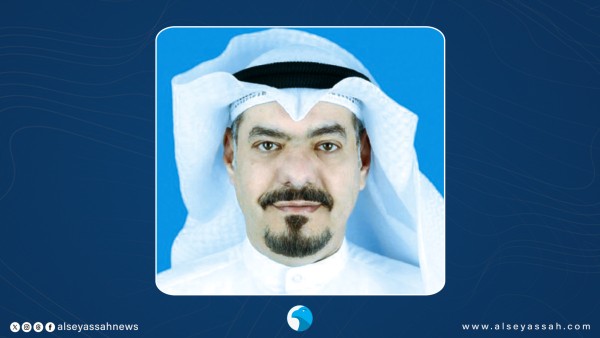
Hamad Al-Bisais affirmed that Kuwait has solidified its humanitarian leadership through effective governance and institutional support.
Translated by Alqyas from Al-Seyassah — Original source
The UN Ambassador for Community Partnership and Chairman of the Board of Directors of Al-Awazem Charity, Hamad Al-Basiss, affirmed that Kuwait has succeeded in consolidating its position as one of the leading countries in charitable and humanitarian work, thanks to its historical legacy of giving, the continuous support provided by the political leadership to charitable endeavors, and the development of the institutional system that has strengthened the principles of governance, transparency, and sustainability.
Al-Basiss stated that charitable work in Kuwait represents a model to be emulated at both the regional and international levels, as Kuwaiti charitable institutions have moved from the concept of providing traditional aid to adopting sustainable development programs based on scientific planning, impact measurement, and partnership building, thereby enhancing the effectiveness of humanitarian initiatives and ensuring their continuity. He clarified that governance has today become the true guarantee for the sustainability of charitable work, noting that the success of institutions is no longer measured by the volume of donations or the number of projects, but by their ability to manage resources efficiently, and to uphold the principles of transparency, accountability, and compliance, while strengthening the trust of donors, society, and regulatory authorities.
Judiciary News
Mobile Application
Water
He added that the Kuwaiti experience has proven that investing in governance and building institutional capacity has contributed to raising the efficiency of the non-profit sector, and has cemented Kuwait’s status as an important reference in humanitarian work. He pointed out that many Kuwaiti institutions are now implementing global best practices in risk management, internal control, impact measurement, and digital transformation, keeping pace with the rapid changes in the sector.
Al-Basiss noted that maintaining Kuwait’s leadership requires continuing to develop institutional performance, leveraging modern technologies and artificial intelligence, enhancing social innovation, and developing national competencies, thereby ensuring Kuwait’s continued role in leading humanitarian and development initiatives at both the Arab and international levels. He emphasized that the prestigious status Kuwait has achieved in charitable work was not a matter of chance, but the result of a strategic vision, official support, and a societal culture deeply rooted in generosity and giving, which has earned it widespread respect and appreciation in various international forums.
Al-Basiss concluded his statement by emphasizing that the future of Kuwaiti charitable work is linked to continuing to consolidate governance, strengthen partnerships, measure impact, and invest in sustainable development, thereby preserving Kuwait’s leading position, enhancing its humanitarian mission, and ensuring that goodness reaches its rightful recipients with the highest degrees of efficiency and transparency.
