Diab to 'Al-Siyasa': Bank results reassure the 'Bourse' and strengthen confidence in the economy
Slight weekly decline in indices amid ongoing Iranian attacks Weekly market capitalization fell by 0.03% to KD 51.85 billion. Liquidity dropped by 4% to KD 326 million, while the number of trades decreased by 6.4%. The m
Translated by Qiyas from السياسة — Original source
Slight weekly decline in indices amid ongoing Iranian attacks
Weekly market capitalization fell by 0.03% to KD 51.85 billion.
Liquidity dropped by 4% to KD 326 million, while the number of trades decreased by 6.4%.
The main indices of the Kuwait Stock Exchange closed yesterday’s session higher, with Kuwait Finance House (KFH) leading trading activity after announcing its half-year profits and dividends. However, these indices posted a weekly decline amid escalating military operations in the region and continued Iranian attacks on several areas in Kuwait.
Newspaper Classifieds
Subscribe to Al-Siyassa Newspaper
Time and Calendars
On a weekly basis, the main indices of the Kuwait Stock Exchange recorded a weak performance, coinciding with the release of financial statements by listed companies, amid escalating military operations in the region and continued Iranian attacks on various areas in Kuwait, including power plants and water desalination facilities, and most recently, the Abdali border crossing.
According to "Mubasher" statistics, the First Market Index fell marginally by approximately 0.02%, or 1.41 points, to close the week at 9,072.46 points, down from its level at the end of the previous week on July 16, 2026.
The General Market Index dropped by 0.03%, equivalent to just 2.94 points, to finish the week at 8,661.58 points. Meanwhile, the Main Index declined by 0.12%, or 10.75 points, to close at 8,843.17 points.
The Main Market 50 Index closed the week’s trading at 10,117.34 points, recording a weekly decline of 0.82%, equivalent to 83.32 points, after recently reaching record highs.
The market capitalization of shares traded on the Kuwait Stock Exchange stood at KD 51.85 billion at the close of yesterday’s session, a marginal decrease of 0.03% compared to KD 51.87 billion at the end of the previous Thursday’s session.
Regarding trading volumes, quantities traded fell by approximately 8.28% to 1.33 billion shares. Liquidity and the number of trades decreased by 4.03% to KD 326.05 million and 6.40% to 89,120 trades, respectively.
The Financial Services sector led weekly trading activity, accounting for half of the traded volumes at 50.27% (equivalent to 668.79 million shares), 32.22% of liquidity valued at KD 105.05 million, and 31.28% of trades, totaling approximately 27,880 transactions.
Regarding individual stocks, "Al-Kout" topped the red list with a 13.61% decline, while "Petrolia" led the weekly gainers with a 29.76% increase.
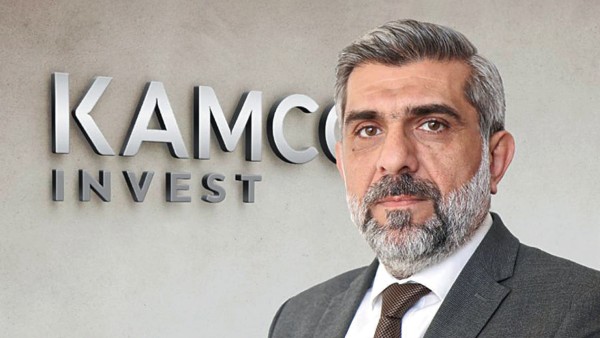
In this context, Raed Diab, First Vice President of Research and Investment Strategies at KAMCO Invest, stated: "Despite geopolitical tensions in the region, repeated attacks on Kuwait and Gulf countries, and the uncertainty surrounding navigation in the Strait of Hormuz, the stock market managed to maintain its cohesion and offset all losses recorded during the week, closing with negligible change."
Diab told Al-Siyassa that the end of the week saw some buying activity, supported by positive results from the second quarter of the current year announced by National Bank of Kuwait, Kuwait Finance House (KFH), and Boubyan Bank.
He clarified that these results helped reassure the market regarding the vital banking sector and strengthened confidence in the Kuwaiti economy despite the current geopolitical situation, reflecting the sector’s resilience, financial strength, and ability to absorb shocks and manage risks, alongside strong government support.
He added that investors are still awaiting further disclosures from other leading and operational banks and companies to assess performance more comprehensively. He noted that the recent period saw a decline in many large stocks to low and attractive levels that do not reflect their strong fundamentals, which could drive selective buying in the coming phase. However, geopolitical developments remain the most influential factor on investor sentiment at present, given the difficulty in forecasting the trajectory of events.
Diab pointed out that previous crises have demonstrated the government’s ability to manage situations and risks, thanks to the state’s strong financial position, its substantial assets, and the financing options available to meet its obligations. This was evidenced by the successful issuance of $6 billion in international sovereign bonds, which attracted strong demand, positioning the country to navigate through this phase.
He added: “Investors are currently hoping for a calm environment. A return to pre-war conditions would serve as a major catalyst for the financial market, boost upward momentum, and significantly revive economic activity.”
