What has brought some Arab countries closer to failure?
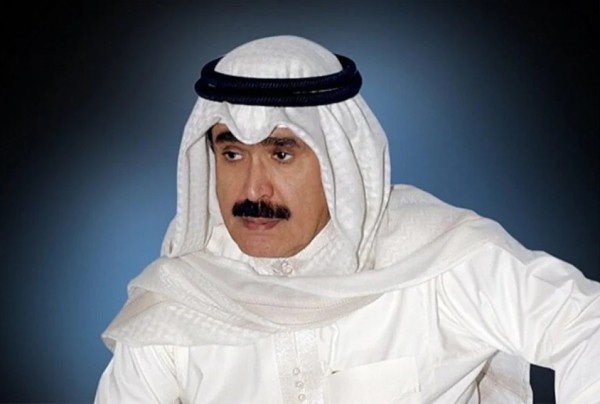
Horizon Talk Ibn Khaldun: States collapse when astrologers and self-appointed politicians multiply Truth and falsehood, jihad and killing become indistinguishable, and terror prevails People seek refuge in sects, as is t
Translated by Qiyas from السياسة — Original source
Horizon Talk
Ibn Khaldun: States collapse when astrologers and self-appointed politicians multiply
Truth and falsehood, jihad and killing become indistinguishable, and terror prevails
People seek refuge in sects, as is the case in Lebanon and Yemen
Masks are unmasked, the indistinguishable becomes mixed, and respect is lost
Friends turn into enemies, and the voice of falsehood rises
Absence of institutions, and in some of them, armed militias
Lebanon, Syria, Iraq, Libya, and Yemen have become failed states
A man said to a police officer: "For many years, my wife abandoned me and ran away. When I saw you chasing me, I thought you would bring her back to me."
Bouto dreamed of owning an atomic bomb for his country.
The Arab world has changed significantly over the past century. Countries that were once considered strong, stable, developing, and allowing freedom of opinion have transformed into something closer to failed states. Examples are right before our eyes, starting with Lebanon, followed by Syria, Iraq, and Libya, and reaching Yemen. If we expand further, the recipe could apply to some Middle Eastern countries, including Iran.
Thus, when reviewing history, Ibn Khaldun’s introduction, written nearly 700 years ago, remains the most accurate in sociology regarding the precise description of the rise and fall of states.
Water Sciences and Marine Sciences
Kuwaiti Political News
Water
What the man wrote in his famous introduction, listing the characteristics of failed states or those closest to collapse, is what is happening today in some Arab and Middle Eastern countries.
In this work, the man diagnosed the collapse of states through three main reasons, which strongly apply to the contemporary Arab and Middle Eastern situation.
In the 14th century AD, Abdul Rahman Ibn Khaldun wrote: "When states are on the verge of collapse, astrologers, beggars, hypocrites, pretenders, scribes, talkers, discordant singers, systematic and affected poets, drummers, drum-beaters, self-styled scholars, palm readers, fortune-tellers, self-appointed politicians, panegyrists, satirists, passers-by, and opportunists multiply."
He added: "Masks are unmasked, the indistinguishable becomes mixed, respect is lost, management deteriorates, meanings and speech become confused, truth is mixed with falsehood, jihad with killing, and terror prevails. People seek refuge in sects, wonders appear, rumors spread, friends turn into enemies and enemies into friends, the voice of falsehood rises, and the voice of truth fades."
Suspicious faces appear on the surface, while reassuring faces disappear. Dreams dwindle, hope dies, and the wise man’s alienation increases. Facial features become indistinct, and belonging to the tribe becomes more entrenched, while belonging to the homeland becomes a form of delusion.
The voice of the wise is lost in the noise of orators, the competition over belonging, and the concepts of nationalism, patriotism, creed, and religious fundamentals. Members of the same household accuse each other of collaboration and treason. Rumors spread about the flight of leaders, and intrigues and conspiracies are hatched. Advice abounds from near and far, and initiatives are proposed by the close and the distant. The powerful plan their departure, the wealthy worry about their wealth, and everyone is in a state of alert and waiting.
The situation turns into projects for emigrants. The homeland becomes a transit station, the pastures we live in become suitcases, houses become memories, and memories become stories.
In this regard, we add to this the absence of institutions, and in some of them, the presence of armed militias stronger than the state itself, as is the case in Lebanon and Yemen, with "Hezbollah" and the "Houthi" group.
The question remains: What made those states closer to failure, and what is the recipe for their success?
Thus, the Mercedes driver escaped the police officer.
An elderly man was driving his new Mercedes at a speed of 160 kilometers per hour. When he looked in the rearview mirror and saw a police car chasing him, he increased his speed to 200, and then to 250 kilometers per hour.
Suddenly, he said to himself, “I’ve grown too old for this nonsense.” He slowed the car and pulled over to the side of the road, waiting for the police car to catch up with him.
A traffic officer approached him, glanced at his watch, and said, “Sir, my shift ends in ten minutes. It’s Friday, and I’m leaving for the weekend. If you can give me a reason to speed up that I’ve never heard before, I’ll let you go.”
The man looked at the officer with utmost seriousness and replied, “Years ago, my wife left me and ran off with a police officer. When I saw you chasing me, I thought you were bringing her back to me.”
The officer turned back to his car, saying, “Have a nice day, sir.”
How was the man who built Pakistan a nuclear power executed?
In 1973, in Islamabad, Zulfikar Ali Bhutto was the Prime Minister. He was in the prime of his youth, and his charisma made him the focal point of his people’s attention.
The man dreamed of building a nuclear project and giving his country an atomic bomb, following its defeat in the war with Bangladesh. He defied both the United States and the Soviet Union, aspiring to lead the Third World.
Boldly, he secretly established Pakistan’s nuclear program while promising his people social justice.
For a time, the dream seemed close to realization. However, the military watched with concern as protests filled the streets. Bhutto needed a loyal general; he overlooked senior officers and chose Zia-ul-Haq, the quiet man who refused to shake his hand when they first met.
On July 5, 1977, tanks surrounded Bhutto’s residence. He was arrested, tried, and hanged two years later.
Thus ended the man who built the nuclear project, which ultimately earned his country nuclear power.
